
Are Swiss Army Knives Still Relevant?
I see this question on EDC forums all the time, and I’ve been asked more than a few times myself. Is the Swiss Army Knife still relevant? Does a brand that’s been around for 130 years still have anything to add in today’s marketplace, or is it merely a relic of a bygone era that has managed to overstay its welcome?
If you know me at all, or if you’ve ever read anything I’ve written about Swiss Army Knives or EDC in general, then you probably have a pretty good idea of where I’m going with this.
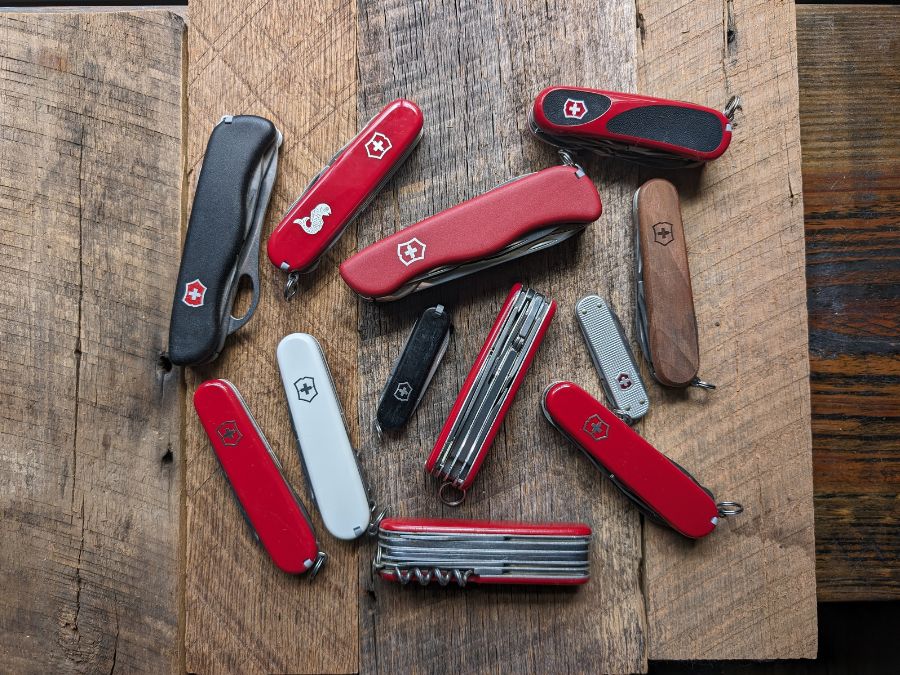
I’ve owned more than a few Swiss Army Knives in my lifetime. I know they’re old-fashioned, but like a great record or a classic car, there are certain things that never truly go out of style. I’ll make the case that SAKs are still very much relevant, but you don’t have to take my word for it. There’s more than one reason why if you don’t own a Swiss Army Knife already, then you probably should.
Instantly Recognizable
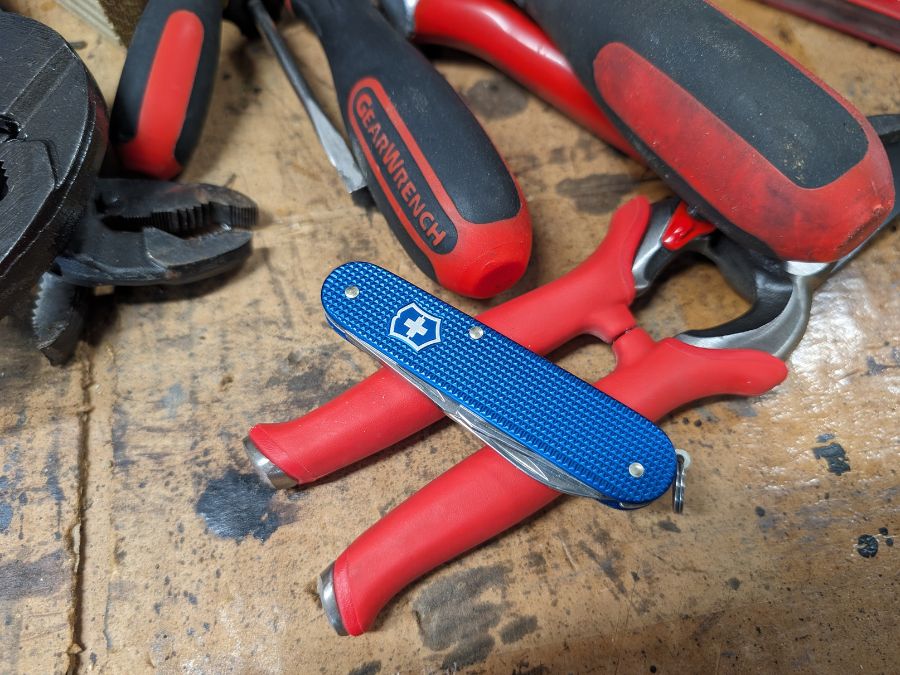
Relevance is hard to quantify, but consider how easy it is for any lay person—no matter how much or how little they know about knives—to spot a Swiss Army Knife. Hand someone a SAK and ask them what it is; everyone will know the answer.
No other type of knife, even a high-profile brand with a singular look like Spyderco, enjoys that level of notoriety. Victorinox has created one of the most iconic and instantly recognizable tools of all time, and it’s arguably just as distinctive and unmistakable today as it was a century ago.
It’s also safe to assume that it’s still one of the most widely used and carried knives in the world. Victorinox makes 10 million pocket knives annually, which is roughly 45,000 per day. If you don’t own one, you can be sure that several people you know do. There’s no hard data on this sort of thing, but there can be little doubt that SAKs are in more pockets and drawers around the world than any other knife.
The Ideal EDC
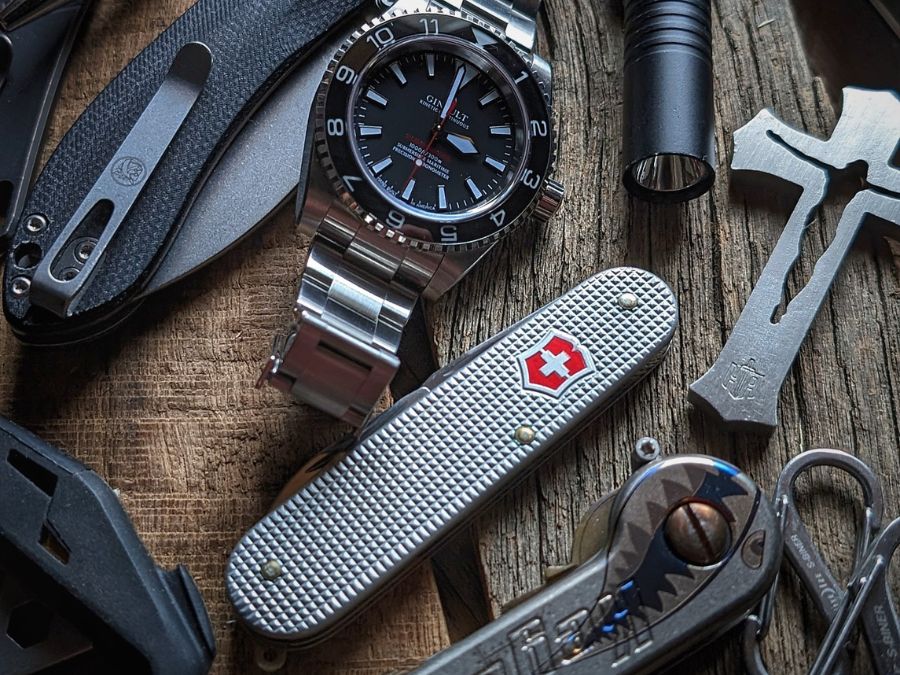
There’s a Swiss Army Knife for everyone. Hikers. Hunters. Fishermen. Farmers. Campers. Carpenters. And one of the reasons that the SAK is still such a great all-around knife for so many different people is that it stays true to the core concepts of everyday carry.
For me, EDC is all about being prepared for any everyday situation that might arise without being overburdened. You want to be ready, but you don’t want to be weighed down. That’s EDC, and it’s also a perfect description of what a Swiss Army Knife provides.
You could argue that a Swiss Army Knife isn’t the best at anything. There are way better knife blades out there. The scissors that come with most SAKs pale in comparison to real scissors. Same goes for the screwdrivers, files, corkscrews and saw blades. Even the tweezers leave a lot to be desired compared to a real set of tweezers.
But just try carrying all those tools in your pockets. The reason a Swiss Army Knife is great isn’t that its individual components are the best in the game. It’s that a SAK is so much more than the sum of its parts.
Generations of Quality
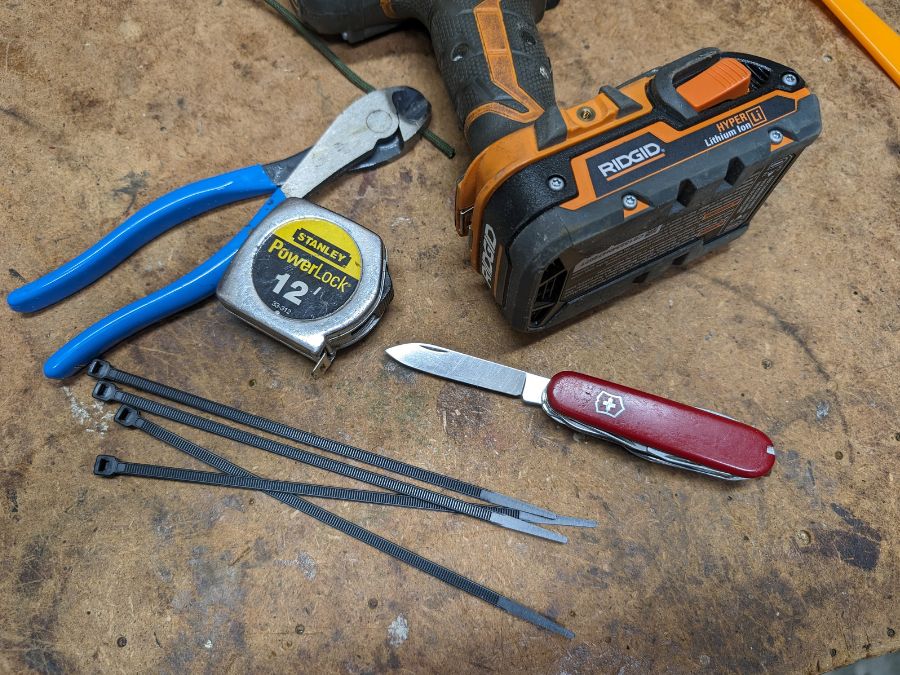
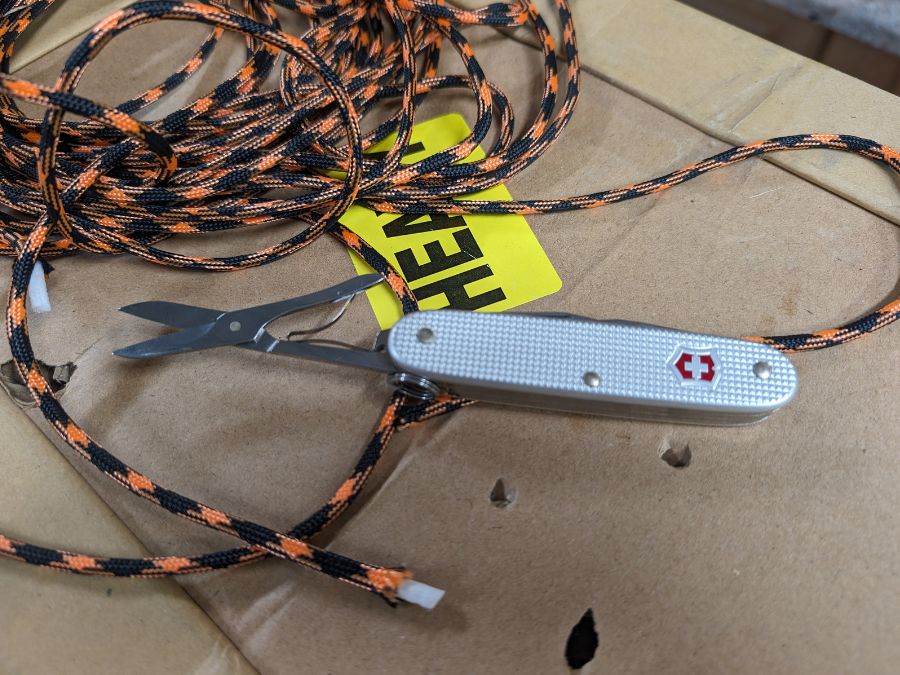
If it sounds like I’m trashing the quality of the individual tools within the Swiss Army Knife, let me be clear about one thing: these are not low-quality items. Victorinox has been making these things in Switzerland since 1891—yes, they’re still Swiss-made—and the quality control and attention to detail continues to be remarkable.
Every SAK I’ve ever laid eyes on had a mirror-like polish to the stainless steel, airtight fit and finish, and smooth and snappy detent even without a true locking mechanism. They have also, without exception, come out of the box hair-splittingly sharp.
The stainless steel also has a great balance of hardness and toughness. It resists corrosion beautifully, and it’s also impressively easy to sharpen. Returning the blade to a razor-like edge is easy with a simple sharpening stone, a leather strop, or even a flat river rock.
Big Business, Great Value
Financial success and relevance are not the same thing. But there’s undoubtedly a connection, and it’s impossible to deny that Swiss Army Knives are big business. Victorinox, the company that makes them, has an annual revenue of $716.2M per year according to Growjo, making it arguably the biggest knife brand on earth.
Granted, that’s not all SAK sales—Victorinox also makes watches, kitchen cutlery and luggage, among other things—but it dwarfs its closest competitors. Even perceived giants like Gerber ($110.4M per year) and Leatherman ($132.1M per year) are several steps below Victorinox.
And it’s worth considering that Swiss Army Knives aren’t expensive. Most models retail for between $35 and $65, and a few of the simplest models cost even less. In a world where knives and multi-tools seem to be marketed more and more as premium products, Swiss Army Knives have yet to out-price the average consumer.
Revolutionary Design, Continued Evolution
It’s hard to imagine just how revolutionary it must have felt in 1891 when the first Swiss Army Knife dropped. Soldiers in the Swiss army who got one of those initial 15,000 “Soldier Knives” must have felt like they had gotten the first iPod. There was nothing else like it.
There’s still, really, nothing else like it. Though it’s been imitated by countless no-name knockoff brands and arguably supplanted as an innovator by the likes of Leatherman, the Swiss Army Knife is still the one that started it all. There almost certainly wouldn’t be a Leatherman if there wasn’t a Swiss Army Knife first. And the fact that more people continue to reach for a SAK than a Leatherman speaks volumes.
And while Victorinox has made only minimal changes to its core SAK line, the company also continues to innovate. Sometimes it’s leading the way, and sometimes it seems to be trying to keep up with the competition, but for a brand that’s been around for more than a century, it’s anything but stuck.
You might say that Swiss Army Knives will never go out of fashion, because they’ve already been out of fashion since before you or I were born. But they’re still the most well-known knives on Earth, and chances are they still will be long after we’re gone.

Blair Witkowski is an avid watch nut, loves pocket knives and flashlights, and when he is not trying to be a good dad to his nine kids, you will find him running or posting pics on Instagram. Besides writing articles for Tech Writer EDC he is also the founder of Lowcountry Style & Living. In addition to writing, he is focused on improving his client’s websites for his other passion, Search Engine Optimization. His wife Jennifer and he live in coastal South Carolina.