
What Is a Field Watch? The Rugged Timepiece That Won Wars and Still Belongs in Your EDC
I have a soft spot in my watch collection for field watches. They aren’t flashy, they won’t draw stares across the room, and nobody is going to ask if you’re wearing one at a cocktail party. But that’s exactly the point. Field watches were never meant to impress; they were meant to survive.
These are the watches built for mud, blood, and daily abuse. They’ve marched across Europe, sweated through the jungles of Vietnam, and today they’re still some of the best tools you can strap to your wrist.
This article isn’t a brand brochure or a thin listicle. We’re going to dig into the history of field watches, how they were actually used by soldiers, what makes a real field watch (and what doesn’t), and why you still want one in your everyday carry rotation.
What Exactly Is a Field Watch?
At its simplest, a field watch is a durable, easy-to-read wristwatch designed for soldiers in combat. The recipe hasn’t changed much since the trenches of World War I:
- A tough case in steel, titanium, or resin.
- A matte dial with big Arabic numerals that you can read in the rain or the dark.
- Strong lume on the hands and markers.
- A reliable movement, usually three hands with hacking seconds for synchronization.
- A modest size, historically 36 to 38mm, today usually 38 to 40mm.
- A strap that can be swapped easily between canvas, leather, or NATO nylon.
You don’t buy a field watch for flash. You buy one because it works every single time you look at it, whether you’re in the middle of a backcountry hike or just making sure you’re on time for a meeting.
WWI: The Birth of the Trench Watch
Before World War I, wristwatches were considered a ladies’ accessory. Men carried pocket watches until trench warfare made that ridiculous. Imagine crouching in a muddy foxhole with artillery shells exploding around you and fumbling for a pocket watch in your vest.
Soldiers started soldering wire lugs onto their pocket watches, strapping them to their wrists, and covering the crystals with protective cages. These improvised “trench watches” were the first true field watches.
Legibility was life or death. A luminous dial often painted with radium meant you could read the time during a night raid or under low light in the trenches.
In fact, by 1916, a British officer’s manual listed a “luminous wristwatch with unbreakable glass” as the first piece of essential kit ranked above a revolver or binoculars. That tells you how important synchronized time had become.
WWII: The Watch That Won the War
World War II made the field watch a global standard. The U.S. Army’s A-11 specification became legendary. Produced by Elgin, Bulova, and Waltham, the A-11 was a small, simple watch — around 32–36mm, black dial, white numerals, hacking seconds.
It wasn’t flashy, but it worked. Collectors still call it “the watch that won the war” because thousands of soldiers, pilots, and navigators wore them from Normandy to the Pacific.
Across the Atlantic, the British Ministry of Defence issued its own spec and contracted twelve Swiss brands to produce watches that met it. The result was the Dirty Dozen — a collection of sturdy, legible, no-nonsense military watches from Omega, Longines, IWC, Jaeger-LeCoultre, and more. Today, finding all twelve is a grail-level hunt for serious collectors.
These wartime watches cemented the formula: slim, tough, clear, and built for one job — telling the time in conditions where failure wasn’t an option.
Vietnam and the Disposable Field Watch
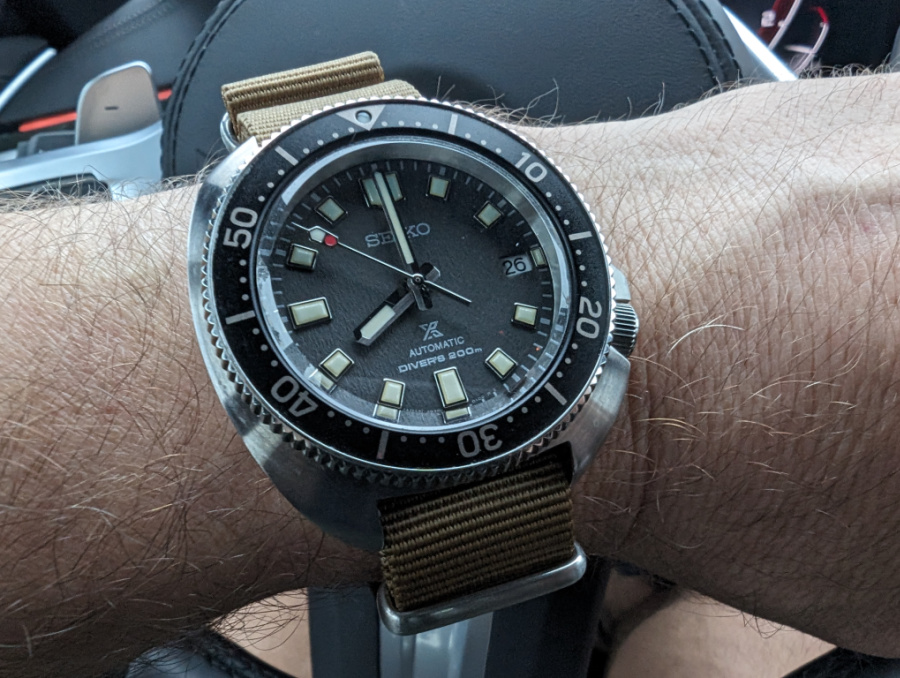
The 1960s and ’70s carried the field watch into the jungles of Vietnam. The U.S. military adopted the MIL-W-46374 spec, which Hamilton and other companies produced in resin cases with acrylic crystals.
These were cheap, lightweight, and considered disposable if one broke, supply issued another. They weren’t glamorous, but they were reliable enough for soldiers slogging through humidity and monsoon rains.
At the same time, soldiers often bought Seikos at the PX models like the Seiko 6105 dive watch or the 7005 field-style automatics. These became legends in their own right, blending rugged Japanese reliability with a price a GI could afford.
In the UK, the Cabot Watch Company (CWC) picked up contracts from Hamilton and continued supplying simple, quartz-powered G10 field watches well into the 1980s and ’90s. Those watches are still beloved by collectors today.
The Anatomy of a True Field Watch
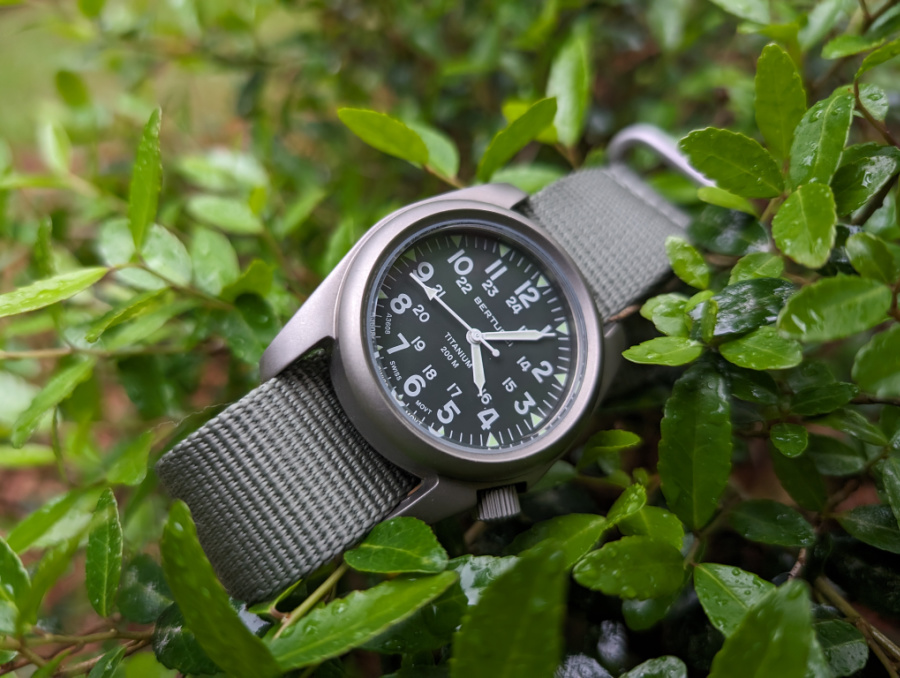
So what makes a “real” field watch? Not every rugged watch qualifies.
A proper field watch is defined by durability, legibility, and simplicity. A case that can take hits, a crystal that won’t shatter at the first knock, and a movement that keeps running, that’s durability. A matte dial with high-contrast numerals and lume that’s legibility.
And simplicity means three hands, maybe a date, nothing more. Field watches are about telling time precisely, not tracking moon phases or running a chronograph.
Size matters too. The best field watches stay compact, in that 36–40mm sweet spot. They wear comfortably all day, under cuffs or gear, and never feel like a weight dragging on your wrist.
And then there are straps. NATO, canvas, and leather dominate. A true field watch shouldn’t require a jeweler to resize it — it should adapt to whatever strap you can throw on, whether you’re heading out camping or into the office.
Field Watch vs. Dive Watch
If you’re into watches, you’ve probably asked: why not just wear a dive watch?
Here’s the difference. Dive watches are thick, heavy, and optimized for underwater use. Their rotating bezels, screw-down crowns, and 200m+ water resistance make them overbuilt for daily carry.
A field watch, on the other hand, is streamlined for land use: lighter, slimmer, more legible, and more comfortable over long days.
Don’t get me wrong — I love a good diver. But if you’ve ever tried wearing a 44mm chunk of steel on a multi-day hike, you know the appeal of a 38mm field watch that disappears until you need it.
The Everyday Carry Appeal
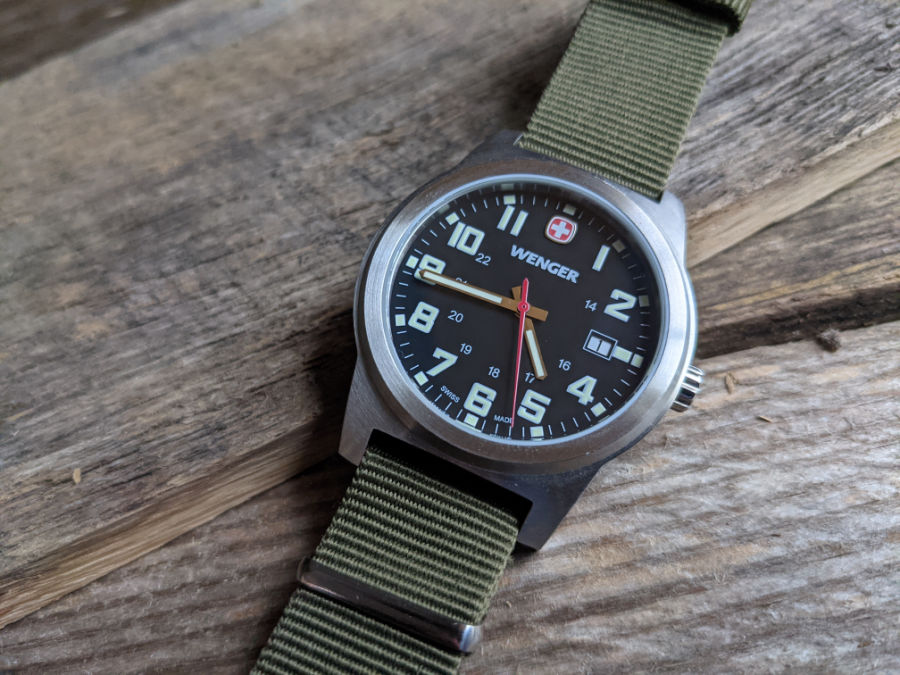
This is where field watches shine today. They’re as practical for EDC as a good pocketknife or a reliable flashlight.
I’ve taken my Hamilton Khaki camping, fishing, and on more than one job where I ended up covered in sawdust and sweat. The crystal’s scratched, the strap’s been replaced a dozen times, but the watch never quit.
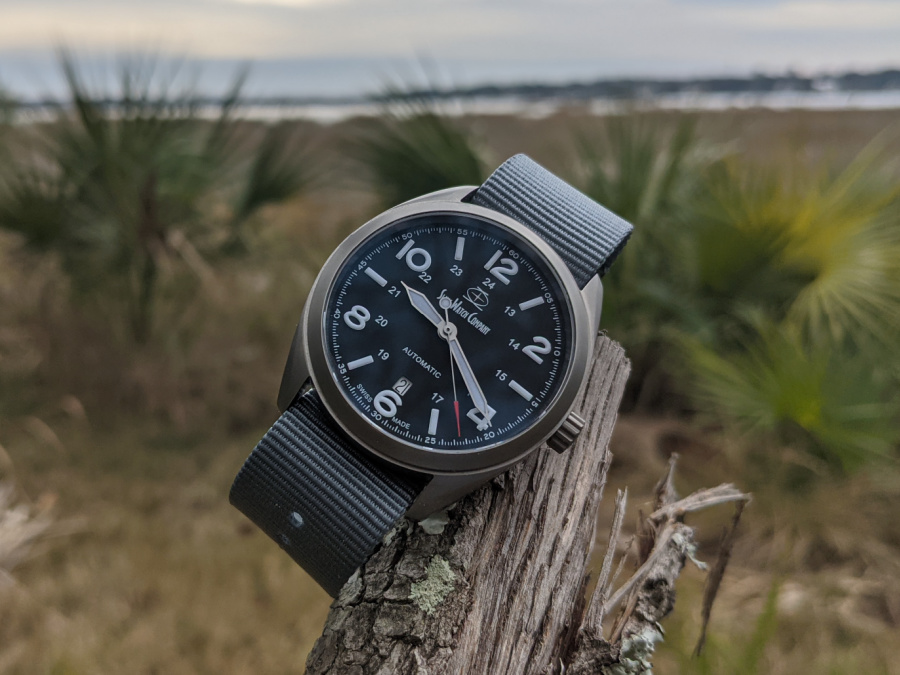
My Seiko SNK a $70 classic has been dunked in rivers, dropped on concrete, and somehow still keeps decent time. And the Swiss Watch Company Bunker, with its tritium lume and bulletproof build, feels like a tank for the modern wrist.
That’s the magic of a field watch: you don’t baby it. You wear it. It’s slim enough to disappear under a jacket, tough enough to survive abuse, and timeless enough to wear anywhere.
The Modern Field Watch Landscape
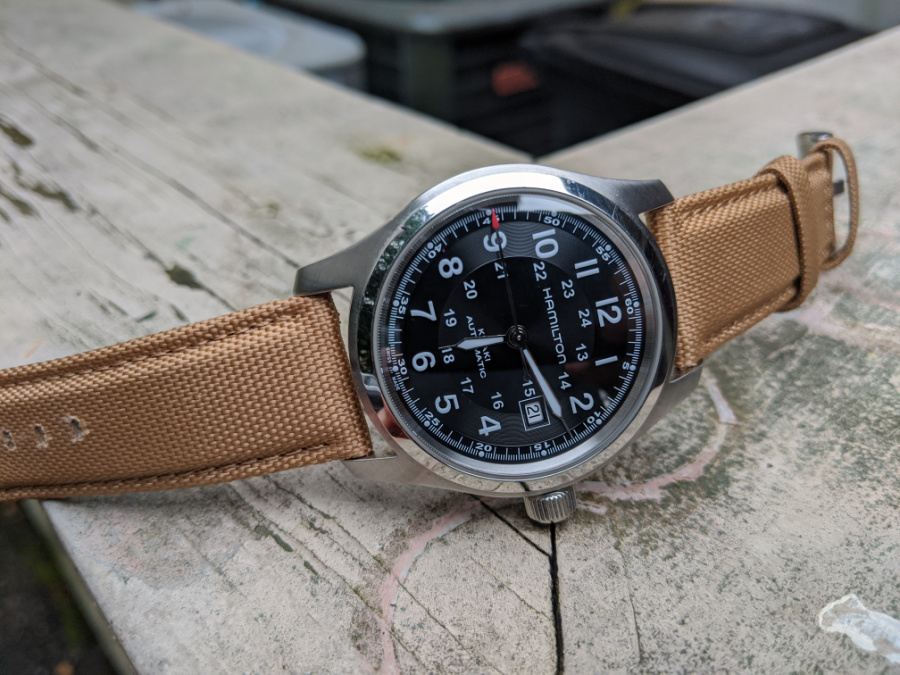
Even in the smartwatch era, field watches are thriving. Brands old and new keep the tradition alive. The Hamilton Khaki Field Mechanical remains the modern heir to the A-11. Seiko 5 automatics are still the best entry-level option for new collectors.
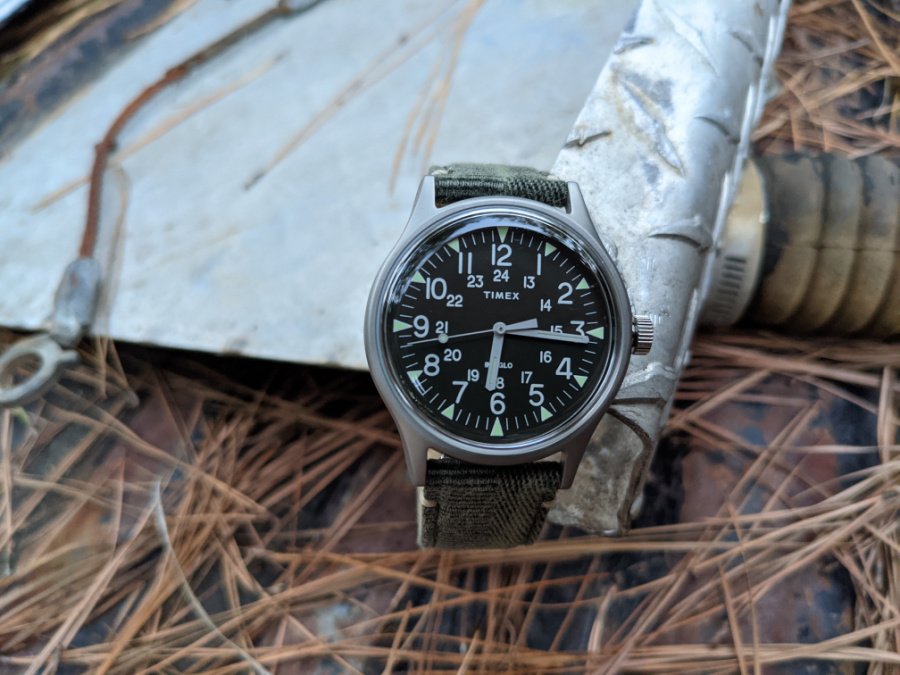
Marathon builds mechanical and quartz field watches to actual military specifications. Timex continues to offer cheap quartz beaters that just won’t quit. And companies like Swiss Watch Company (SWC) push the formula forward with tank-like builds and tritium illumination.
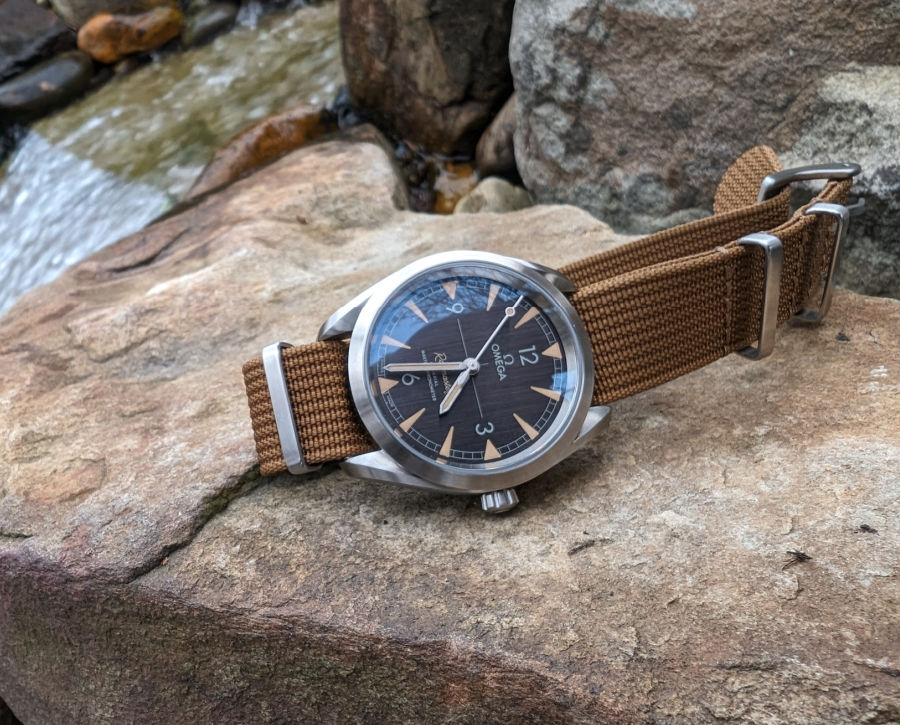
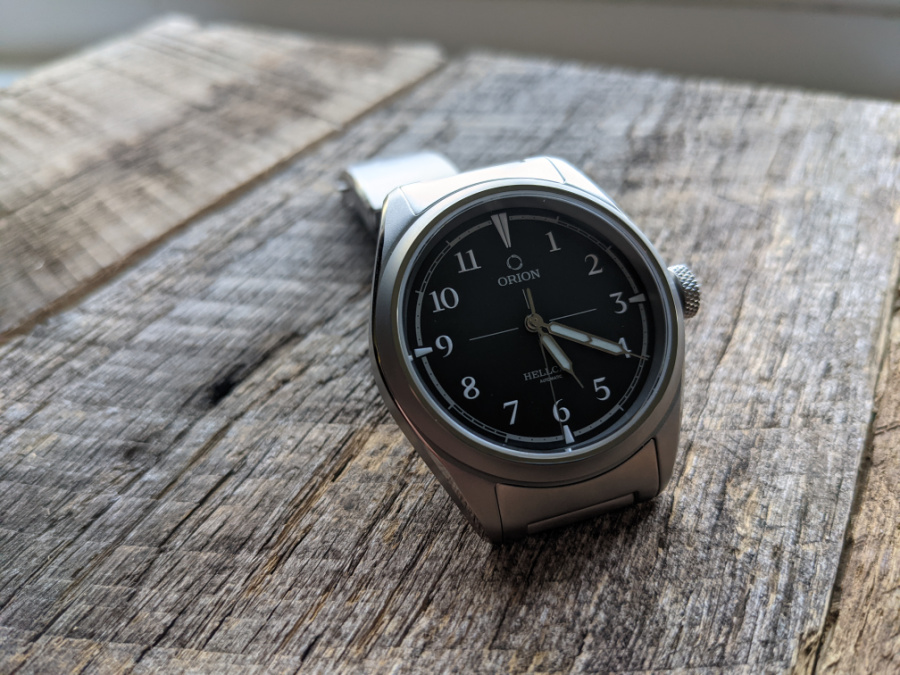
There are plenty of others from microbrands like Vaer and Orion to heritage pieces like the Omega Railmaster. The point is, the field watch has never gone away. It’s evolved, but the DNA remains the same.
Why Every Collection Needs a Field Watch
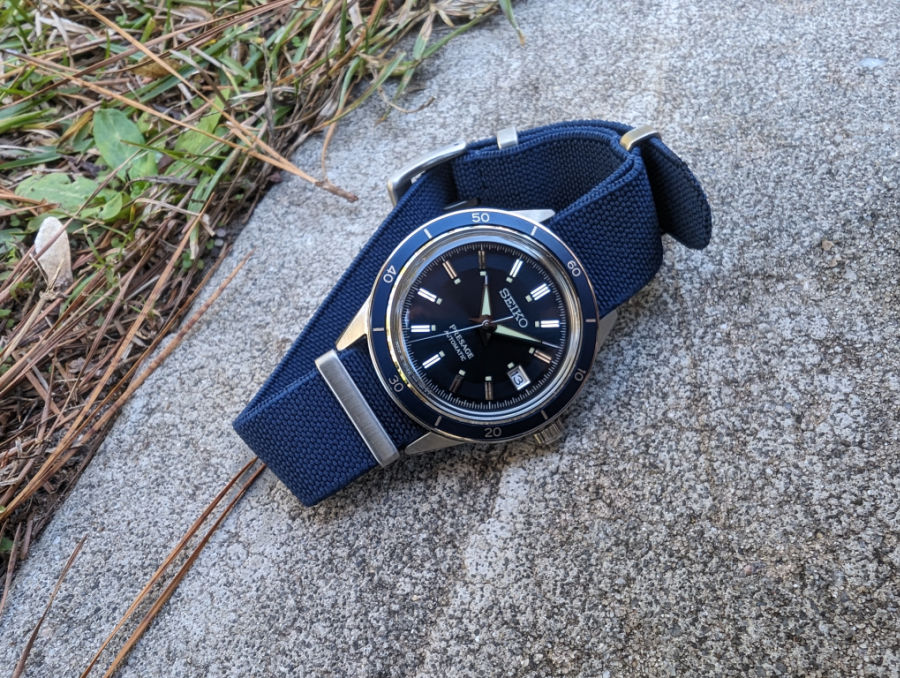
Let me be blunt: you don’t need a field watch. But if you care about watches, or gear that’s built to last, you’re eventually going to end up with one anyway.
Field watches balance practicality with history. They’re inexpensive enough to wear hard, but meaningful enough to collect. They connect you to a lineage that runs from muddy trenches to modern EDC rotations. And they do it without screaming for attention.
You can own ten divers, three chronographs, and a smartwatch, but your collection won’t feel complete until you have a proper field watch.
Field Watch FAQs
What makes a watch a field watch?
Durability, legibility, and simplicity. If it’s shiny, oversized, or over-complicated, it’s not a field watch.
Why are field watches smaller than divers?
Because soldiers needed something comfortable and practical. Small size = lighter weight and easier wear.
Can you swim with a field watch?
Most can handle rain and rivers, and some are fine for swimming. But if you’re diving, wear a diver.
Are G-Shocks considered field watches?
You could argue they’re the modern field watch for military and law enforcement. Personally, I say they’re their own beast.
What’s the best entry-level field watch?
The Seiko 5 SNK. It’s automatic, affordable, and tough. If you want quartz, grab a Timex Scout.
Can a field watch be dressy?
Yes — that’s the beauty. Throw a leather strap on a Hamilton Khaki or Seiko 5, and you’ve got a watch that works just as well at dinner as it does on a trail.
Why the Field Watch Still Matters Today
Field watches aren’t jewelry. They’re tools. They were born out of necessity in the trenches of WWI, standardized in WWII, refined in Vietnam, and today they’re still some of the most practical watches you can buy.
From the A-11 that helped win a world war to the Hamilton Khaki that still carries that DNA today, the formula hasn’t changed: slim, tough, legible, reliable.
You don’t need a field watch but if you’re serious about watches, history, or everyday carry, you’ll end up with one. And once you do, you’ll understand why these simple, rugged watches have never gone out of style.

Blair Witkowski is an avid watch nut, loves pocket knives and flashlights, and when he is not trying to be a good dad to his nine kids, you will find him running or posting pics on Instagram. Besides writing articles for Tech Writer EDC he is also the founder of Lowcountry Style & Living. In addition to writing, he is focused on improving his client’s websites for his other passion, Search Engine Optimization. His wife Jennifer and he live in coastal South Carolina.