
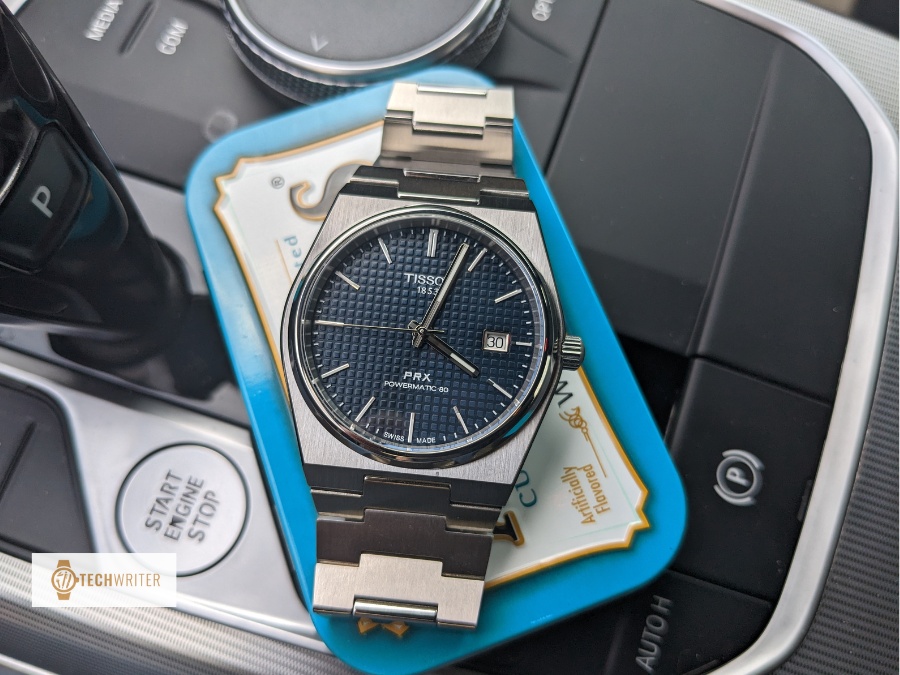
Tissot PRX Powermatic 80 Review: Blue Dial Long Term Test
Quick Take:
I bought the blue dial PRX to celebrate Tissot being the official timekeeper of the Tour de France, and I have worn it every July since as part of my own weird cycling ritual. Three years later it is still in my rotation. The PRX is slim, sharp, and easy to wear, with an eye catching blue waffle dial that feels like it belongs on a much more expensive watch. The bracelet fit quirks, weak lume, and plastic parts in the Powermatic 80 are real, but none of that has kept this watch from becoming a steady, reliable daily driver.
Why I Bought It
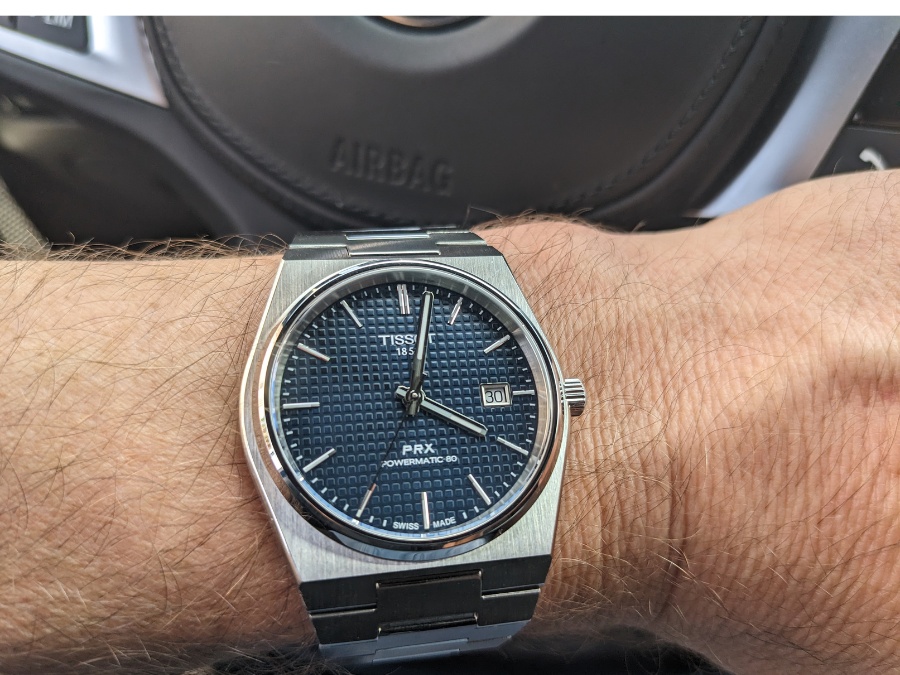
I picked up the blue dial PRX as a Tour de France tradition. My rule: keep it wound and wear it for every stage. Call it cycling superstition, but it stuck. Out of the box, the PRX made sense with classic integrated bracelet lines, thin profile, and a dial that looked fantastic in sunlight.
What started as an impulse buy turned into a long-term keeper. I have since added other Tissots to my collection, including the Seastar 1000 (you can read that review here), but the PRX has a special place. It is one of those watches that feels more refined than its price suggests.
Case and Wearability
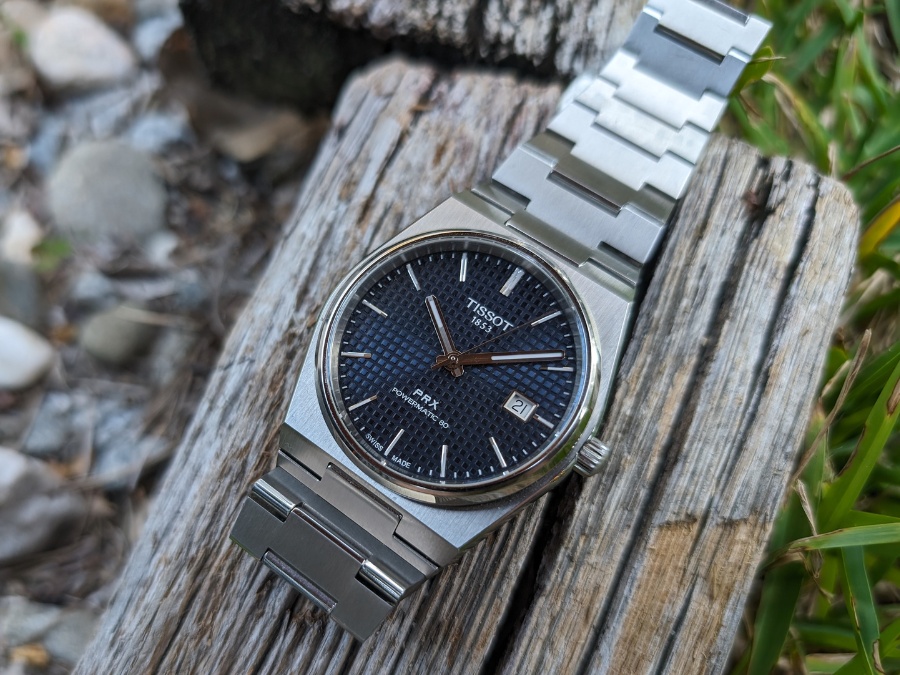
The PRX case is pure 1970s with sharp lines, flat surfaces, and brushed steel that looks clean and deliberate. At just under 11mm thick, it wears flatter than most automatics in this price range. The brushing is crisp, the polished accents give it some flash, and the whole case feels more premium than you would expect for under 1000 dollars.
The quirk here is the bracelet. The first link does not articulate, which extends the effective lug to lug beyond the official 44.6mm. On my 7.5 inch wrist it is fine, but on smaller wrists it can flare out and leave awkward gaps at the corners.
Water resistance is 100m, which is plenty for real world use. The crown is tucked into the case, ergonomic enough, but a little fiddly to grip at times.
Bracelet and Clasp
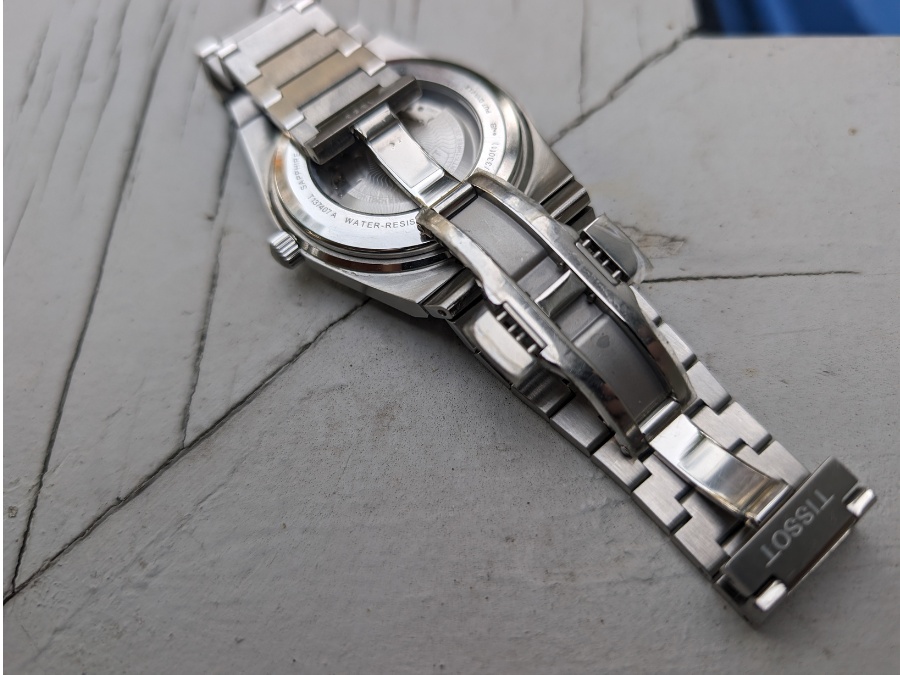
This bracelet is one of the reasons the PRX got so much attention. It drapes nicely, tapers toward the butterfly clasp, and has a comfortable, airy feel. The brushing is well done and there is a thin polished reveal between links that catches the light just right.
Some folks complain the bracelet scratches easily, but after three years of regular wear mine looks fine with just normal hairlines you would expect on steel. It uses pins and collars for sizing. People gripe about that too, but it keeps the bracelet thin and flexible. For me, no problem.
The clasp is a butterfly style with no on the fly micro adjust. Tissot did include half links, and I was able to get a good fit. Would I prefer tool free micro adjust? Of course. But at this price I can live without it.
The Blue Dial
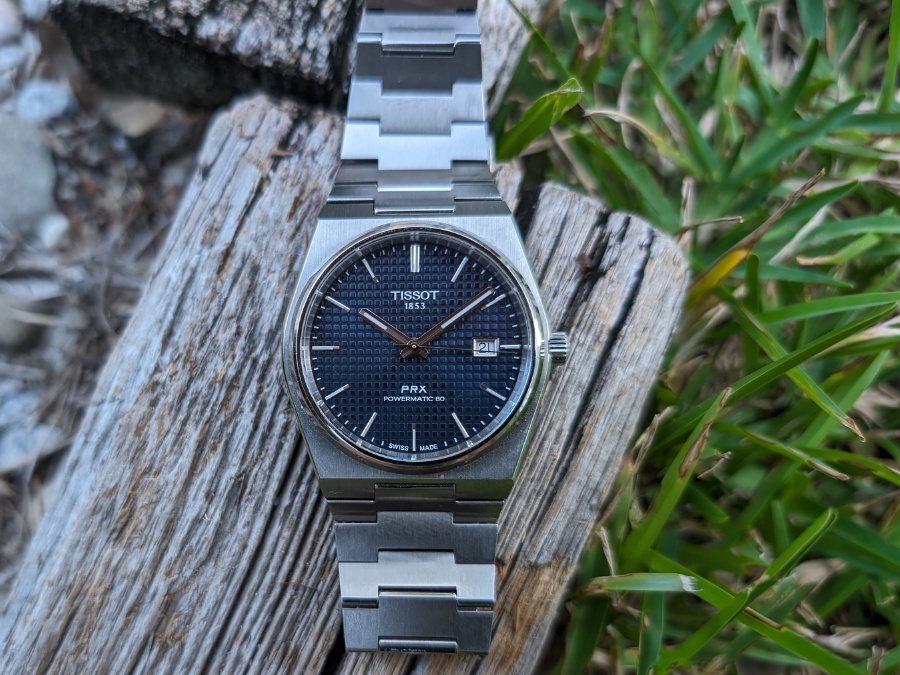
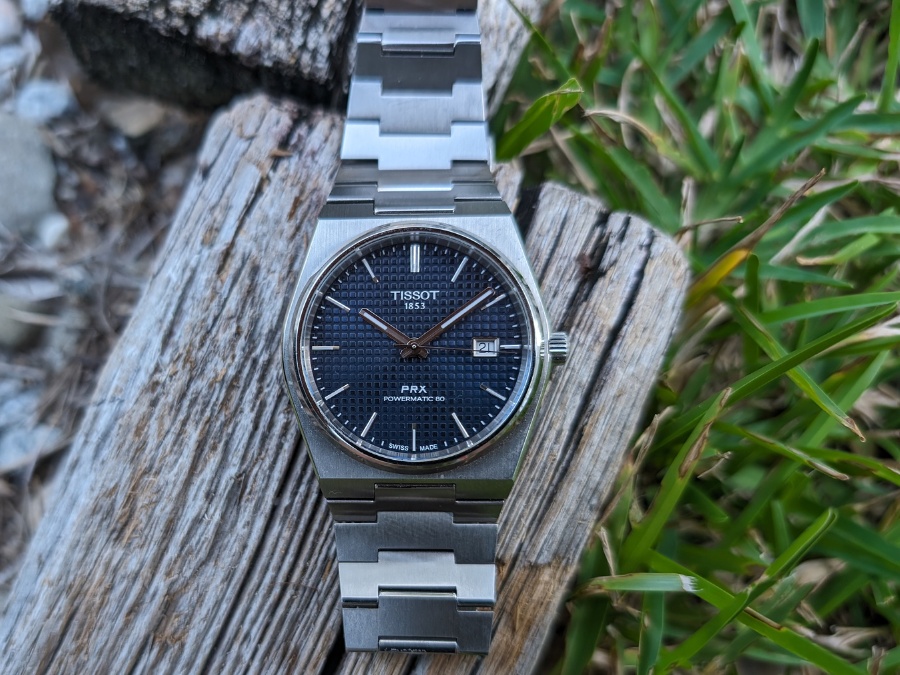
This is the part that sold me. The square waffle texture gives it personality, and in blue it comes alive under sunlight. It is not flashy, it is a deep, shifting shade that feels expensive.
The applied markers are clean and the framed date window is properly proportioned. Everything lines up the way it should.
The hands are the weak point. They are loomed, with a polished stripe down the center, but they look flat compared to the textured dial. Functional, sure, but visually they do not live up to the rest of the design.
Lume
The lume is serviceable but forgettable. It glows, it fades, and it helps with orientation in low light. Nothing more.
Movement and Long-Term Reliability
Inside is the Powermatic 80, an ETA based design tuned down to 21,600 bph to stretch out an 80 hour power reserve. It is a clever design, but not without controversy.
Here is the truth: the movement uses some plastic components in the escapement and is factory regulated without a traditional regulator. That means your local watchmaker cannot just tweak it like an ETA 2824, and if something in the balance assembly breaks, the fix is usually a swap, not a repair.
When I bought mine, I did not know about the plastic. Now I do, and honestly it has not changed my opinion. My PRX has run strong for three years, keeping good time and starting right up after sitting. For me, that is all that matters. But if you are a purist who wants a movement that can be serviced indefinitely, this might be a sticking point.
Caseback
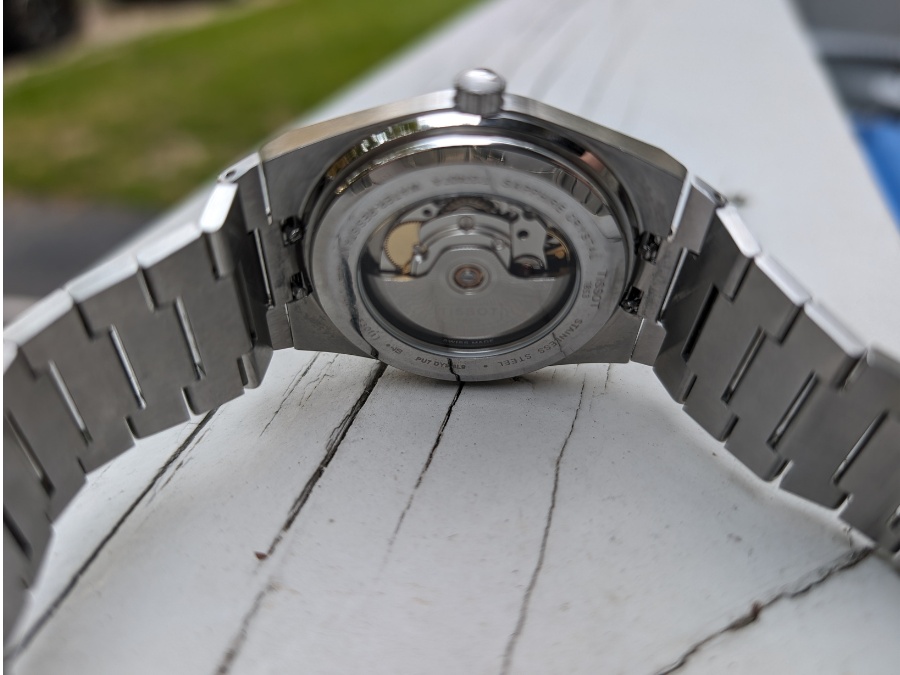
The PRX has a display caseback. The movement is not finished for show, but for someone new to mechanical watches it is neat to see the rotor spin. Personally, I would have preferred a closed caseback and an even slimmer profile, but I get why Tissot went this way.
Who It Is For / Who Should Skip It
Buy the PRX if:
- You want an affordable integrated bracelet Swiss watch that looks and feels like a higher end piece
- You appreciate slim, versatile watches that can do dressy or casual duty
- You are okay with a modern, factory regulated movement that trades serviceability for convenience
- You want a long term daily wearer that still feels special on the wrist
Skip the PRX if:
- Weak lume or flat hands are dealbreakers
- You expect full micro adjust and perfect bracelet articulation
- You are a purist who wants a fully traditional, endlessly serviceable movement
- You dislike popular watches that show up on too many wrists
Verdict
The Tissot PRX blue dial is not flawless. The lume is weak, the bracelet articulation makes it wear larger than the specs suggest, and the Powermatic 80 has compromises that watch nerds love to gripe about. Add in the fact that the PRX got too popular and you will see why some collectors unfairly dismiss it.
But popularity does not make a watch bad. The truth is the PRX is stylish, slim, reliable, and versatile. It is one of the easiest watches in my box to grab for daily wear. It looks like a much more expensive piece, it wears comfortably, and it is backed by Tissot’s 180 plus years of history.
Three years later, I can still say the PRX is a keeper. If you are into the integrated bracelet look and can accept a few quirks, the PRX is one of the best value Swiss automatics on the market. I recommend it without hesitation.

Blair Witkowski is an avid watch nut, loves pocket knives and flashlights, and when he is not trying to be a good dad to his nine kids, you will find him running or posting pics on Instagram. Besides writing articles for Tech Writer EDC he is also the founder of Lowcountry Style & Living. In addition to writing, he is focused on improving his client’s websites for his other passion, Search Engine Optimization. His wife Jennifer and he live in coastal South Carolina.