
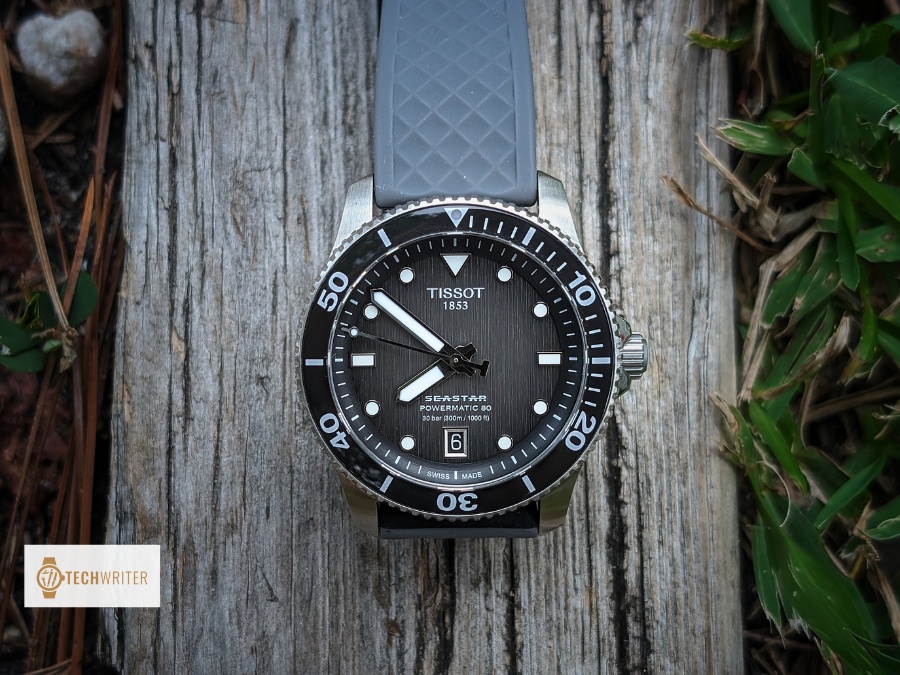
Tissot Seastar 1000 Review: The Swiss Diver That Deserves More Wrist Time
Sometimes a watch grows on you for reasons that have nothing to do with specs. That’s the story of my Tissot Seastar 1000 Powermatic 80, the 40mm gray dial version that I bought on a whim during the Tour de France.
Between the decent price, killer looks, and Tissot’s tie-in with professional cycling, I convinced myself I needed it and after months of wearing it, I still do.
But let’s not sugarcoat things. While the Seastar 1000 gets a lot right, it also falls victim to the same lazy sins that plague mainstream Swiss brands: weak bracelets, no on-the-fly adjustment, and a sense that they know they can get away with it. That said, is the watch still worth it?
Absolutely.
A Compact Diver With Real Specs
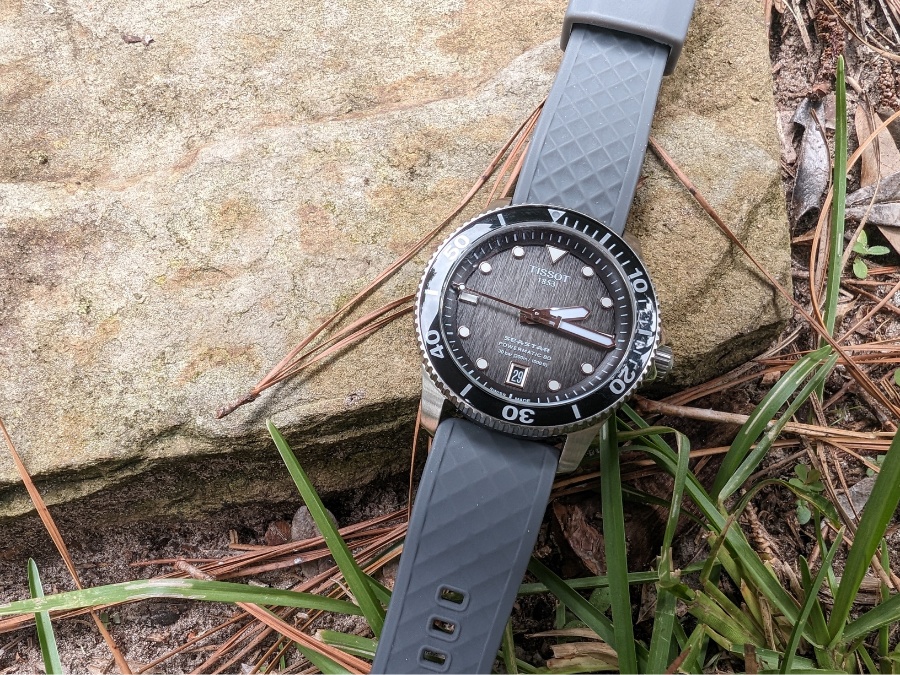
The 40mm Seastar is the dive watch a lot of us have been waiting for scaled down from the original 43mm and better for it. The dimensions hit a sweet spot: 40mm wide, 12.8mm thick (with crystal), and 46mm lug-to-lug.
On the wrist, it wears like a true modern diver should—substantial but not obnoxious. This is a watch that works whether you’re sweating it out on a summer hike or wearing a button-up.
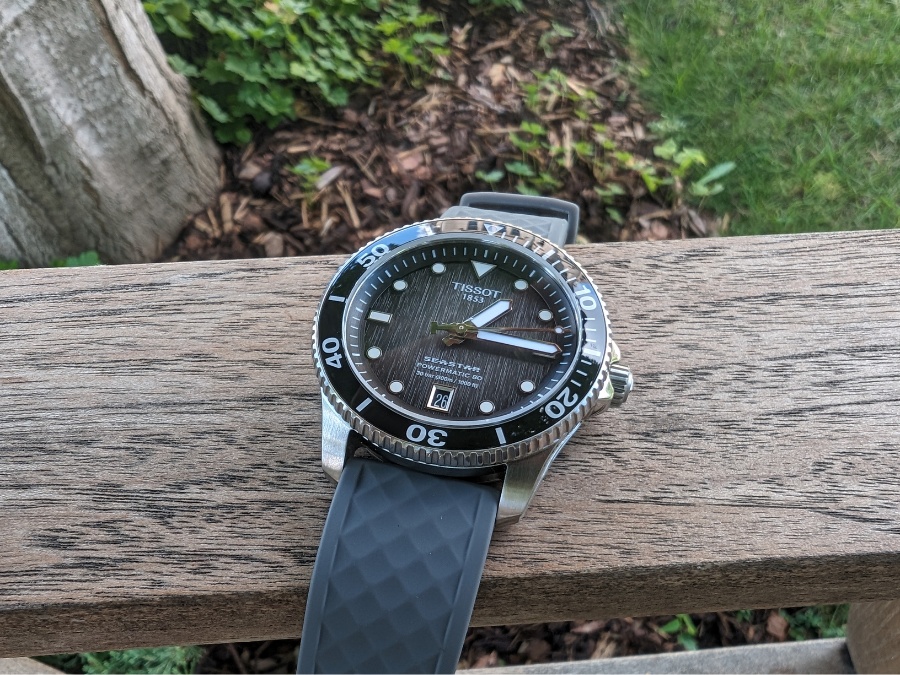
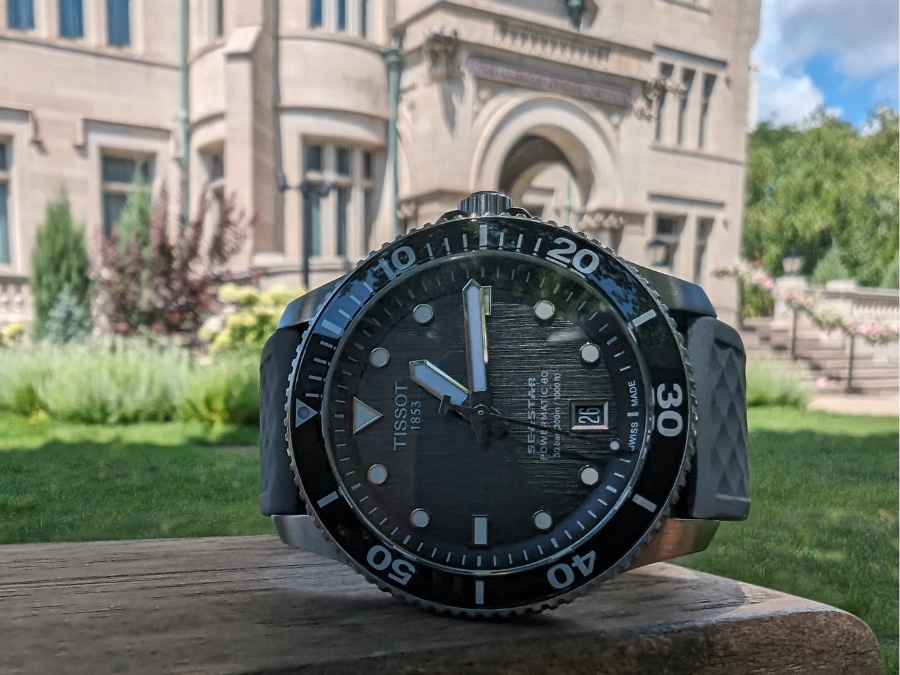
The gray fumé dial is an absolute stunner. It transitions from steel gray in the center to a smoky charcoal at the edge, and the vertical brushing adds some real texture. It catches the light beautifully outdoors—photos don’t do it justice.
The applied indices and sword hands are well-finished, filled with Super-LumiNova, and while I wish the markers were slightly larger, they’re still readable and symmetrical.
Even the date window at 6 o’clock is clean, framed, and color-matched. It doesn’t interrupt the flow of the dial like so many others.
A Great Case, a Not-So-Great Bracelet
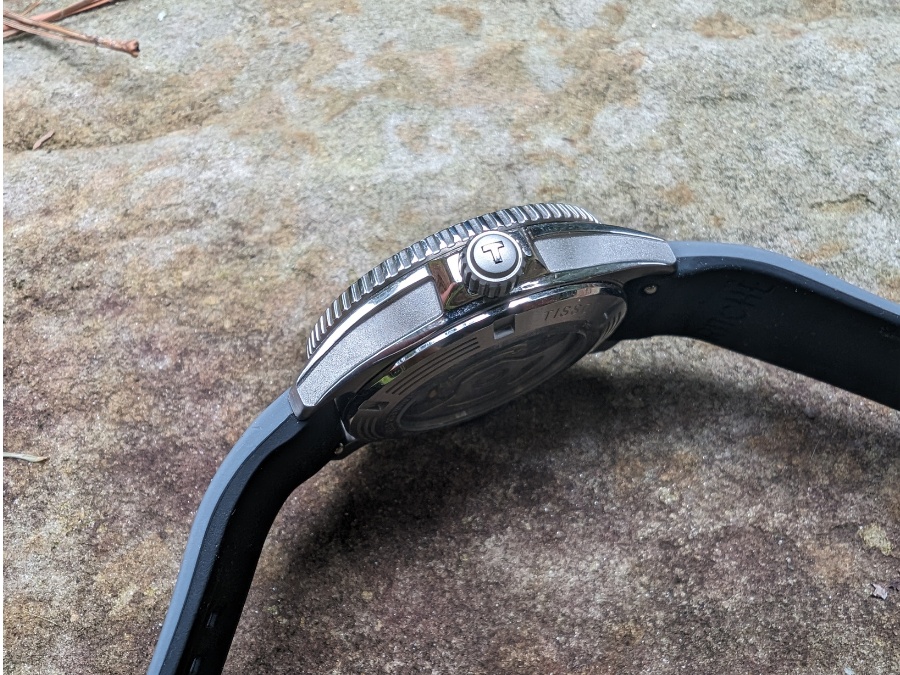
The stainless steel case finishing is excellent for the price point. Brushed tops, polished bevels, and a solid bezel insert (mineral glass, not ceramic, but who cares). The crown guards are just aggressive enough, and the screw-down crown is well-machined with good threading.
And then there’s the bracelet.
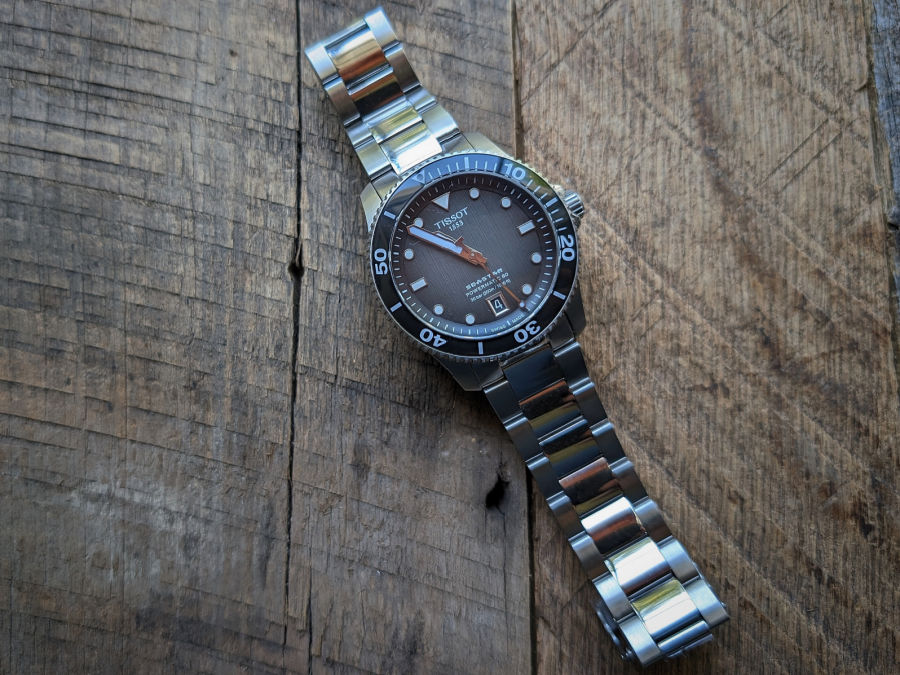
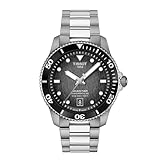
Let’s just get this out of the way: the bracelet is the weakest link on this otherwise stellar watch. Tissot gave us quick-release spring bars, decent finishing, and polished center links. Cool. But where it all falls apart is the clasp, a basic stamped steel unit with zero on-the-fly micro-adjustments. For a watch that costs close to $900 retail, this is a joke.
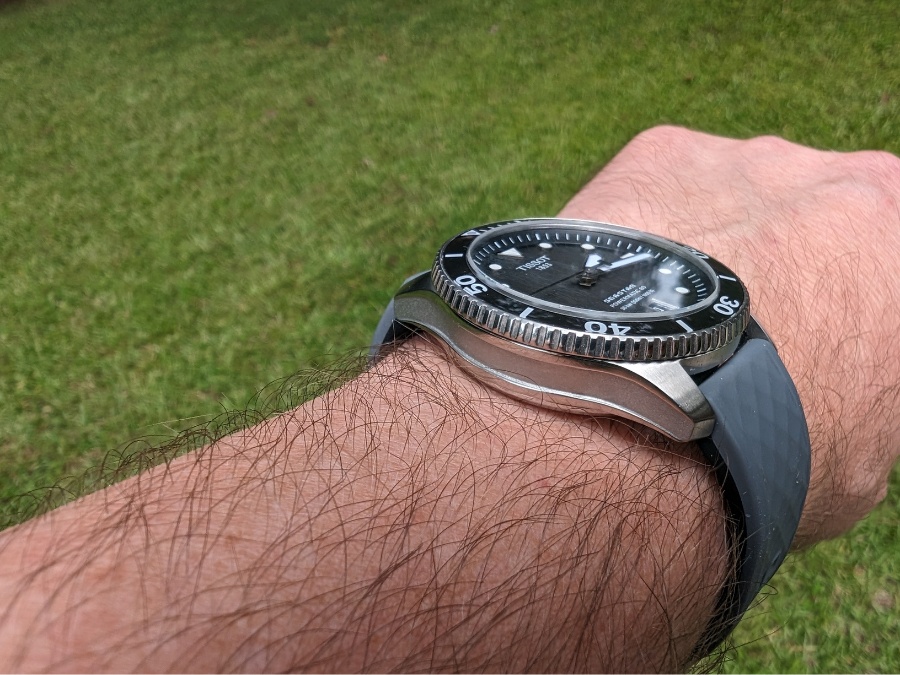
Look, microbrands at half the price are putting out bracelets with milled clasps, push-button adjusters, and better integration. The fact that Tissot—and others—skip this tells you everything: they can get away with it.
We need to start demanding more. I would happily pay another $100 for a bracelet that didn’t feel like an afterthought. For now, shame on Tissot.
Personally? I ripped the bracelet off on day one and slapped it on a gray Ritchie silicone strap, where it’s lived ever since. I didn’t even size the bracelet. That’s how little I cared for it.

Powermatic 80: The Workhorse Movement
Inside is Tissot’s Powermatic 80, a proven Swiss automatic that gives you 80 hours of power reserve, Nivachron anti-magnetic tech, and all the basics—hacking, hand-winding, solid timekeeping.
You can see it through the exhibition caseback, and while the finishing is minimal, it’s still nice to get a peek at the movement. The rotor has a bit of flair with the Tissot branding, and honestly, it’s more than you’d expect at this price.
Between the 300m water resistance, sapphire crystal, and the real mechanical movement, this thing is no slouch it’s a diver in both name and function.

Why I Love This Watch Anyway
Despite the bracelet rant, the Seastar still wins me over. Part of it is irrational—I admit it. Tissot’s Tour de France sponsorship and connection to cycling definitely swayed me. I associate this watch with that trip, that moment, and that association just stuck.
But nostalgia aside, this is a damn good-looking dive watch with real chops.
The proportions are perfect, the dial is sharp, and the case finishing punches above its weight. The lume could be a tad brighter. The indices could be a touch bolder. But taken as a package, this is a legit Swiss diver with heritage, not just another hype piece.
And here’s the kicker: I’m surprised by how much I genuinely love wearing it. It’s become a go-to in my rotation, and I rarely say that about watches that didn’t cost me four figures.
Should You Buy It?
If you’re in the market for a real-deal Swiss dive watch and don’t want to blow your entire paycheck, yes, buy this watch. It’s not perfect, but it’s a complete package with solid specs, good looks, and just enough brand heritage to keep it interesting.
Just do yourself a favor and ditch the bracelet unless you enjoy being annoyed.
- These timepieces are perfect for those in search of a sporty yet assertive accessory, offering water resistance up to 1000 feet (300 meters) and improved visibility in dim conditions thanks to the Super-LumiNova coated hands and hour markers.

Final Thoughts
The Tissot Seastar 1000 Powermatic 80 (40mm) may be a little on the pricier side compared to similar-spec’d microbrand divers, but it’s backed by Tissot’s long-standing history and reliable Swatch Group engineering. It’s clean, robust, stylish, and comfortable once you find a better strap.
This one is a surprise keeper, and that’s saying a lot in a sea of forgettable divers.

Blair Witkowski is an avid watch nut, loves pocket knives and flashlights, and when he is not trying to be a good dad to his nine kids, you will find him running or posting pics on Instagram. Besides writing articles for Tech Writer EDC he is also the founder of Lowcountry Style & Living. In addition to writing, he is focused on improving his client’s websites for his other passion, Search Engine Optimization. His wife Jennifer and he live in coastal South Carolina.