
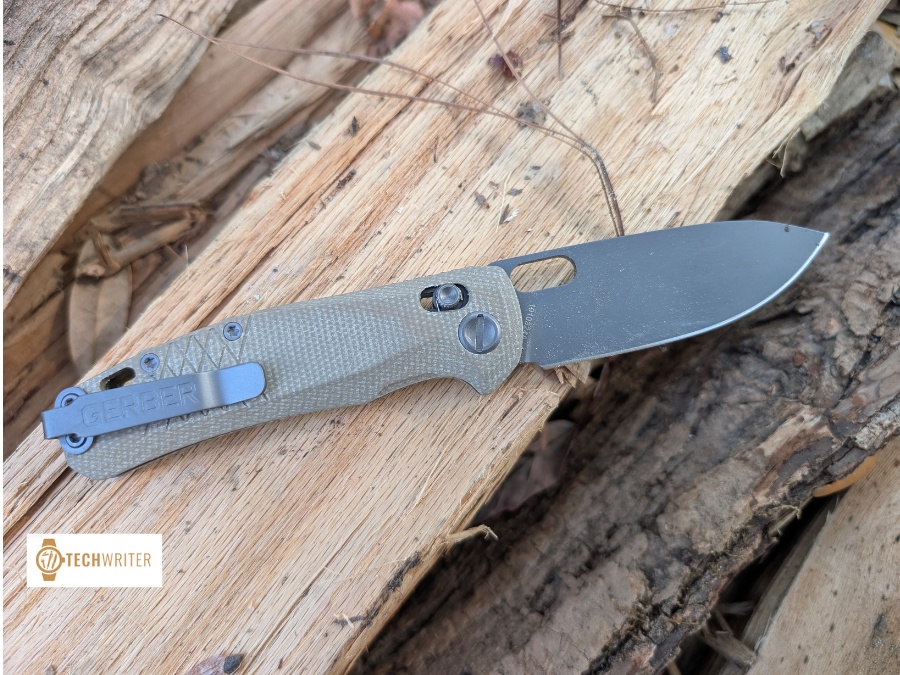
Gerber Scout Review | A Great Design Held Back by the Wrong Steel
An Almost Great Knife That Trips at the Finish Line
Gerber has been on a slow upward climb over the last few years and the Scout is one of the clearest examples of how close they are to making truly competitive knives again. The design is excellent. The feel in hand is fantastic. The lock and mechanics rival knives that cost twice the price. But all of that momentum hits a wall when you look at the blade steel. At around sixty dollars the Scout should have been a home run. Instead it lands squarely in the almost category good enough to use but not good enough to recommend without a major asterisk.
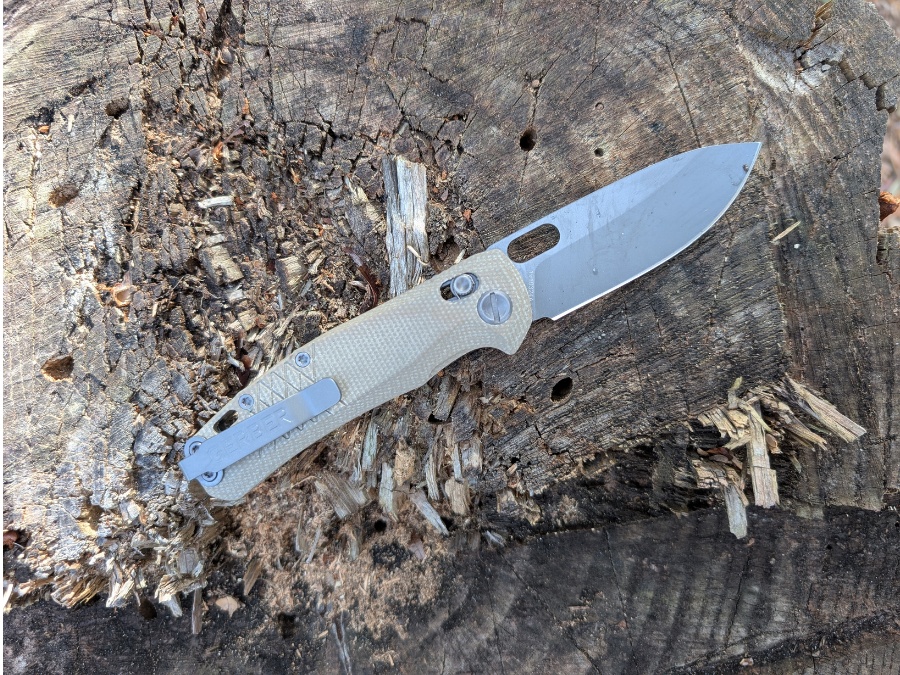
Specs at a Glance
Blade Length 3.2″
Steel 440A stainless
Handle Micarta over milled steel liners
Lock Pivot Lock crossbar style
Weight around four ounces
Street Price around $65.00
Best For Users who value design comfort and construction more than edge retention
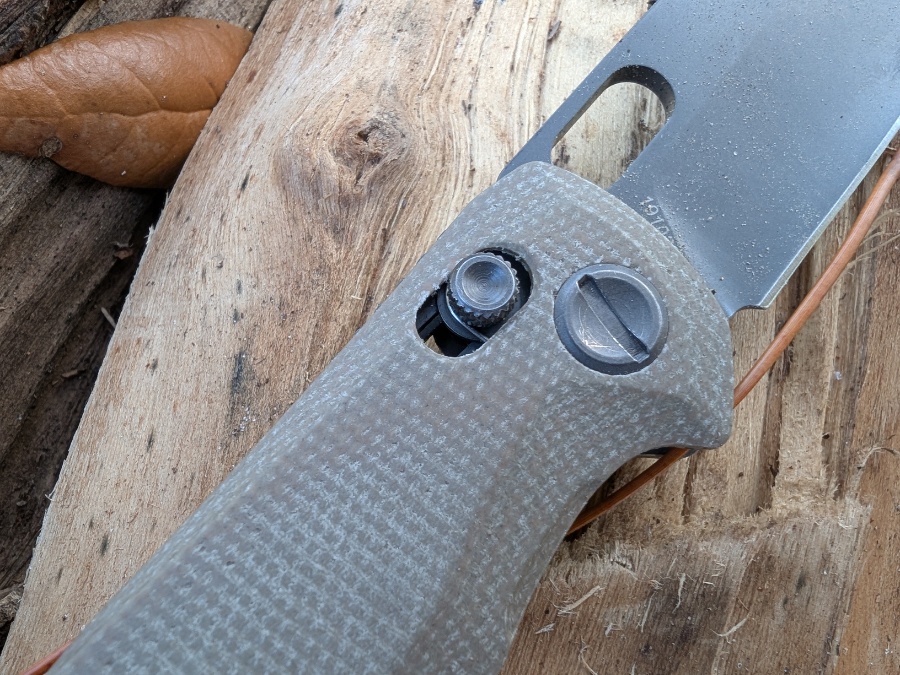
A Lock and Pivot System Gerber Should Be Proud Of
The first standout feature is the pivot lock. It feels robust, secure, and genuinely pleasant to use. The traction cuts on the lock bars look like miniature all terrain tires and provide excellent grip without digging into your fingers. The lock engages positively without any harsh edges and avoids the uncomfortable feel found on many budget crossbar systems.
Gerber also made the smart choice to use bronze washers instead of ball bearings. For a work knife that decision matters. The action stays smooth even when dirty the pivot is easy to maintain and the knife avoids the gritty bearing crunch that cheaper models develop. Despite running washers the Scout still flicks open confidently and closes with a smooth controlled swing. This is the kind of mechanical execution Gerber should keep leaning into.
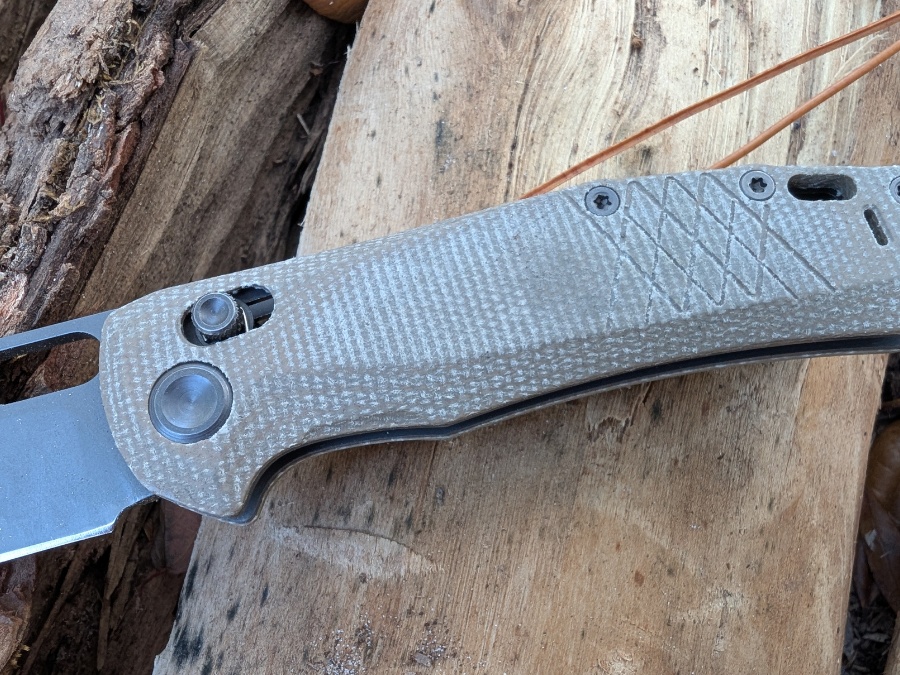
Ergonomics and Micarta That Feel Better Than the Price
The handle on the Scout is easily its best feature. Gerber used real micarta that feels warm, dense, and noticeably better than the plasticky fake micarta used on many budget knives. It has a reassuring grip without feeling rough or abrasive.
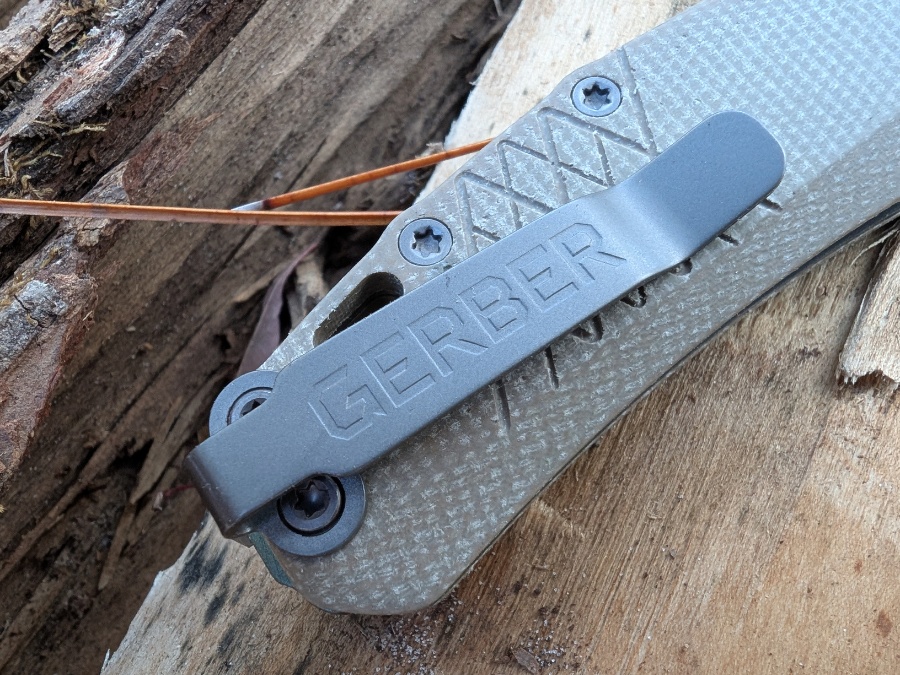
The shape is simple and extremely effective. No forced finger grooves, no awkward cuts, no strange indexing points. Just a neutral profile that works in multiple grips and stays comfortable over long cutting sessions. The steel liners add strength without making the knife overly heavy, and the overall balance feels intentional and refined. Even the pocket clip works well with recessed screws and a design that locks into an anti-rock notch for stability. For this price range, the ergonomics are surprisingly dialed in.
Blade Geometry That Wants to Shine
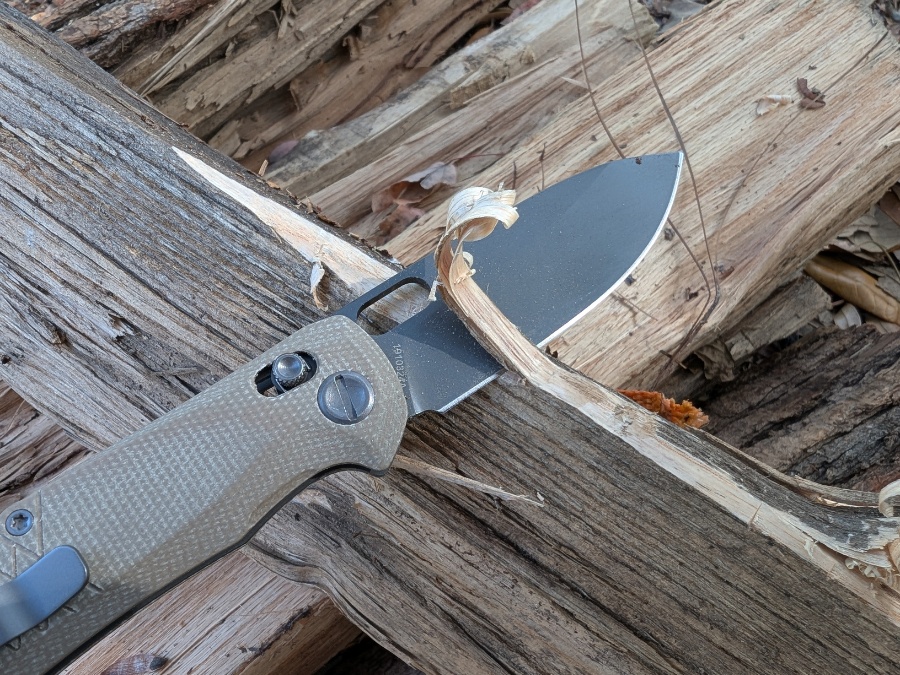
This is where the frustration begins because the blade geometry is genuinely excellent. The drop point profile is clean and practical, the high flat grind is well-executed, and the edge geometry strikes a great balance between slicing performance and tip strength. The spine throws sparks, the tip feels reinforced, and the entire package feels like a knife designed for real-world use.
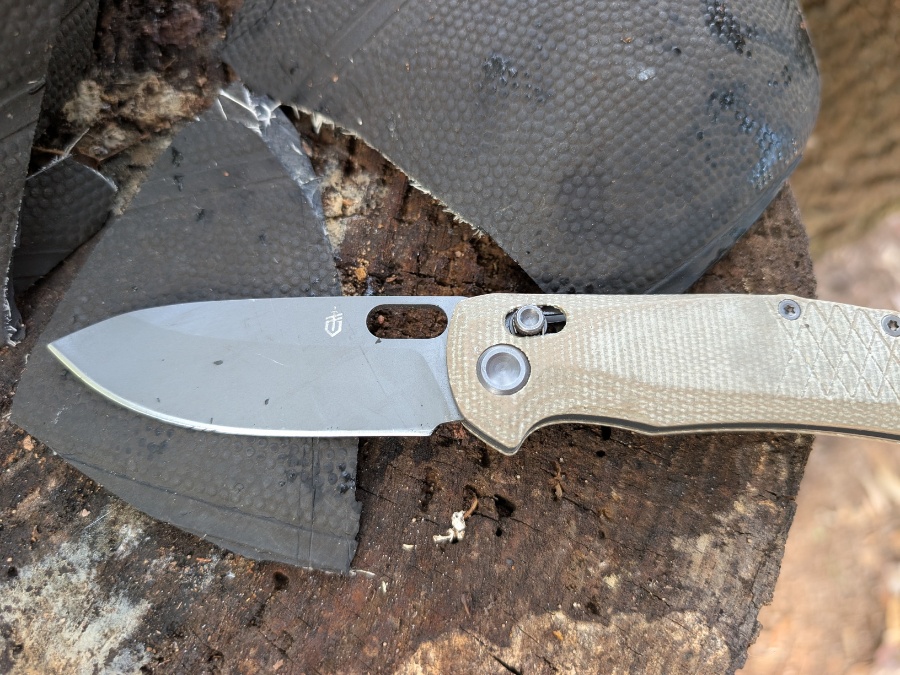
In actual cutting, the Scout performs beautifully for a while. Cardboard rope, cordage, camp prep, and small wood tasks all feel controlled and efficient. For the first twenty or thirty minutes, you start thinking Gerber has nailed it.
And then the steel reminds you what it is.
440A The Decision That Holds This Knife Back
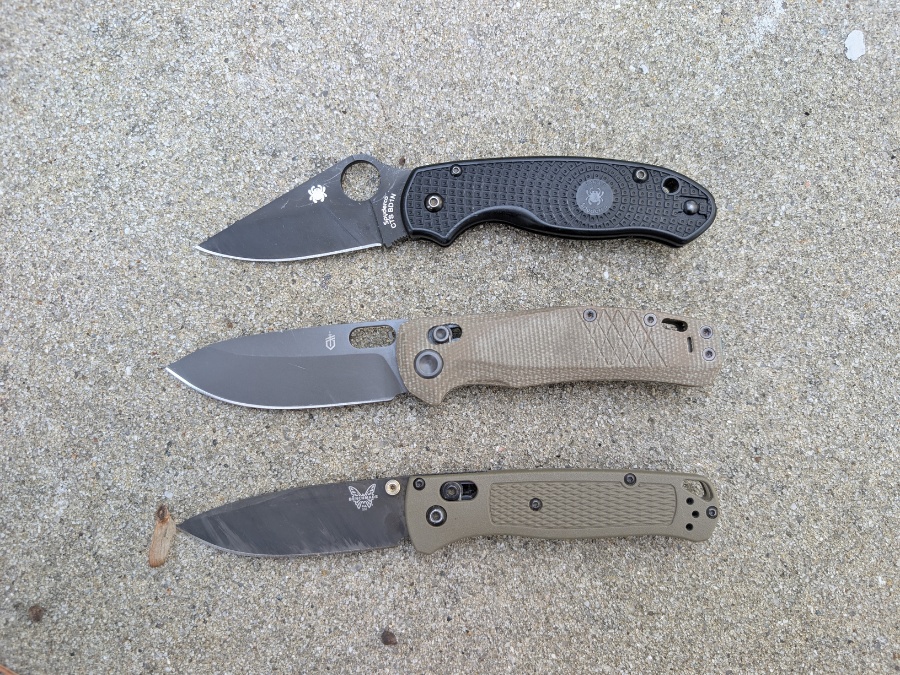
At sixty dollars, 440A is simply the wrong choice. It does not ruin the knife, but it absolutely limits its potential. The Scout performs like a knife stuck in a different decade one where 440A was an acceptable mid-grade steel instead of a bare minimum baseline.
During rope testing and everyday carry, the edge held up nicely for the first thirty cuts. After that, the edge dropped off quickly. By fifty rope cuts, the blade felt almost dull along the belly. The positive news is that it did not chip or roll, and it sharpened back up quickly with a ceramic rod. But the cycle repeats fast. You cut it dull, you sharpen and start over.
In today’s market, knives at this price routinely offer steels such as D2, fourteen C, twenty-eight N, nine CR, eighteen MOV, and other mid-grade options. The Scout simply cannot keep up with that steel’s performance.
Real World Carry and Daily Use
Even with the outdated steel, the Scout is still pleasant to carry. It feels solid, rides well in the pocket, and offers excellent control during work. The micarta never feels cheap, the lock inspires confidence, and the knife feels built for hard use rather than display.
If you regularly sharpen and value build quality, comfort, and lock strength, the Scout will still serve you well. But if you expect a knife to hold its edge through a full week of heavy tasks, such as cardboard rope yard work or job site duty, the Scout will fall behind quickly. It can work hard, but it needs frequent maintenance to keep up.
What Gerber Should Have Done
This knife does not need a redesign. It just needs a steel upgrade. Keep the handle. Keep the micarta. Keep the washers. Keep everything exactly the same and swap in D2 or fourteen C twenty eight N. If Gerber released a Scout Pro tomorrow with updated steel at the same price it would instantly become one of the best hard use budget knives available.
The design is already there. The steel is not.
Who Should and Should Not Buy the Gerber Scout
The Scout works best for users who prioritize feeling, comfort, and robust construction more than edge retention. If you do frequent touch-ups or simply want an overbuilt design with excellent hand feel, the Scout remains a satisfying tool.
But if you care about cutting longevity or already own knives with D2 or fourteen C twenty-eight N, you will immediately notice how quickly the Scout dulls under real work.
A Knife That Deserved Better Steel
The Gerber Scout is a knife I genuinely wanted to love. The design is smart, the micarta is excellent, and the lock and action feel far better than most knives in this price range. But the steel holds it back and becomes the deciding factor between recommending it and passing on it.
If Gerber updates the blade steel, this becomes a must-buy. As it stands now, it is a knife for users who value everything around the blade more than the blade itself.

Blair Witkowski is an avid watch nut, loves pocket knives and flashlights, and when he is not trying to be a good dad to his nine kids, you will find him running or posting pics on Instagram. Besides writing articles for Tech Writer EDC he is also the founder of Lowcountry Style & Living. In addition to writing, he is focused on improving his client’s websites for his other passion, Search Engine Optimization. His wife Jennifer and he live in coastal South Carolina.