

Lion Steel M7 Fixed Blade Review
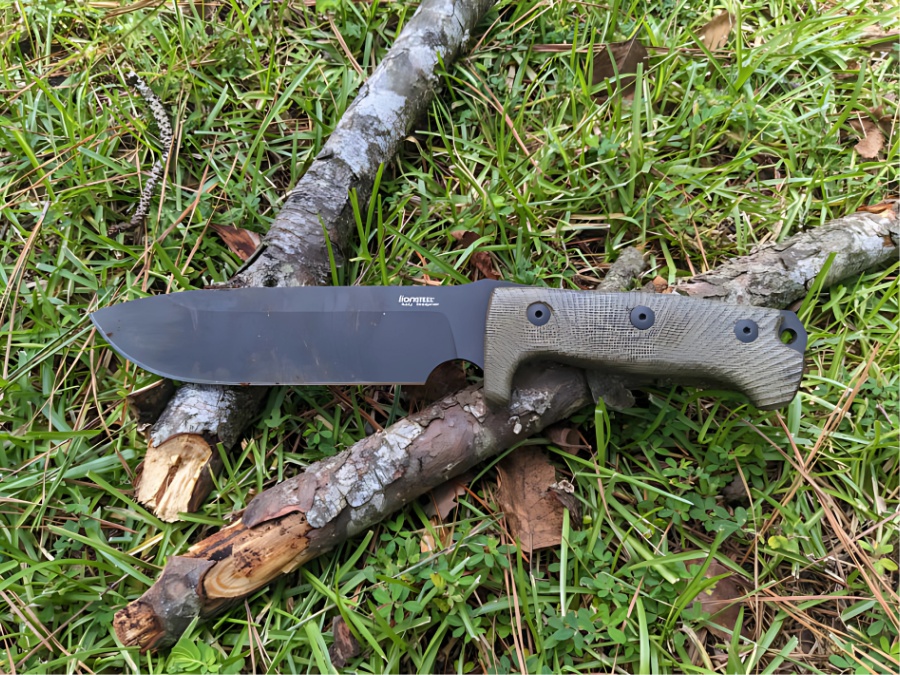
Some fixed blades are weekend toys. The LionSteel M7 is a working tool. If your trips involve clearing trail, building camp, and processing real wood, this is the kind of knife you want riding on your hip. It hits that rare balance of brute strength and fine control, and it does it with fit and finish you usually pay a lot more for.
I’ve used the M7 on a rugged backcountry car camping trip, several treks through the lowlands of South Carolina, and a handful of harsher camping trips where the weather and the wood weren’t exactly friendly. It’s also one of the knives I put through my survival knife roundup. Each time, the M7 handled everything I threw at it without a hiccup.

At a Glance
- Blade length: 7 inches with 6 inches of cutting edge
- Overall length: about 12.5 inches
- Thickness: 0.22 inches
- Grind: high saber with a robust point
- Steel: Bohler Sleipner at 60–61 HRC
- Handle: solid Micarta canoe construction with recessed hardware
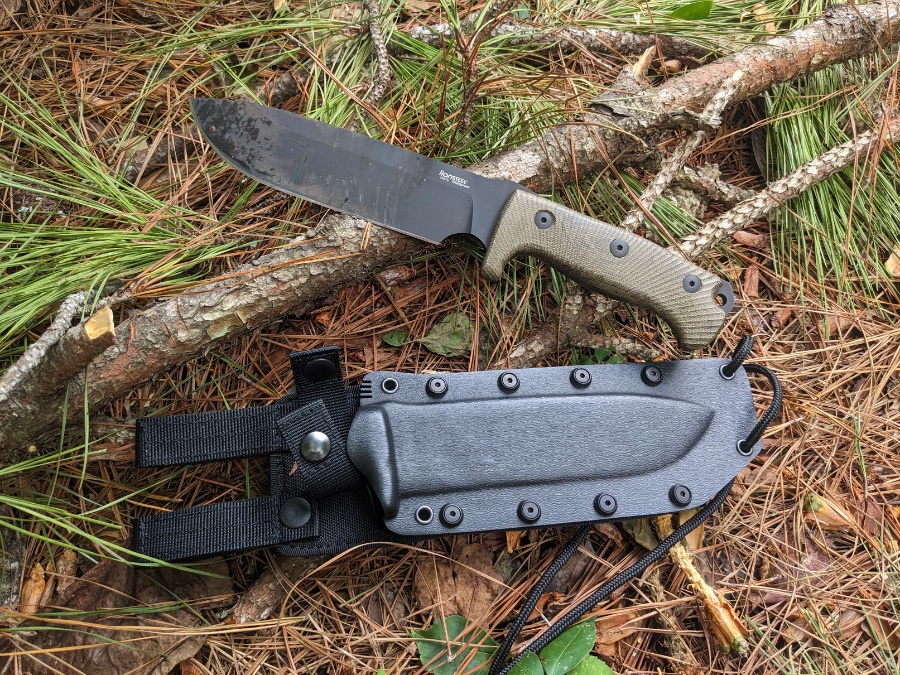
- Sheath: Kydex shell with Cordura backer, MOLLE compatible and ambidextrous
- Price: typically 210 to 250 depending on finish and scales
What Stands Out First
The blade shape is purpose built. Think long enough to chop, thick enough to pry a little, and ground high enough that it still slices. The reinforced tip gives you confidence for splitting knots and scraping without worrying about a snap. Nothing about the geometry feels gimmicky or fragile.
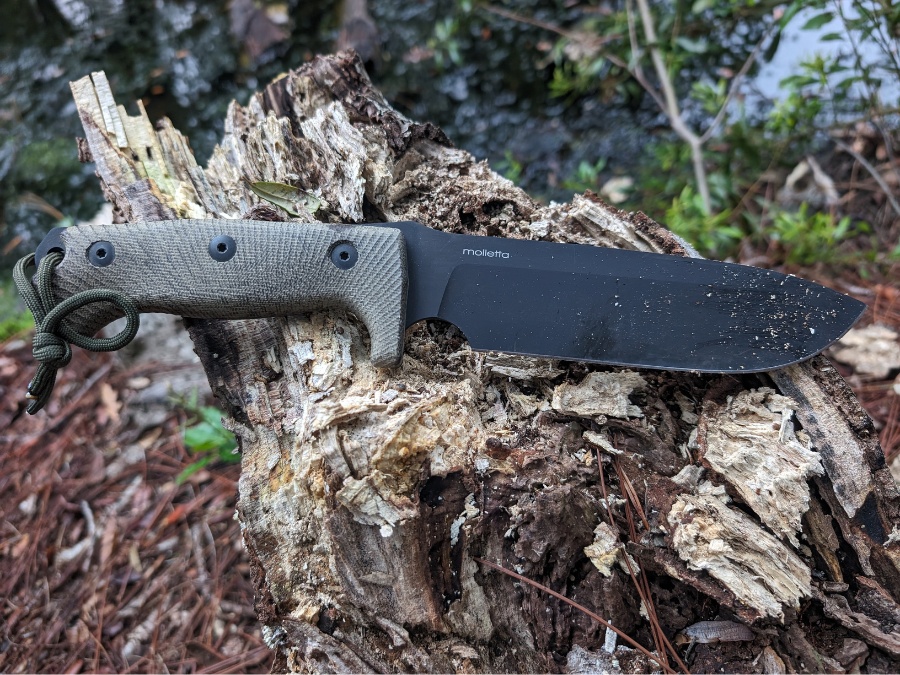
The handle is the second star. Instead of two flat scales slapped on a tang, LionSteel uses a one-piece Micarta shell that envelopes the tang with three recessed screws. No sharp edges. No hot spots. Just a contoured, palm-filling grip that works in gloves or wet hands.
Steel Deep Dive: Sleipner In The Field
Sleipner lives in the tool steel family near D2, but with better toughness and chip resistance. In practice that means:
- Better edge stability than basic high carbons when you hit a knot
- Much slower to rust than 1095 or O1, especially in humid environments
- Not truly stainless, but very corrosion resistant if you wipe it down at day’s end
- Honest edge retention that favors real work over spec-sheet bragging
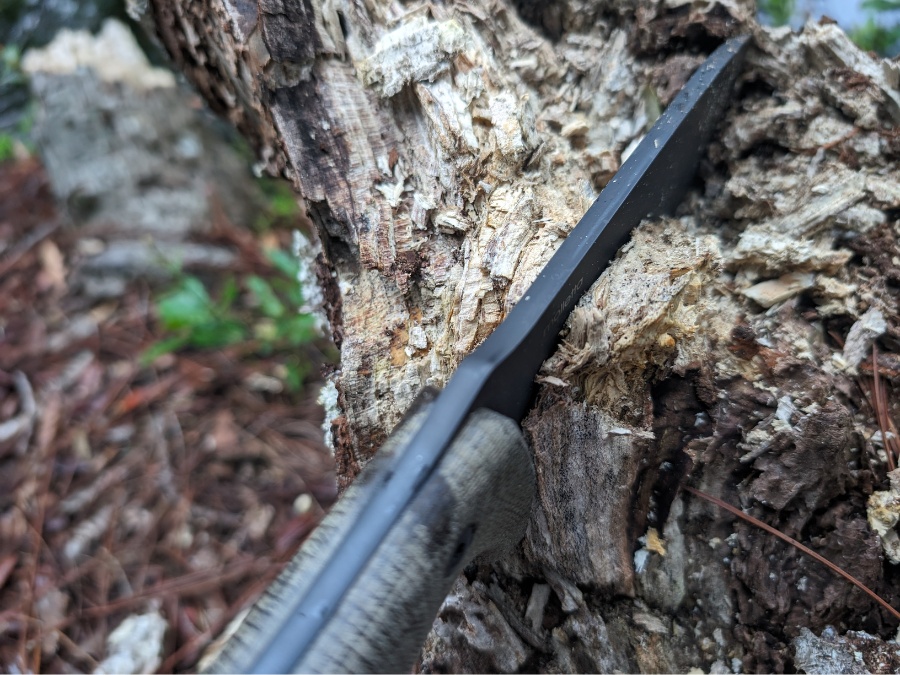
At 60–61 HRC my sample held a clean, aggressive edge through chopping, batoning, and fine carving. Afterward, there were no glints, no rolled spots, and it still shaved. You can absolutely touch it up with a ceramic rod or strop in minutes. If you are used to 3V or Vanadis Super for max retention, Sleipner will not run as long, but it also sharpens faster and costs a lot less.
Geometry and Cutting Behavior
High saber grind with a thin, well finished edge is the magic here. You get three distinct personalities in one blade:
- Chopper: Forward blade mass and that 7 inch length deliver decisive bites in wrist and elbow powered cuts.
- Splitter: The 0.22 inch spine and strong tip track straight through dry splits and knotty batoning.
- Carver: Choke into the huge finger choil and it behaves like a mid sized bushcraft knife. Feather sticks, notches, pot hangers, you name it.
The spine is crisp enough to shower a ferro rod. You will not be hunting for a separate striker.

Ergonomics: Three Legit Grips
LionSteel’s handle work is excellent and the M7 feels finished.
- Choked up in the choil: Full control for detail work. The guard is generous, and the choil is large enough to be safe even with cold fingers.
- Neutral middle grip: Everyday camp tasks, food prep, and general slicing feel secure. The subtle palm swell keeps the blade indexed without fatiguing your hand.
- Backed up for chopping: The subtle bird’s beak and lanyard hole let you lock in for power strokes without throwing the knife.
Everything is rounded and dehorned where it should be. If you have larger hands, you will appreciate that the handle fills the palm without getting blocky.
Sheath: Versatile Mounting, Mixed Execution
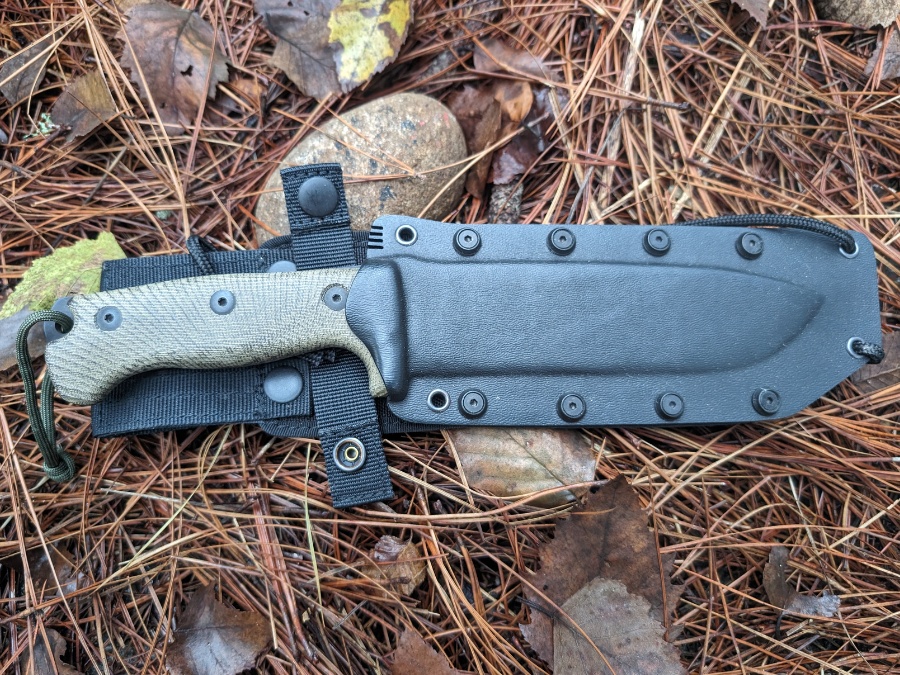
The pancake Kydex shell with Cordura backer gets the job done and offers a lot of mounting options.
What works:
- Ambidextrous mounting with a rotating belt loop
- MOLLE tabs top and bottom for packs or plate carriers
- Secondary snap that locks it down for running, scrambling, and heavy brush
What could be better:
- Some rattle if you run it without the snap engaged
- Re-sheathing can bind if you don’t hit the angle just right
- Uses Allen hardware instead of more field common Phillips
Retention and draw are excellent once you get the rhythm. If you want zero rattle and one handed blind re-sheathing, an aftermarket Kydex is an easy upgrade. Most users will be fine out of the box.
Field Impressions
Chopping
It is not a machete, but it outperforms most knives in its class. Limbing small branches, clearing vines, and cutting stakes is fast and predictable. The edge tracks without skidding.
Batoning
The spine and grind split clean. Even through knots there was no chipping or rolling. It is long enough to baton across typical wrist sized camp wood without feeling under bladed.
Carving
This was the pleasant surprise. The choil and geometry make feather sticks and notches easy even after heavy chopping. It behaves like a smaller blade when you need it to.
Fire Starting
The spine throws great sparks. The bevel and edge profile make feathering tinder almost effortless.
Corrosion
On humid South Carolina treks, the uncoated version shook off sweat and wet conditions without a speck. A quick wipe and a whisper of oil at camp is all it needs.
Weight and Balance
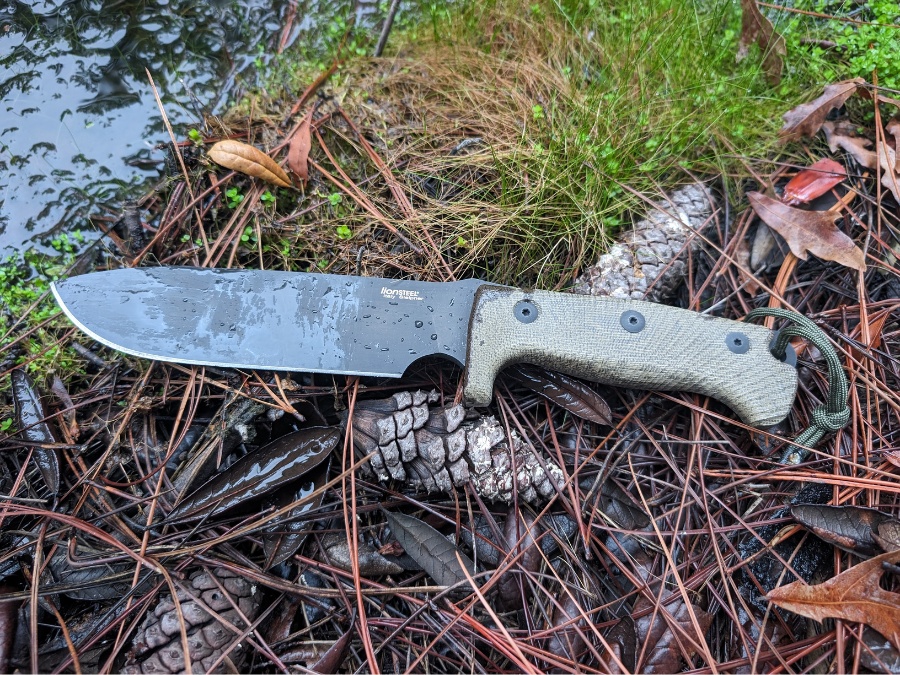
It is a big knife and it feels like one, but the balance is set up so the blade does the work without turning your wrist into mush. On belt, the modular backer lets you run it vertical, canted, or pack mounted to keep the bulk out of the way.
Maintenance and Sharpening
Sleipner likes a simple routine.
- Daily: wipe down, strop 10 to 20 passes to keep the bite
- Touch up: ceramic rod or fine diamond when you feel it slip
- Full sharpen: 20 to 25 degrees per side on stones or a guided system
If you store it long term, a thin coat of oil is smart, especially if you live near salt water. In the field it is much easier to bring back than high vanadium super steels.
Who The M7 Is For
- Backpackers and overlanders who want one tool to chop, split, and carve
- Hunters who process camp wood and build blinds before quartering game
- Bushcrafters who prefer a single primary blade and a small backup folder
- Anyone who wants big knife ability without spending custom money
Who should look elsewhere
- Ultralight hikers
- Folks who primarily clear green, soft vegetation where a machete shines
- People who must have a perfectly silent, friction lock sheath out of the box
Competitors To Consider
ESEE 6
Proven 1095 workhorse with great warranty, but heavier maintenance in wet climates and lower edge retention.
Cold Steel SRK in 3V
Tough as nails with incredible edge stability, pricier and not as refined in the handle.
Fallkniven A1
Convex VG10 or laminated options, higher price, but stellar slicer and durability.
Bark River Bravo 1.5 or 2
Premium convex edge, hand finished, but at a premium cost.
The M7 slots in as the value choice that still feels premium. It’s less money than many of these while checking most of the same boxes.
Value
At roughly 210 to 250 dollars depending on finish, the M7 is punching in a class above its tag. You get quality steel, real grind work, premium ergonomics, and a sheath that is versatile even if not perfect. If you are building a kit with one primary blade, this is an easy spend.
Verdict: Should You Buy It
Yes. If you actually use your knives, the LionSteel M7 is exactly the kind of blade that earns a permanent place in your loadout. It chops, batons, carves, and sparks without complaint, shrugs off moisture better than plain high carbon steels, sharpens quickly, and feels great in hand. The sheath could be tighter, but it is serviceable and modular.
For real field work in a single-knife carry, the M7 is a buy.

Blair Witkowski is an avid watch nut, loves pocket knives and flashlights, and when he is not trying to be a good dad to his nine kids, you will find him running or posting pics on Instagram. Besides writing articles for Tech Writer EDC he is also the founder of Lowcountry Style & Living. In addition to writing, he is focused on improving his client’s websites for his other passion, Search Engine Optimization. His wife Jennifer and he live in coastal South Carolina.