
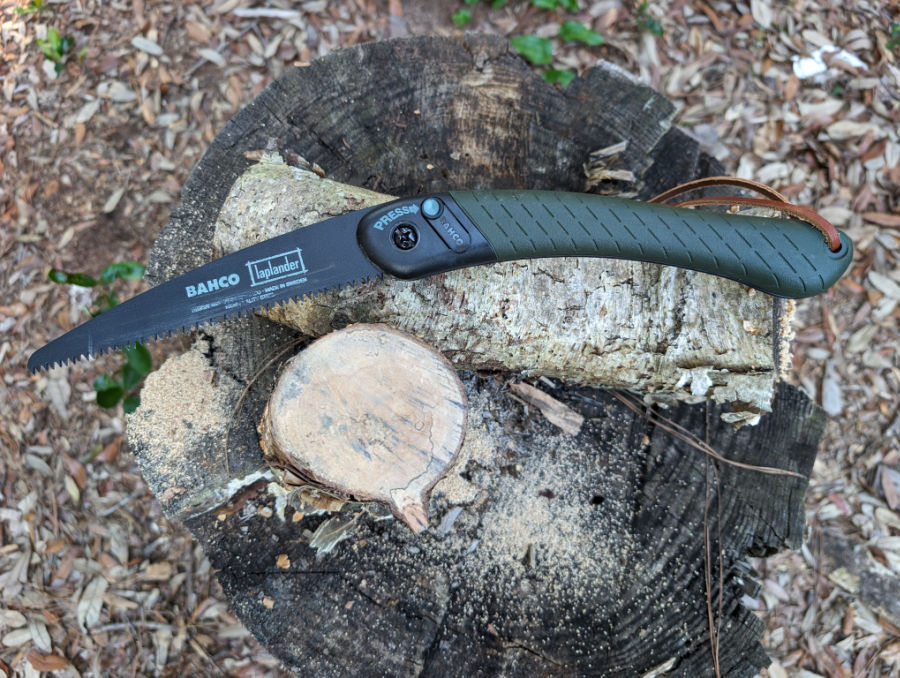
Bahco Laplander Folding Saw Review | The Classic That Still Earns Its Keep
There’s a reason the Bahco Laplander keeps showing up in backpacks, bug-out bags, and glove boxes. It’s not because it’s the newest or fastest saw on the market. It’s because it just works. I bought mine years ago, mostly because I was tired of cheap folding saws that jammed, bent, or rattled themselves loose halfway through a cut. What I got instead was a little green workhorse that refuses to quit.
It’s not perfect, and it’s certainly no Silky Gomboy — the undisputed king of folding saws — but at half the price, the Laplander has a lot going for it.
Build Quality and First Impressions
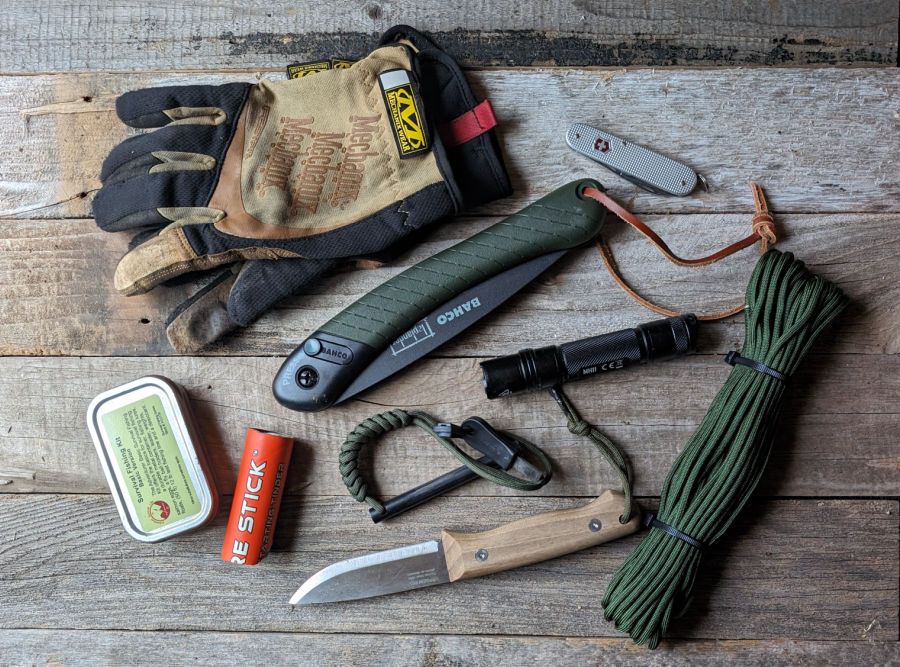
The Laplander looks like something a forest ranger might pull from the side pocket of a pack. No bright colors, no aggressive curves, no marketing gimmicks. It’s green, straightforward, and built to get dirty.
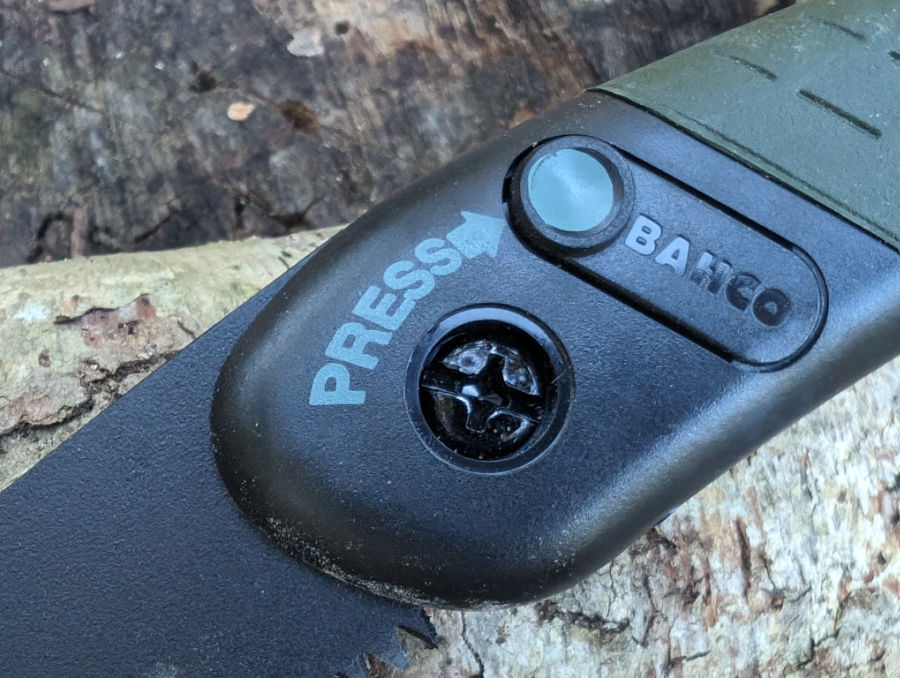
When I first unfolded it, I noticed how solid the lock felt. The button clicks in with confidence, and there’s zero wiggle in the blade. You can tell Bahco has been making saws for professionals, not hobbyists. The blade locks both open and closed, and the entire mechanism feels precise and deliberate — a detail a lot of cheaper folding saws miss.
At about fifteen inches open and just over six ounces, it’s small enough to toss into a hiking bag without thinking about weight. But it’s not dainty. The rubber-coated handle has just enough flex to stay comfortable, and the shape fills your palm instead of digging into it. I’ve used mine bare-handed in the summer and gloved in the winter, and it never feels slippery or cramped.
The Blade: Simple, Sharp, and Still Effective
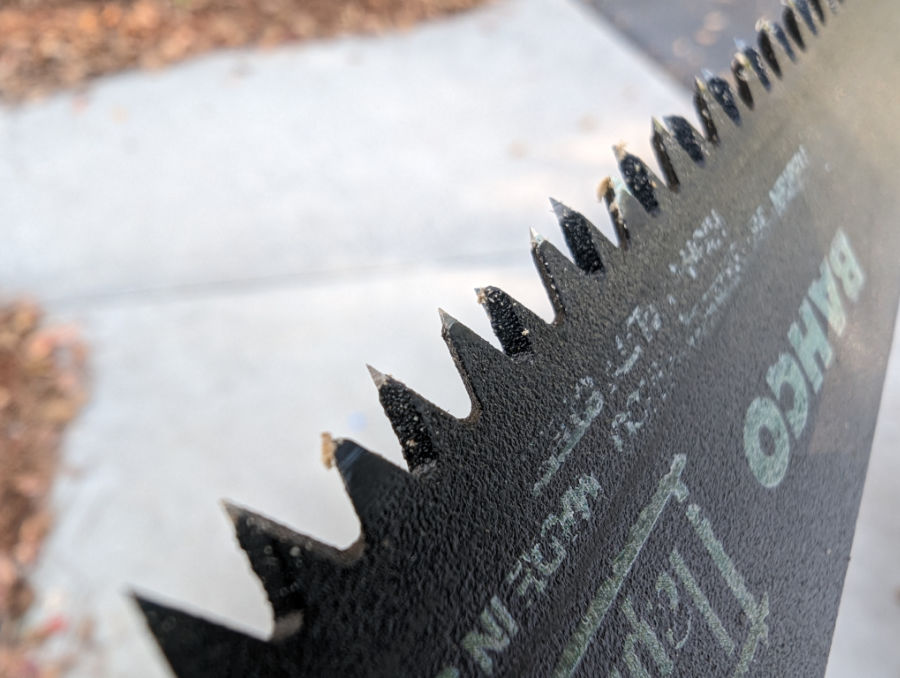
The seven-inch carbon steel blade is coated in a low-friction finish that helps it glide through wood without sticking. The teeth are designed to cut on both the push and pull strokes, which makes it surprisingly efficient for its size.
I’ve used it to cut everything from green pine branches to seasoned oak, and it performs better than you’d expect for the money. On smaller pieces — the kind of wood you’d use for campfires or shelter poles — it just eats. You get clean, predictable strokes with almost no binding.
On thicker logs, you’ll eventually hit the limit of that straight blade. This is where the Silky Gomboy 240 still reigns supreme. The curved Silky design bites deeper into green wood and moves through larger branches faster. But here’s the thing: the Laplander costs about half as much, weighs less, and doesn’t feel fragile. It’s not fancy, but it’s reliable.
I’ve owned multiple Laplanders over the years, and I’ve never bent a blade or stripped a screw. For something that lives in my truck, that’s saying a lot.
Around the House and in the Field
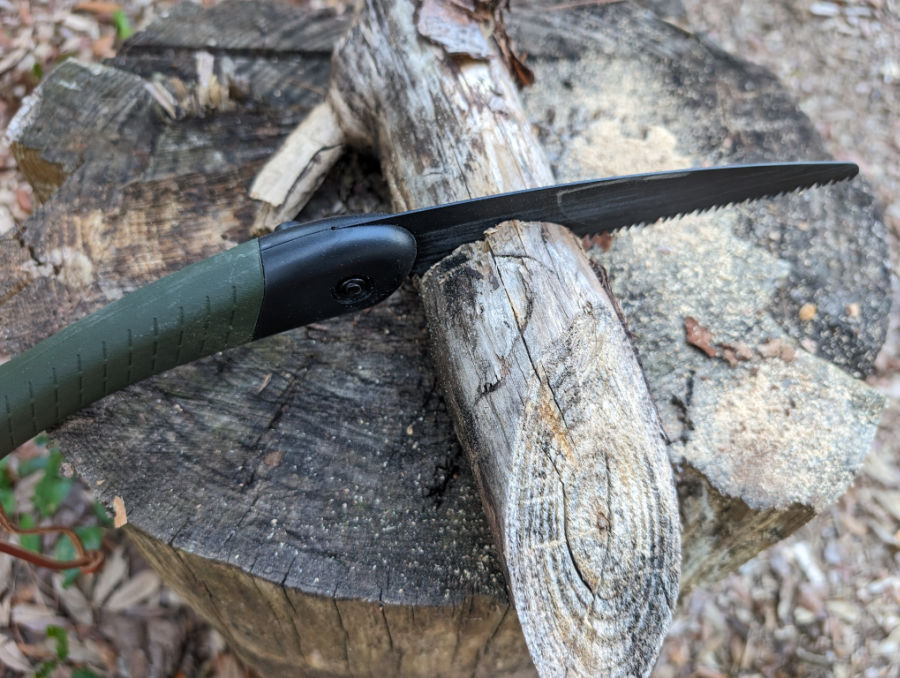
A lot of my gear gets used both in the woods and around the house, and the Laplander fits that dual role perfectly. It’s my go-to saw for trimming overgrown shrubs, cutting down dead limbs, and processing firewood.
Out in the field, it shines in the tasks that really matter — cutting kindling, shaping stakes, or building quick shelters. It’s quiet, controllable, and doesn’t fatigue your arm. For waist-level sawing, the straight blade is perfect. Above the head, not so much, but that’s where curved saws win anyway.
The handle stays comfortable during long sessions, and it never feels like it’s going to slip. The lock stays tight even after years of snapping open and closed. I like simple tools that don’t make me second-guess them, and this one earns that confidence.
Durability and Maintenance
I’ve had one of these for so long that the Bahco logo has completely worn off the blade. It still cuts like the day I bought it. The coating eventually fades, but the teeth stay sharp for years. I’ve never broken a blade, never had the locking mechanism fail, and never felt like it was underbuilt.
Maintenance is about as easy as it gets. Wipe it off after you’re done, oil the pivot once in a while, and keep it dry. There’s a small screw at the hinge if you want to adjust tension or swap blades, but replacement blades cost almost as much as the saw itself. Honestly, by the time you ever dull one out, you’ll probably just buy another Laplander and call it good.
Compared to the Silky Gomboy and Others
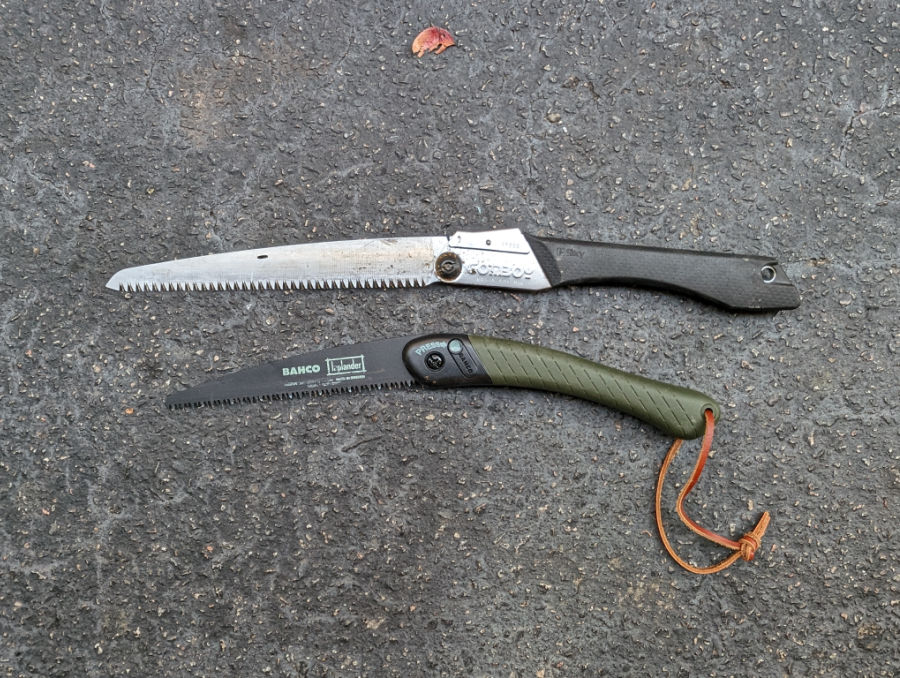
If you’re wondering how it stacks up against the Japanese heavy hitters like the Silky Gomboy or Silky PocketBoy, here’s the real comparison. The Gomboy cuts faster through live wood. Its curved blade bites hard, and you can chew through four-inch branches in seconds. It’s also smoother and more refined, but it costs roughly twice as much and feels more delicate.
The Laplander trades that speed for toughness and price. It’s slower but steadier, and you can afford to beat on it. You can throw it in a truck toolbox, forget about it for a year, and it’ll still be ready to work when you dig it out.
Compared to cheaper saws like the Corona RazorTooth, the Bahco feels more controlled and less aggressive. The Corona rips through material fast but can chatter and bind. The Bahco stays smooth and quiet, which matters if you care about precision or just want a calmer cutting rhythm.
What It’s Best For
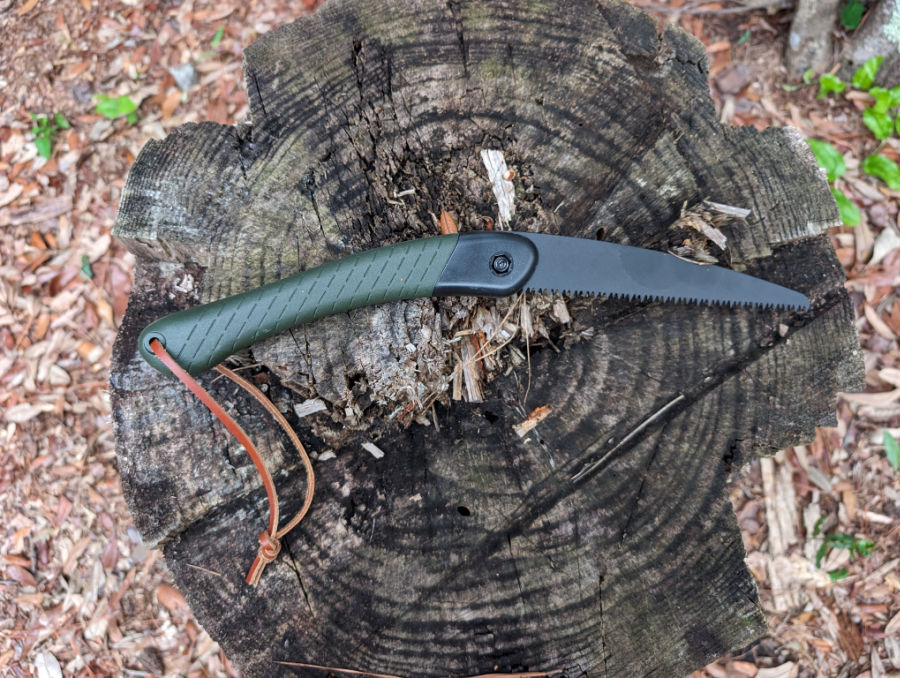
The Laplander is perfect for campers, bushcrafters, and anyone who needs a capable folding saw that doesn’t break the bank. It’s great for backpackers who count ounces but still want something that can process real wood. It’s also ideal for keeping in your vehicle for storm cleanup or trail work.
It’s not the saw for professional arborists or anyone who cuts every day, but for the average outdoorsman, it’s exactly right.
The Drawbacks
Every tool has limits. The Laplander’s straight blade isn’t ideal for overhead cutting or large-diameter logs. You can muscle through them, but it’s not quick. And while you can replace the blade, the cost doesn’t make sense when the entire saw is so affordable.
Also, because it’s so popular, it sometimes disappears from stores during peak camping season. When you find one in stock, grab it.
Final Thoughts
After years of use, I still consider the Bahco Laplander a must-own tool. It’s not flashy, and it doesn’t need to be. It’s a dependable folding saw that’s lightweight, tough, and priced right.
I’ve used mine for everything from cutting firewood in the woods to trimming branches in the backyard. It’s not a Silky Gomboy, but it’s solid enough — and for about half the price, it delivers more than enough performance for most people.
There’s something refreshing about a tool that doesn’t try to be anything more than what it is. The Bahco Laplander just cuts wood, quietly and efficiently, year after year. If you want one saw that can live in your pack or your truck and handle almost any job you throw at it, this is the one.
Pros
• Compact and lightweight
• Comfortable handle that stays grippy when wet
• Cuts on both push and pull strokes
• Dependable lock with no play
• Proven durability in the field
• Great balance of value and performance
Cons
• Slower than curved saws on green wood
• Replacement blades cost almost as much as a new saw
• Not ideal for overhead pruning or thick logs
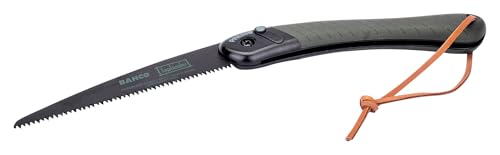
- READY FOR ANY CUT: Built for hunters, campers, and survivalists, this folding saw tackles green/dry wood, bone, and plastic. Its rust-protected blade and ergonomic handle make it a must-have for bushcraft, trail maintenance, and campsite prep.


Blair Witkowski is an avid watch nut, loves pocket knives and flashlights, and when he is not trying to be a good dad to his nine kids, you will find him running or posting pics on Instagram. Besides writing articles for Tech Writer EDC he is also the founder of Lowcountry Style & Living. In addition to writing, he is focused on improving his client’s websites for his other passion, Search Engine Optimization. His wife Jennifer and he live in coastal South Carolina.