
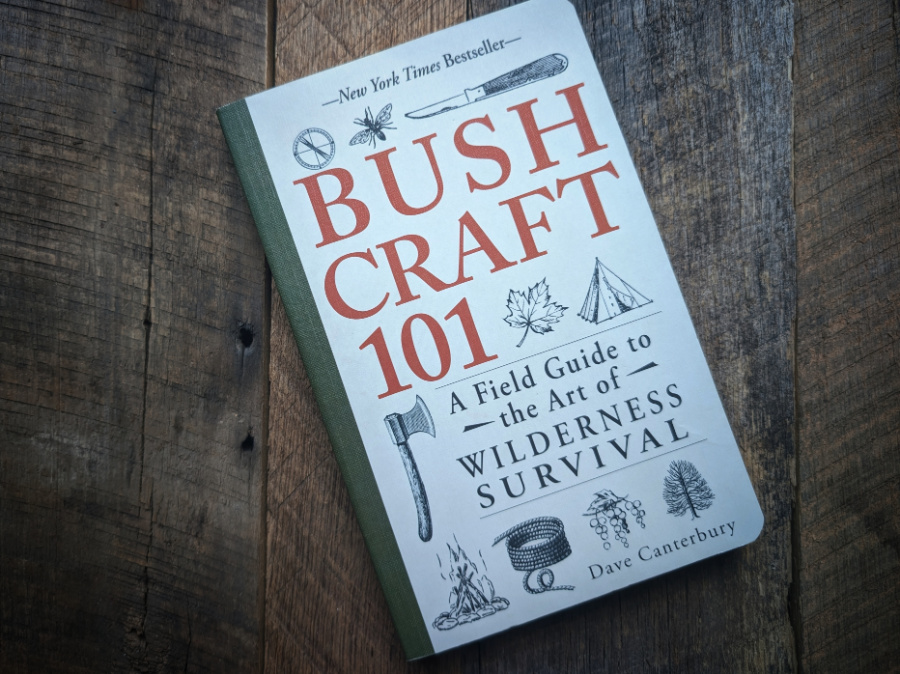
Bushcraft 101 by Dave Canterbury: Book Review
When it comes to survival and bushcraft books, few titles spark as much conversation as Bushcraft 101 by Dave Canterbury. Some people swear by it as a foundational text; others dismiss it as too commercial or uneven. After reading and field-testing it, I wanted to cut through the noise and give you a straight, experience-driven review of whether this book deserves a place in your pack. Spoiler: despite its flaws, it’s worth the read.
About Dave Canterbury
Before diving into the book, it’s important to understand the man behind it. Dave Canterbury is a former co-star of Dual Survival, founder of the Pathfinder School, and a well-known face in the modern bushcraft movement. He’s also a polarizing figure. Some admire his teaching style and practical focus, while others criticize his self-promotion and controversies.
Love him or not, there’s no denying he’s had a massive influence on bringing bushcraft into the mainstream. And Bushcraft 101, first published in 2014, is the book that solidified him as a household name among outdoor enthusiasts.
Book Structure at a Glance
Bushcraft 101 is broken into two major sections:
- Part One: Gearing Up – Focused on equipment, tools, and the philosophy of preparedness.
- Part Two: In the Bush – Focused on skills, fieldcraft, and practical applications once you’re out there.
Each part is subdivided into chapters on packs, tools, knots, containers, coverings, firecraft, campsite selection, navigation, tree uses, and trapping. On paper, it’s a solid framework. In reality, some sections nail the essentials while others swing too far into advanced territory for a book labeled “101.”
Chapter Breakdown With Commentary
Chapter 1: Packs and the Five Cs
Canterbury introduces his well-known “Five Cs of Survivability” — Cutting tool, Combustion device, Covering, Container, and Cordage. It’s a good starting philosophy that emphasizes redundancy and priorities. But the pack discussion ranges from ALICE frames to DIY lashings from saplings — a leap for beginners. Also, the omission of a first-aid kit from the gear list is baffling. If you’re swinging axes and knives, bandages are not optional.
Chapter 2: Tools
This is one of the strongest chapters. Knives, saws, axes, grind types, and safety considerations are well explained. The advice on oiling blades with olive oil so they’re food-safe is a nice touch. Where it overreaches is in discussing felling live trees and advanced timber work. That’s useful, but it’s not exactly “101-level.”
Chapter 3: Ropes and Cordage
A quick primer on essential knots. Some have diagrams; others don’t. Why an overhand knot gets a full walkthrough but a bowline doesn’t is anyone’s guess. Still, for new readers, it’s a handy refresher.
Chapter 4: Containers and Cooking
Covers the pros and cons of aluminum, cast iron, titanium, and stainless steel. Solid information, but Canterbury’s dismissal of plastic bottles as “a waste of time and money” is absurd. Anyone who’s hiked with a Nalgene knows better.
Chapter 5: Coverings
A standout chapter. Tents, tarps, hammocks, wool blankets, and improvised shelters are all discussed. The instructions on making oilcloth are particularly useful and unique.
Chapter 6: Combustion
A straightforward section on lighters, ferro rods, magnifying glasses, and bow drills. Clear, concise, and one of the more genuinely “101” parts of the book.
Chapter 7: Setting Up Camp
Covers the “Four Ws” (wind, widowmakers, wood, water) and basics of hygiene, footwear, and tarp setups. Practical stuff, though inconsistencies creep in — one chapter says three fire-starting tools are enough, the next insists you also need char cloth.
Chapter 8: Navigation
Solid introduction to compass use, pacing, map reading, and terrain features. If you’ve never used pacer beads, this section alone is worth the read.
Chapter 9: Trees and Seasonal Resources
Too thin. Canterbury mentions pines, oaks, willows, walnuts, and sassafras, but without diagrams or ID guides, it’s incomplete. Beginners will still need outside resources.
Chapter 10: Trapping and Game Processing
Thirty-plus pages on primitive trapping, processing animals, and even log cabin cuts. Fascinating if you’re already deep into bushcraft. Overwhelming if you’re just dipping your toes in. This is where the book veers far from “101.”
The Appendices
The back matter is surprisingly useful:
- Appendix A: Conserving resources
- Appendix B: Medicinal and edible plants
- Appendix C: Recipes
These feel like bonus value and add some practical, ready-to-use content.
What Works
- Gear Philosophy: The Five Cs are an excellent framework.
- Tools and Safety: Great coverage of knives, axes, and saws.
- Shelter and Fire: Accessible, clear, and actually beginner-friendly.
- Line Drawings: Simple illustrations make knots and techniques easier to digest.
- Appendices: The plants and recipes section adds everyday practicality.
What Misses
- Audience Confusion: Swings between “here’s how to pitch a tarp” and “here’s how to build a log cabin.”
- Missing Basics: No mention of first aid kits or water filtration beyond boiling.
- Inconsistent Detail: Some knots get step-by-step drawings, others don’t.
- Brand Mentions: Pathfinder gear gets referenced a bit too often. Not overwhelming, but noticeable.
Comparisons: Where It Stands on the Shelf
- Mors Kochanski’s Bushcraft: A classic, denser, and more Canadian-boreal focused. Less accessible for beginners.
- Ray Mears’ Essential Bushcraft: Polished, detailed, and deeply field-tested. More technical.
- Cody Lundin’s 98.6 Degrees: Focused on modern survival psychology and essentials — lighter on traditional bushcraft.
Compared to these, Canterbury’s Bushcraft 101 sits squarely as a middle-ground, gear-and-skills primer with a U.S. Eastern Woodlands bias.
Practical Takeaways I Actually Used
- Campsite Selection (Four Ws): Immediately improved my site choice when backpacking.
- Olive Oil for Blades: A simple but clever hack I now use regularly.
- Pacer Beads and Navigation: A pacing system that translates directly into practical backcountry navigation.
These weren’t just “nice to read” — they stuck with me and changed how I approach my time in the woods.
Who This Book Is For (and Who It Isn’t)
- For Beginners: If you’re brand new and want a mix of gear philosophy, shelter basics, and some solid knot work, this book works.
- For Intermediates: If you’ve dabbled and want to push into deeper topics like trapping, tool use, and self-reliance, you’ll get a lot of value.
- For Experts: You may already know 70% of this material, but you’ll still pick up a few nuggets.
If you’re looking for a one-stop “everything you need” bushcraft manual, this isn’t it. But as a starting point with personality, it earns its spot.
Final Verdict
Bushcraft 101 is an uneven book. It sometimes talks down to beginners, sometimes overwhelms them, and occasionally reads like a soft commercial. But in between those flaws, it delivers a ton of practical advice, clever hacks, and inspiration to actually get out and practice.
At the end of the day, if you’re interested in bushcraft, this book is worth your time. Read it, dog-ear it, and then take it into the field to see what actually works for you.

Blair Witkowski is an avid watch nut, loves pocket knives and flashlights, and when he is not trying to be a good dad to his nine kids, you will find him running or posting pics on Instagram. Besides writing articles for Tech Writer EDC he is also the founder of Lowcountry Style & Living. In addition to writing, he is focused on improving his client’s websites for his other passion, Search Engine Optimization. His wife Jennifer and he live in coastal South Carolina.