
The Best Pocket Knives: 30 Tested at Every Price Point
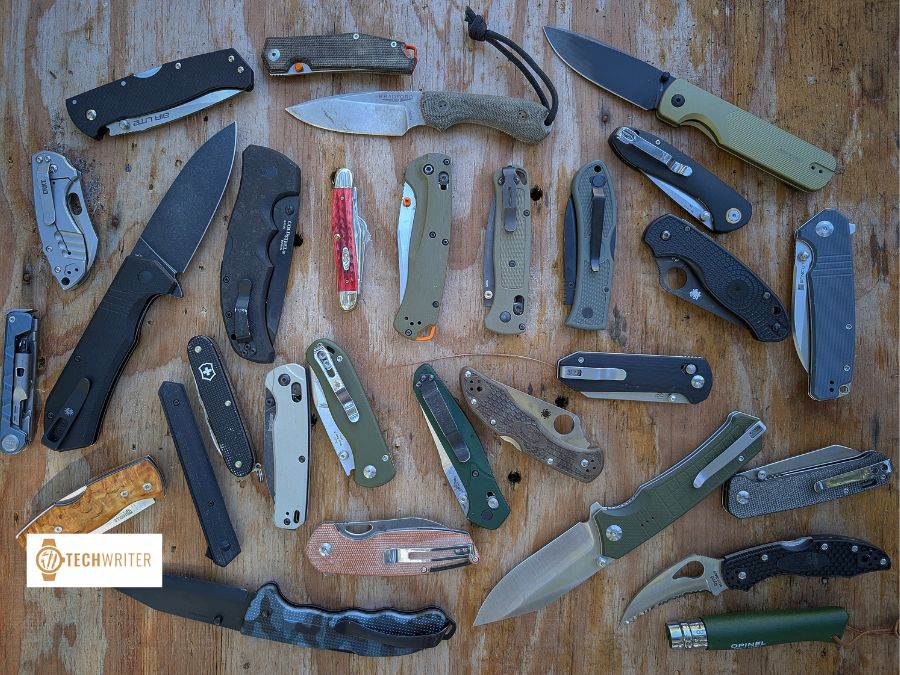
I own every knife on this list.
Not “tested samples” that got returned after a photo shoot. Not loaners from manufacturers hoping for a good review. Thirty pocket knives I bought with my own money, carried in my own pockets, and used until I understood exactly what each one does well and where it falls short.
Some of these knives cost fifteen dollars. Some cost over two hundred. What they all have in common is that they earned their spot by actually performing—not by looking good in photos or having the right marketing budget.
This isn’t a spec-sheet roundup where someone copy-pastes blade steel and calls it a review. It’s built on years of daily carry, hundreds of boxes opened, thousands of cuts made, and the kind of honest assessment you only get when the reviewer isn’t worried about keeping a brand happy. If a knife has a problem, I’ll tell you. If it punches above its price, you’ll know that too.
Quick Picks:
- Best Overall EDC: Spyderco Para 3 Lightweight
- Best Budget (Under $35): QSP Penguin
- Best Premium Slicer: Kershaw Bel Air
- Best Hard Use: Cold Steel Recon 1 Tanto
- Best Ultralight: Benchmade Bugout
- Best Value: CJRB Feldspar
- Best Traditional: Case Medium Stockman
- Best Fixed Blade: Bradford Guardian 3
Whether you’re looking for your first real pocket knife or your tenth, there’s something here that fits. Let’s get into it.
Budget Pocket Knives (Under $50)
You don’t need to spend a hundred bucks to get a knife that actually works. These budget picks cut, carry, and perform well enough that some of them never leave my rotation—even with a drawer full of expensive options.
QSP Penguin
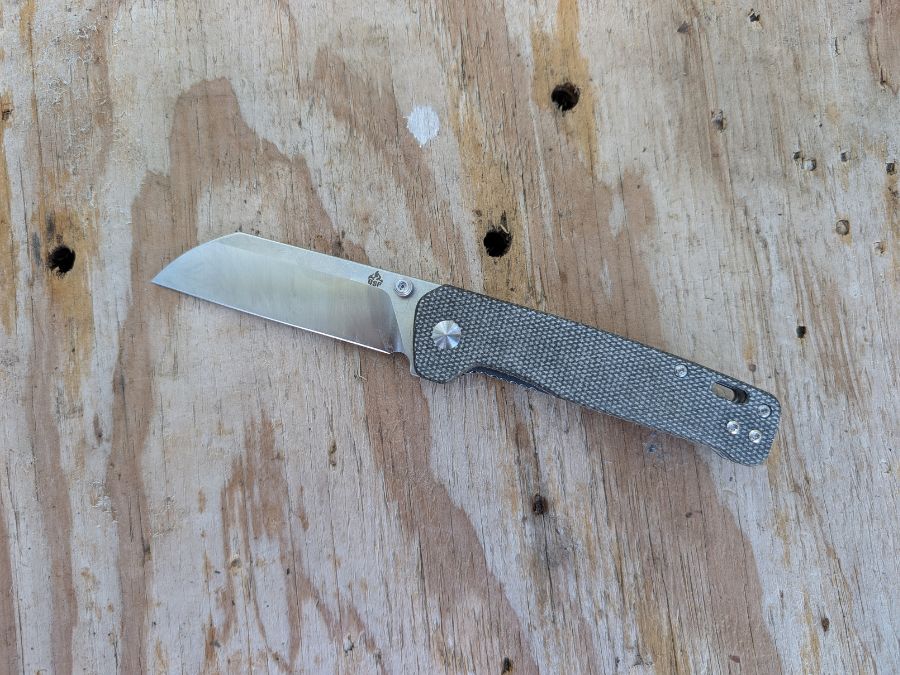
Budget classic that still slaps
Street Price: $30–$35 | D2 | Liner lock | 3.1″ blade
The Penguin is the definition of done-right budget EDC: a straight-edge sheepsfoot that opens packages and slices cardboard better than most pricier drop points. Blue-jeans or brown micarta over steel liners keeps it grippy and light, and the action on phosphor-bronze washers is shockingly smooth—snappy detent, effortless thumb-stud or reverse flick.
Carry is easy at ~3.2 oz with a truly deep clip (clean slotted mount, though the clip screws aren’t recessed). Edge geometry is thin and practical; D2 is fine at this price if you wipe it down. Ergonomics are neutral and comfortable for medium hands; the clip can be a mild hotspot in long cuts, and the thumb stud sits just a hair in the cutting path.
Bottom line: simple, tough, and ridiculously good value. If someone asks for one budget knife that just works, this is it.
SENCUT Awassi
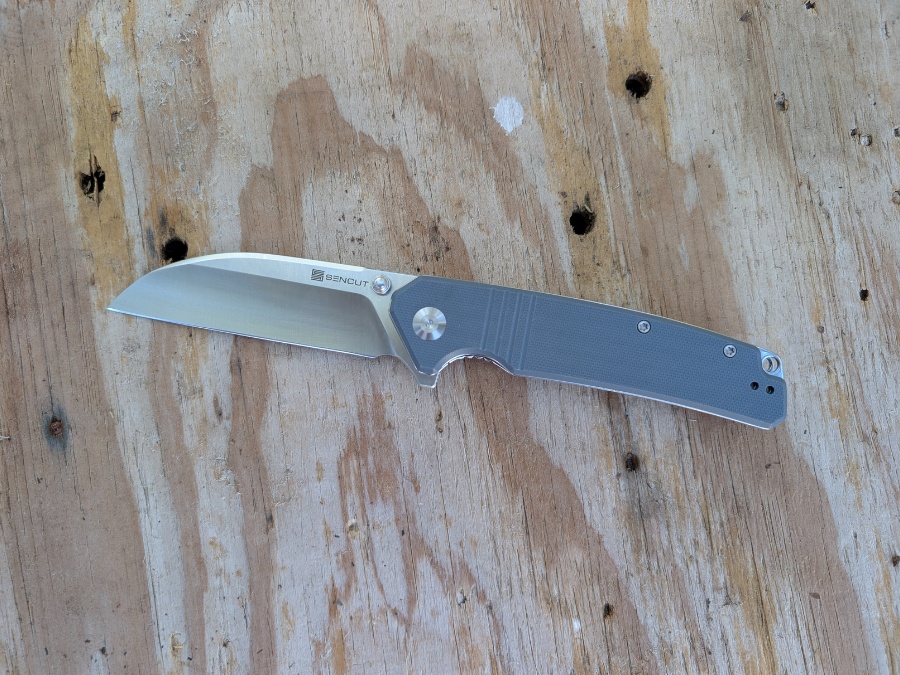
Budget slicer that cuts way above its price
Street Price: $39 | 9Cr18MoV | Liner lock | 3.46″ blade
The Awassi proves Sencut still knows how to make a budget knife worth talking about. At just over eight inches overall, it’s a full-size EDC built around a hollow-ground 9Cr18MoV blade that thins out to a razor edge around 0.012″. It sails through rope, cardboard, and wood like a much pricier knife—easily one of Sencut’s sharpest performers to date.
Action is crisp and clean thanks to caged ceramic bearings, a dialed detent, and both flipper tab and thumb stud deployment. The G10 scales are comfortable and grippy, the skeletonized liners keep the weight down to 3.8 ounces, and it feels balanced in hand.
For under forty bucks, you’re getting excellent geometry, heat treat, and cutting performance that puts other budget folders to shame. It’s simple, tough, and designed to work—everything a good everyday knife should be.
CJRB Feldspar
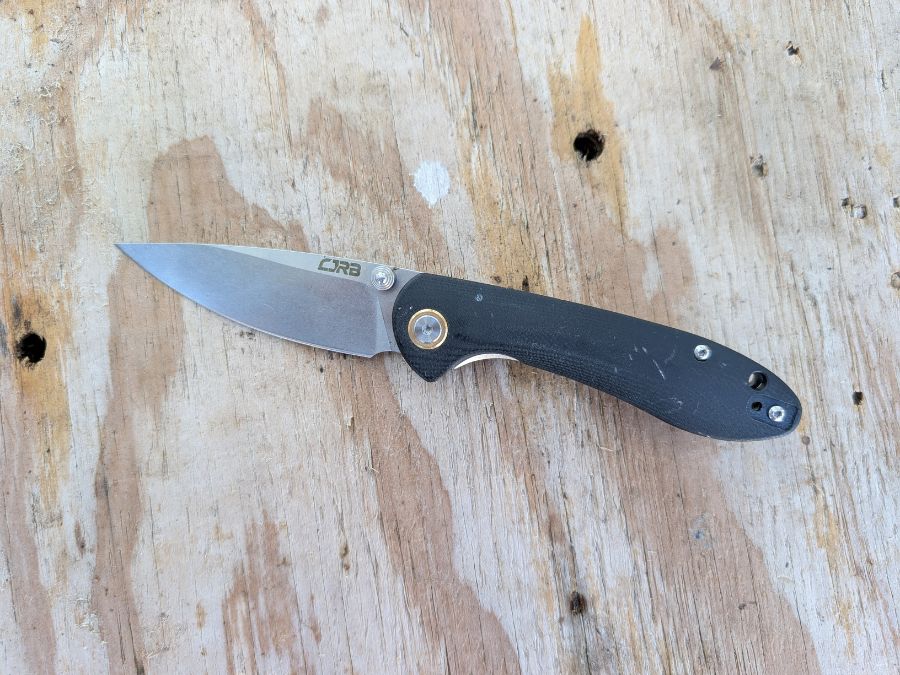
A budget knife that punches way above its price
Street Price: $30 | D2 | Liner lock | 3.5″ blade
The Feldspar is one of those rare budget knives that shows up, makes zero noise, and quietly outperforms half the knives that cost three times as much. CJRB nailed the formula here: a clean, practical drop-point blade in D2, great geometry, and shockingly smooth action thanks to ceramic bearings. The micarta or G10 scales feel better in hand than you’d ever expect at this price, and the whole knife has that “why is this so good for $30?” vibe that instantly makes it a favorite.
It’s a comfortable full-grip knife with solid cutting power, easy deployment, and just enough weight to feel planted without being a brick. If you’re building a budget EDC rotation or just want a reliable cutter that doesn’t care about price tags, the Feldspar is absolutely one of the best values in the entire pocket knife world.
KA-BAR Dozier Folding Hunter
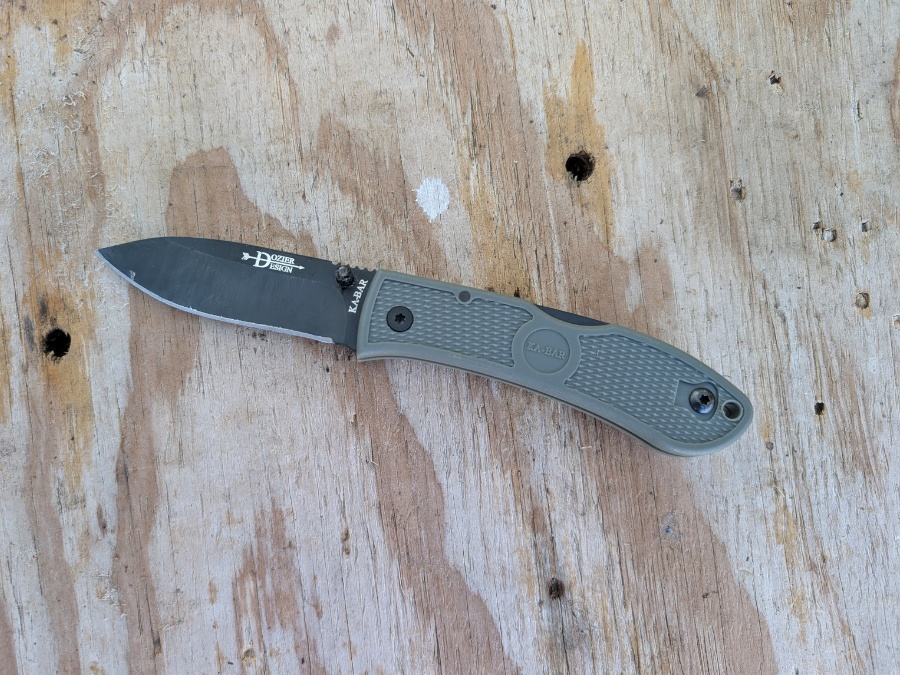
Ultra-light beater that costs about what you’d blow on lunch
Street Price: under $30 | AUS-8A | Lockback | 3.0″ blade
The KA-BAR Dozier is the definition of “good enough” done really well. You get a 3-inch hollow-ground AUS-8A blade that actually holds an edge, shrugs off cardboard and paracord, and sharpens up fast when you finally do dull it. The lockback is rock-solid with no wiggle, so you can whittle, twist, and dig a bit without feeling like the blade is going to fold on you.
The Zytel handle is where this thing quietly wins: 4.25″ of grippy, hand-filling plastic that doesn’t feel toy-like, even if you’ve got large hands. At just 1.6 ounces it disappears in the pocket, making it a killer option for hikers, backpackers, or anyone counting ounces. It’s fully ambidextrous with a reversible clip and swappable thumb stud, offered in a pile of colors and blade finishes. The only real knock? The thumb stud texture is a little cheese-grater on your thumb if you fidget it all day. But for the money, the Dozier is one of the best “toss it in the pocket and don’t baby it” knives you can buy.
CRKT Pilar
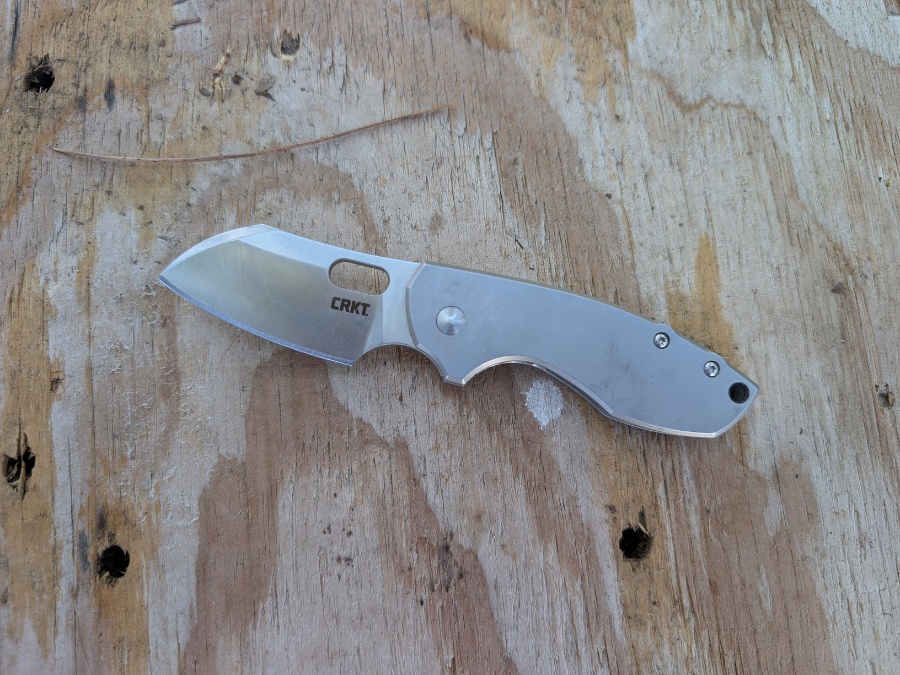
Small working knife that refuses to die
Street Price: $28–$35 | 8Cr13MoV | Frame lock | 2.4″ blade
I’ve had my Pilar for more than seven years, and it is still one of those knives that just gets work done without ever asking for attention. It is a classic Jesper Voxnaes design: short, stout, and built like it expects to be dropped, scraped, and pushed through material it probably shouldn’t be cutting. The tall blade and generous forward choil let you choke up and control the edge in a way most small knives cannot match.
The steel is simple 8Cr13MoV, but on a knife like this it makes sense. It sharpens quickly, takes a very usable working edge, and pairs well with the blade shape for carving, breaking down cardboard, and general shop chores. The frame lock is solid with that familiar CRKT feel, and the oval opening hole works best as a smooth roll open. Once you settle into the choil, the ergonomics suddenly click, and the knife feels planted and capable despite its compact footprint.
It is not light and it is not fancy, but that is the appeal. The Pilar is a true small hard use knife that never pretends to be something else.
Bottom line: a proven budget cutter that still earns pocket time. If you want a compact knife that can take real work without complaint, the Pilar is still one of the best values out there.
Byrd Hawkbill (Meadowlark 2 Hawkbill)
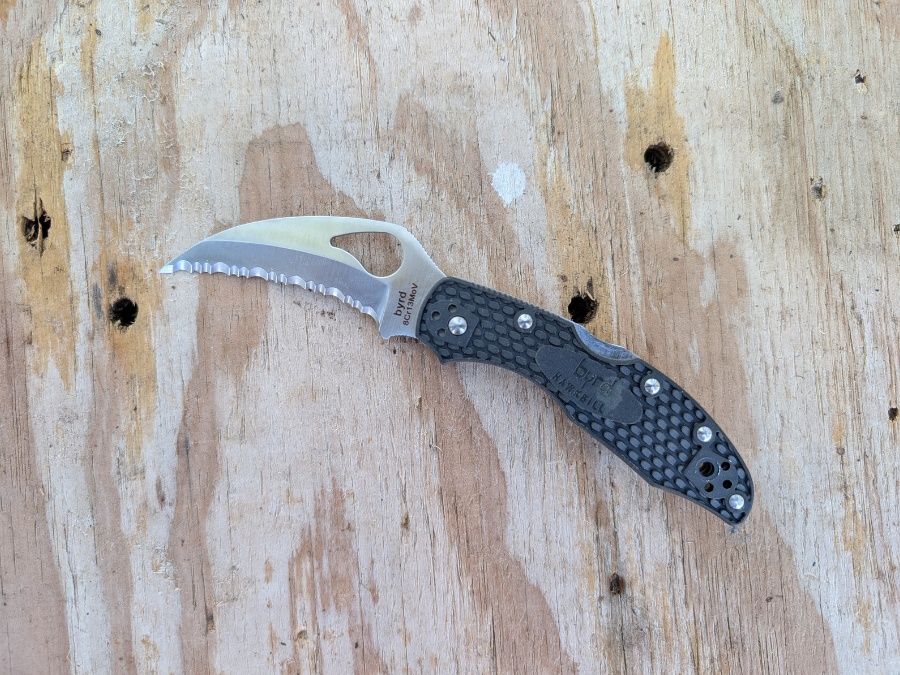
A budget hawkbill that actually does the job
Street Price: $20–$25 | 8Cr13MoV | Back lock | 2.9″ blade
If you want a cheap hawkbill that actually cuts like a real tool, this is the one. The Byrd Hawkbill gives you that classic Spyderco-style hooked blade on a budget chassis: FRN scales with bi-directional texture, solid jimping, and a secure back lock. It is light, it is simple, and it has way more traction than most knives in this price range.
Where it shines is in controlled, aggressive cutting. The hawkbill shape naturally digs into material—rope, bags, straps, cardboard—and keeps the edge engaged the entire cut. Add in Spyderco’s excellent serrations, and this thing unzips tough material with almost no effort.
For defensive carry, this design actually makes sense. The hook geometry does not require a perfect angle or a lot of force; it bites immediately and stays locked into whatever it touches. The thin handle and light weight disappear in pocket, and the secure grip makes accidental slip-outs unlikely. For twenty bucks, it is one of the few budget knives that legitimately works as an emergency slashing tool.
Eafengrow EF235
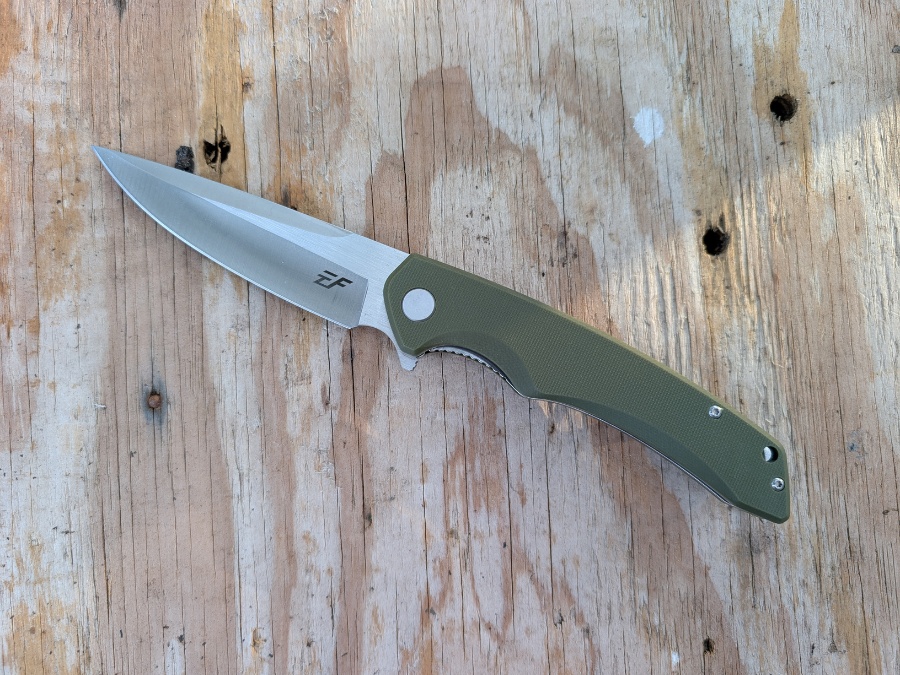
A twenty-dollar folder that punches above gas-station grade
Street Price: Around $20 | D2-ish mystery steel | Liner lock | 3.3″ blade
The EF235 is classic Eafengrow: sometimes great, sometimes “eh,” but always a better bet than the knockoff gas-station junk hanging near a cash register. For twenty bucks, this one actually lands on the better side of their hit-or-miss folder lineup.
If you get a good sample with clean lock-up, the EF235 becomes a surprisingly usable light-duty knife. The action is usually decent, the liners are sturdier than you’d expect at the price, and the ergonomics fall into that simple, neutral category that works for a wide range of hands. Fit and finish can vary, but the overall package is still far ahead of anything in the same price bracket at a truck stop.
Edge retention is “serviceable,” steel is whatever Eafengrow is calling D2 that week, and long-term reliability isn’t the point. But if you want a cheap folder you won’t stress about losing, breaking, or tossing into a toolbox, this is exactly the lane it succeeds in.
Bottom line: a budget beater that performs well enough to justify the twenty bucks. Not perfect, not premium, but absolutely useful—especially if you’ve already seen how good their fixed blades can be.
Opinel No. 8 Colorama (Green)
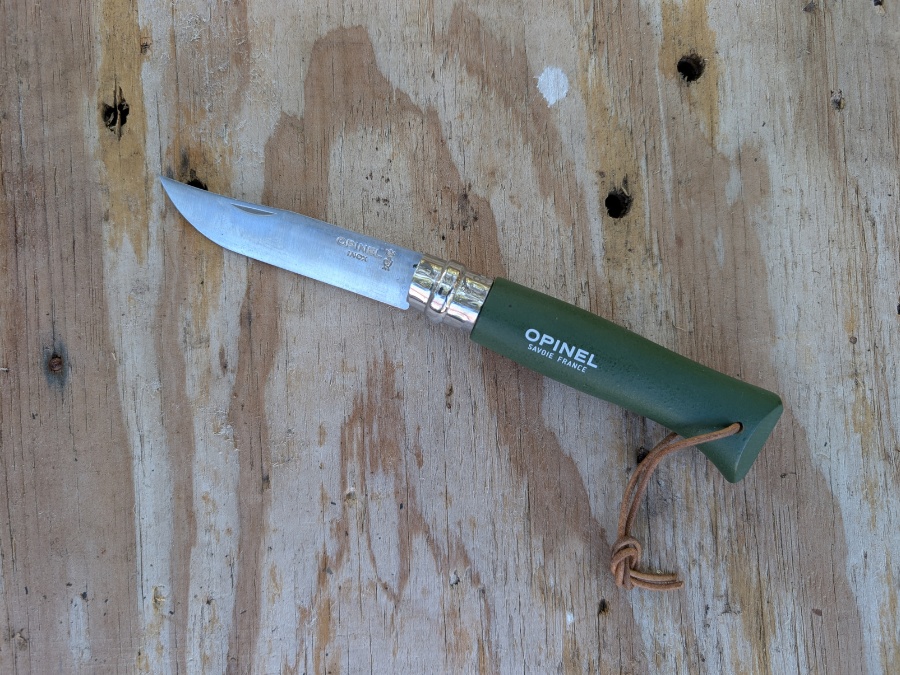
Iconic French slicer with camping-first practicality
Street Price: $15–$20 | Carbon steel | Collar lock | 3.25″ blade
The Opinel No. 8 is a cult classic for a reason: it cuts better than most knives five times the price, it weighs nothing, and the carbon steel blade is a food-prep monster. My Colorama version in green keeps the classic wood handle but adds a fun splash of color.
Where it lags is fast deployment. The rotating collar lock is secure and clever, but it’s slow compared to modern EDC. That’s why I reach for the Opinel more when I’m camping, cooking outside, or keeping the blade open for a while. It excels at slicing, whittling, food prep, and making perfect feather sticks thanks to its thin grind and sharp spine.
For an inexpensive, lightweight, razor-friendly tool that punches way above its weight outdoors, the No. 8 still earns a spot in any kit—even if it’s not your quickest pocket carry.
Kizer Drop Bear 2
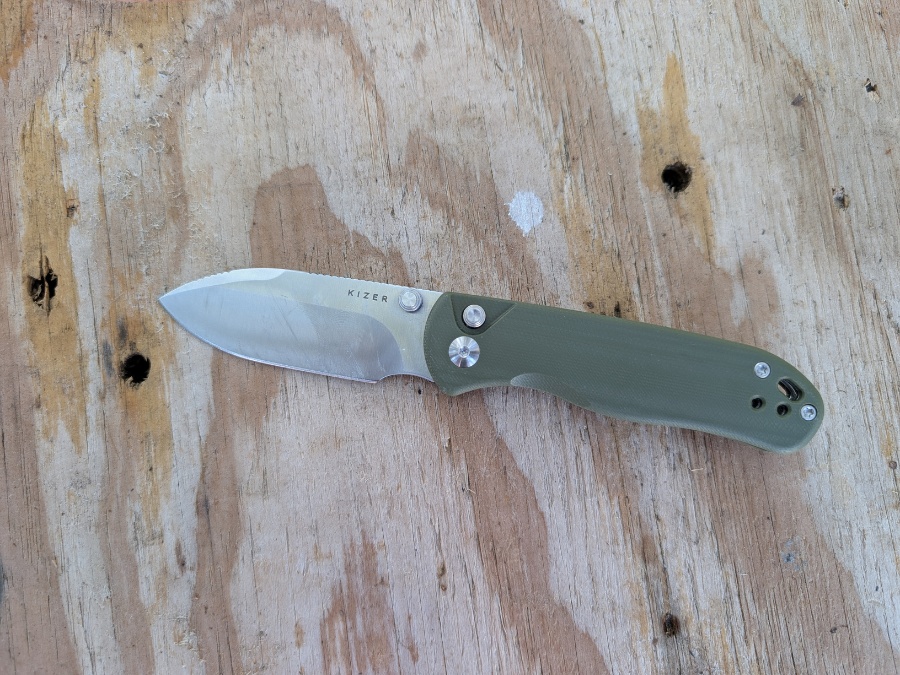
A refined little workhorse with better action than it has any right to
Street Price: ~$48 | AEB-L | Button compression lock | 2.9″ blade
This is the Drop Bear 2 done right. Kaiser trimmed the original into a tighter, cleaner, more carry-friendly package—and somehow improved the action in the process. My version with the aluminum scales is exactly what a compact EDC should feel like: light in the pocket, confidence-inspiring in the hand, and completely drama-free when you put it to work.
AEB-L was a smart choice here. It sharpens easily, resists rust, and holds a clean working edge far longer than the price suggests. Paired with Kaiser’s dialed-in button compression lock, the knife is genuinely fun to use—snappy thumb-stud deployment, smooth close, and none of the gritty “budget lock” feel you expect at this size and price.
The ergonomics are shockingly capable for a sub-3″ blade. The handle gives you a full, usable grip without forcing weird choke-ups or hot spots, and the aluminum scales keep the whole thing feeling solid instead of toy-like. It’s a small knife, yes, but not a fragile one. Compared to the original Drop Bear, the 2 feels more intentional—less bulk for the sake of bulk, more knife where it matters.
Mid-Range Pocket Knives ($50–$100)
This is the sweet spot for most people. You’re getting better steel, smoother action, and refined ergonomics without crossing into “collector knife” territory. Every knife in this section punches above its price.
CIVIVI Yonder
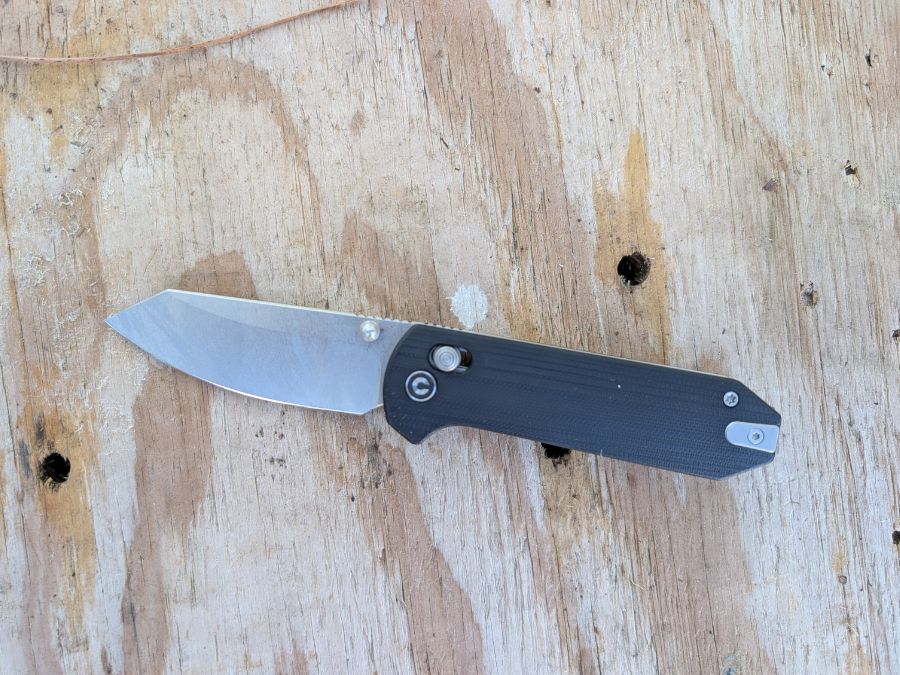
Compact crossbar-lock EDC with a slicey wharny-sheepsfoot hybrid
Street Price: $55–$60 | 14C28N | Crossbar lock | 2.88″ blade
The Yonder is a small knife with a very dialed blade: a swept sheepsfoot/wharncliffe hybrid in 14C28N that excels at fine control, utility cuts, and everyday slicing. Action is classic CIVIVI—ceramic bearings, smooth bar lock, and thumb studs you barely need because it flicks open and closes with the lock alone.
The G10 handle is contoured and a bit thicker than most knives in this size class, which helps it feel more substantial in hand, but the overall handle length will feel short if you’ve got larger hands. For medium hands or anyone who likes compact bar-lock folders with real cutting performance, it’s a very capable little EDC. Read My Full Review Here.
Victorinox Pioneer X Alox
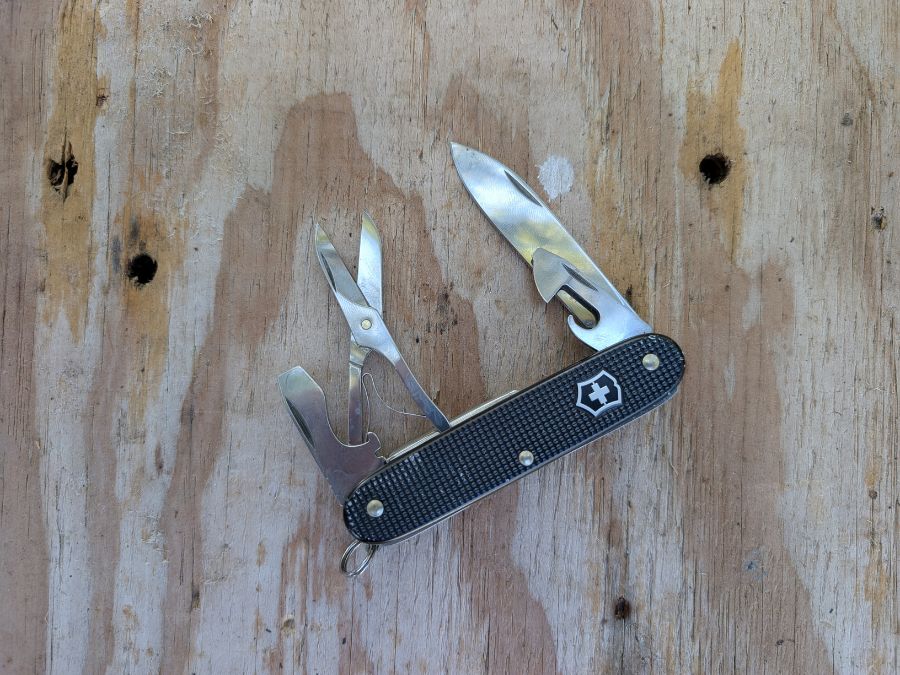
The modern Swiss Army knife that actually earns pocket time
Street Price $60 | 2.75″ main blade | 3.2 oz | Alox scales
If you want one multitool-style knife that can live in your pocket every day and not feel like a brick, the Pioneer X Alox is it. You get the classic Victorinox spear-point blade in their easy-to-maintain stainless, a legit in-line awl that actually works for real scraping and punching, the usual excellent openers/screwdrivers, and the star of the show: Victorinox scissors.
They’re still the best in the game and the whole reason to choose the X over the standard Pioneer. The ribbed Alox scales are tough, grippy, and come in a bunch of colors, but the form factor stays slim and flat enough to vanish in a pocket or on a key hanger. No pocket clip, no locking blade, nothing tactical about it—just a rock-solid, urban-friendly multi-tool that’s stood the test of time and still feels like a proper piece of kit.
Böker Plus Kwaiken Air (Mini or Full-Size)
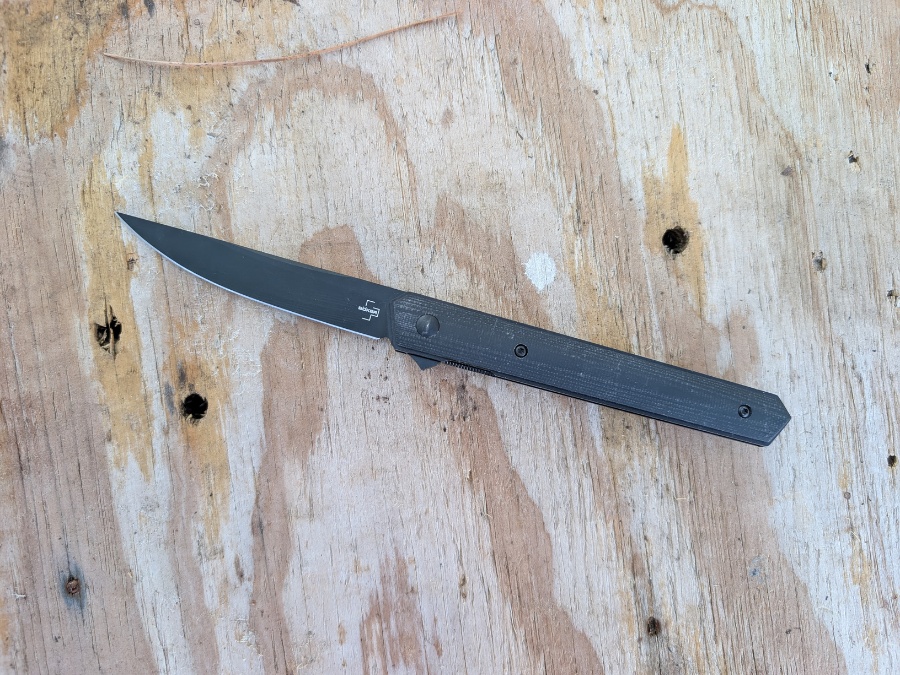
The tuxedo knife of the EDC world
Street Price: ~$70–$85 | VG-10 | Liner lock | 3.0″ blade
The Kwaiken Air takes Burnley’s iconic silhouette and strips it down to the essentials: slim, sleek, feather-light, and purpose-built for office or dress carry. The narrow VG-10 straight-back blade is thin at the edge and great for envelopes, tape, light food prep, and every “gentleman’s task” that doesn’t require prying or twisting. Grind height is modest, so it’s not a cardboard-murdering workhorse — this one’s about precision and elegance, not demolition.
Ergos are surprisingly secure for such a slim handle. The G-10 scales are flat and clean, and the fully recessed deep-carry clip is absolutely perfect — low profile, snag-free, and invisible in pocket. The flipper works well once you adjust to the stronger detent; expect a little finger fatigue if you’re a chronic fidgeter, but the blade fires out with authority and closes cleanly.
At just ~2.1 oz, it disappears in the pocket and carries like a pen more than a knife. Fit and finish is the best Böker has put out in the sub-$100 category: clean liners, solid lockup, centered blade, and no weird factory scratches.
OKNIFE Duron
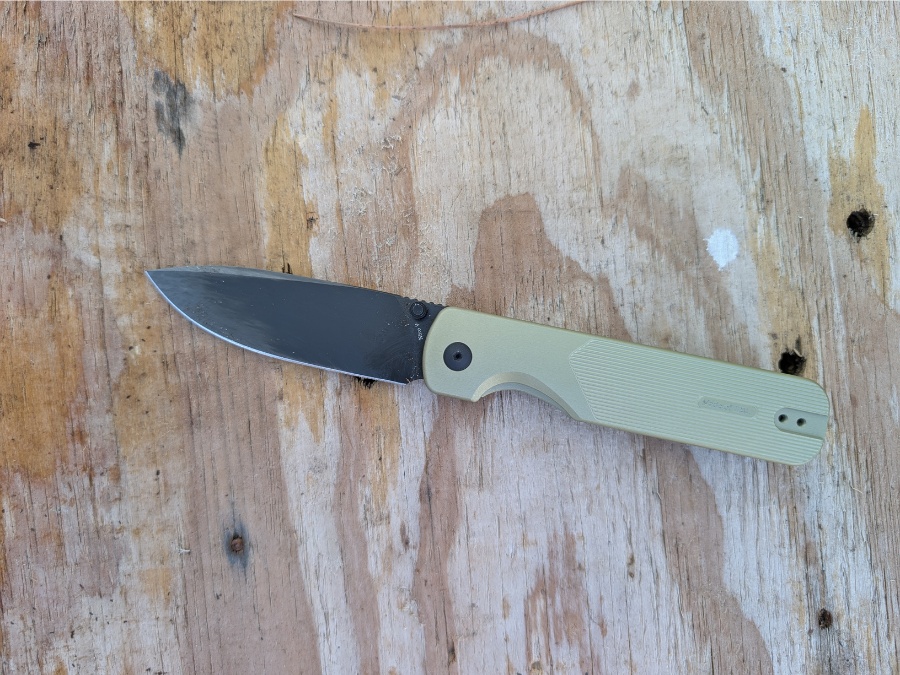
Slicey full-size EDC in “super aluminum”
Street Price: ~$85–$100 | Nitro-V | Frame lock | 3.5″ blade
The Duron is OKnife finally getting serious again. It’s a full-size 8″ folder that carries like something smaller thanks to their OAL “super aluminum” scales—light, rigid, and grippy without feeling chalky. My version is incredibly light for its size and still feels planted when you’re pushing through cuts.
The Nitro-V blade is the star: 3.5″, full flat grind, thin behind the edge, and genuinely slicey. Mine came hair-popping sharp, and the geometry backs it up—it glides through cardboard and rope with zero effort. The tip has a high swedge and enough meat to feel secure without killing precision.
Action is dialed: great thumb-stud deployment, strong detent, ceramic bearings, and a clean drop shut. Ergonomics are better than expected for such a slim handle—contoured scales, softened edges, and a nice flat choke-up spot make it comfortable even in longer cuts.
Carry is excellent: sub-3.5 ounces, deep-carry clip, and the clip slides into light materials without snagging. Build quality is tight, lockup solid, and the anodized finish shrugs off scratches impressively well. Read My Full Review Here.
Cold Steel Air Lite
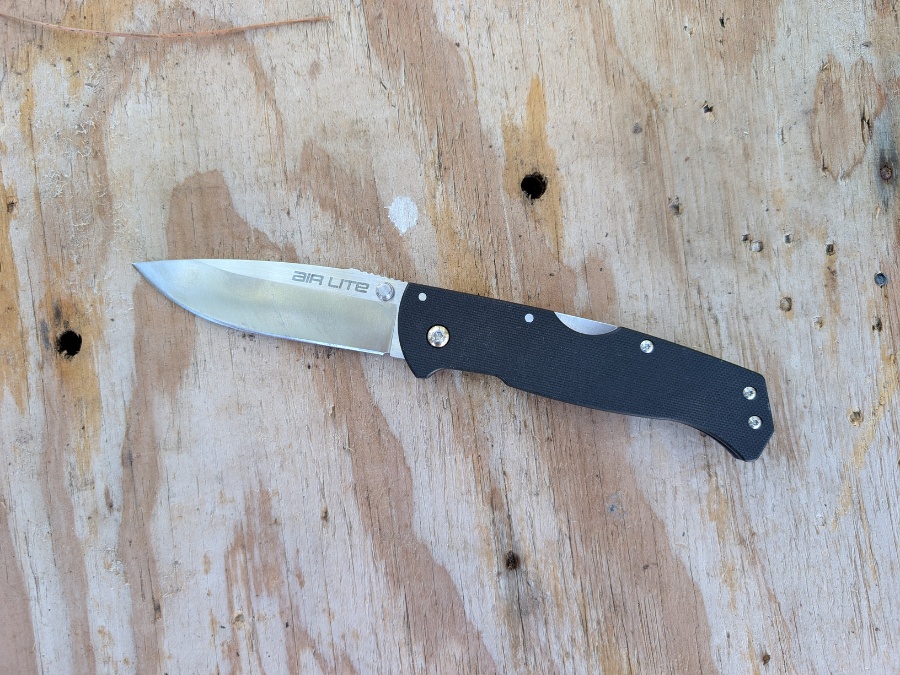
Featherweight carry with real backbone
Street Price: ~$55–$75 | AUS-10A | Tri-Ad Lock | 3.5″ blade
Cold Steel has a reputation for overbuilding everything, but the Air Lite is the rare model that gives you their trademark strength without the usual brick-in-pocket feel. It’s slim, lightweight, and easy to carry—yet still noticeably more robust than something like a Benchmade Bugout.
The 3.5″ AUS-10A drop point is classic Cold Steel: thin enough to slice cleanly, tough enough for hard use, and ground with that confident utility-forward profile. Edge retention is solid for the category, and it sharpens up quickly.
The Tri-Ad Lock is the reason people buy this knife. It’s still firm—sometimes very firm out of the box—but the payoff is bank-vault strength and zero blade play. Once it wears in, the lock feels smoother while staying absurdly secure.
G-10 scales, stainless liners, and Cold Steel’s usual tight fitment make it feel sturdier than the weight suggests. Carry is comfortable thanks to the thin profile, and the long, reversible deep-ish clip keeps it anchored without printing.
Bottom line: a reliable, high-performing EDC that punches way above its price. If you want light weight without sacrificing confidence, the Air Lite is one of the best “do-everything” knives Cold Steel makes.
CIVIVI Tacticorix
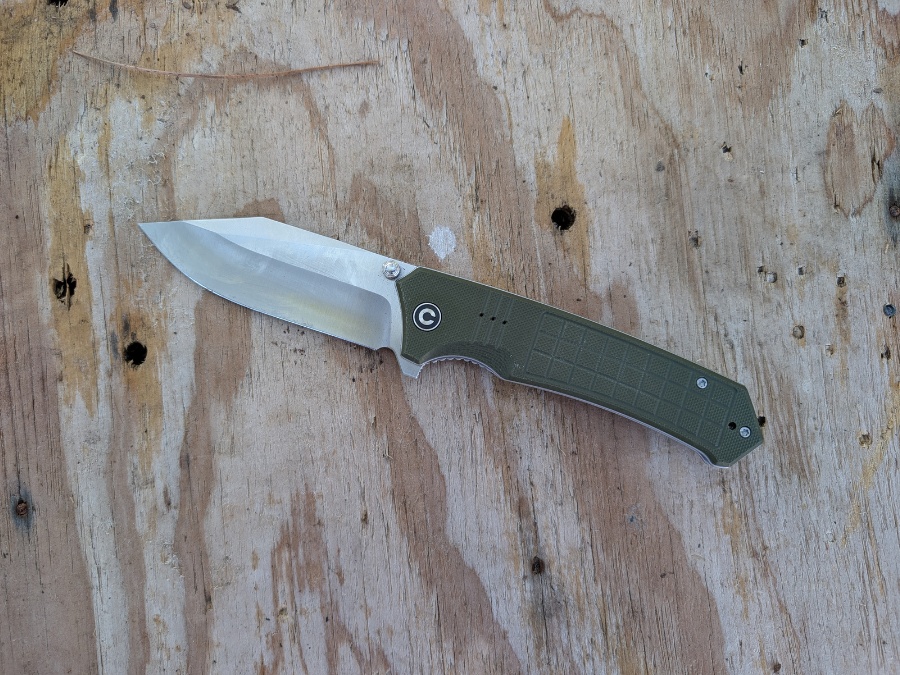
Big-budget folder that actually earns the pocket time
Street Price: ~$67 | Nitro-V | Liner lock | 3.85″ blade
CIVIVI finally built a large-format budget knife that isn’t pretending to be something smaller. The Tacticorix gives you a real 3.85″ blade, real leverage, and real work-ready geometry without creeping into the “overbuilt mall ninja” category. It’s just a straightforward, long, capable cutter exactly what a full-size EDC should be.
The hollow-ground Nitro-V blade has the right mix of toughness and everyday practicality. It goes through cardboard, plastic straps, and packing materials without dragging or wedging, and it holds up through repeated use. No drama, no surprises just predictable performance.
My green G10 version feels solid and comfortable. CIVIVI rounded the edges and kept the ergonomics neutral, so you get a secure grip with no hotspots. The action is tuned well: a clean detent, easy thumb-stud deployment, and a flipper tab that actually works without chewing up your finger. It’s also shockingly manageable in the pocket for something this long.
If anything, the knife’s biggest strength is that it doesn’t try to be fancy. No gimmicks, no fragile materials just a reliable full-size folder that punches above its price.
Bottom line: if you want a big budget knife that behaves like a grown-up tool, the Tacticorix is one of the few that actually delivers.
Kansept Model 6
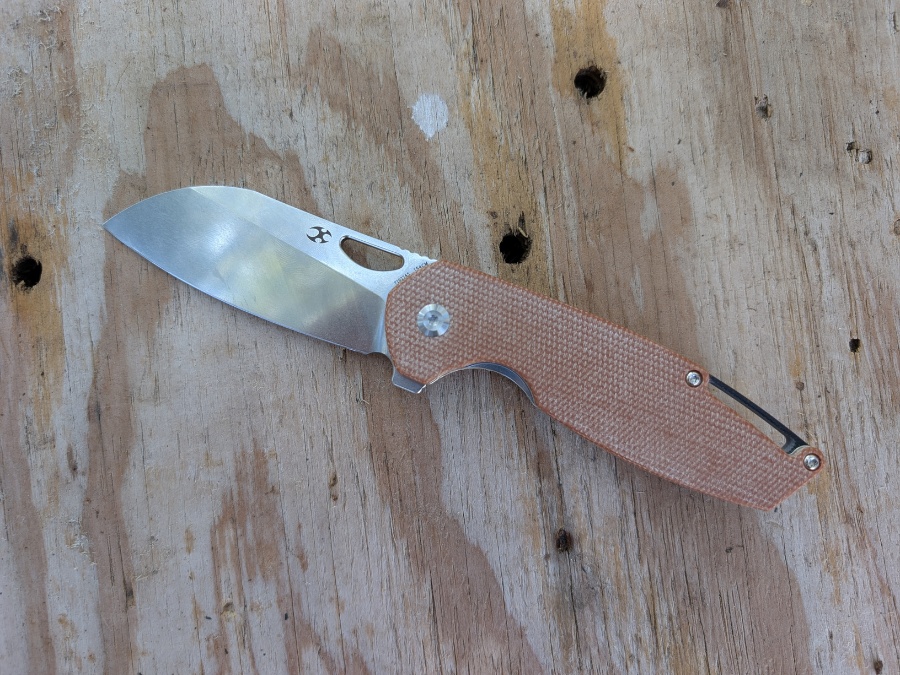
Great ergos, excellent cutter, tiny flipper that kills the action
Street Price: $70–$80 | 154CM | Liner lock | 3.1″ blade
The Model 6 is one of those knives I really enjoy in hand. My brown micarta version feels warm, grippy, and sized just right for daily work. The 154CM blade is a proven steel, the sheepsfoot profile is practical, and the overall build is classic Kansept—clean, tough, and well-finished. It’s a great working knife with solid lockup and confidence-inspiring ergonomics.
But the flipper tab is almost unusable. It’s tiny, smoothed over, and sits so tight to the frame that actually deploying the blade with it is frustrating. If you buy this knife, plan on using the oval deployment hole instead—flicking it open works fine, but the flipper might as well not exist.
Action quirks aside, the Model 6 is still a comfortable, hardworking EDC with good materials and a great feel. Just know what you’re getting into: this is a “thumb flick” knife, not a “flipper” knife.
Spyderco Delica 4
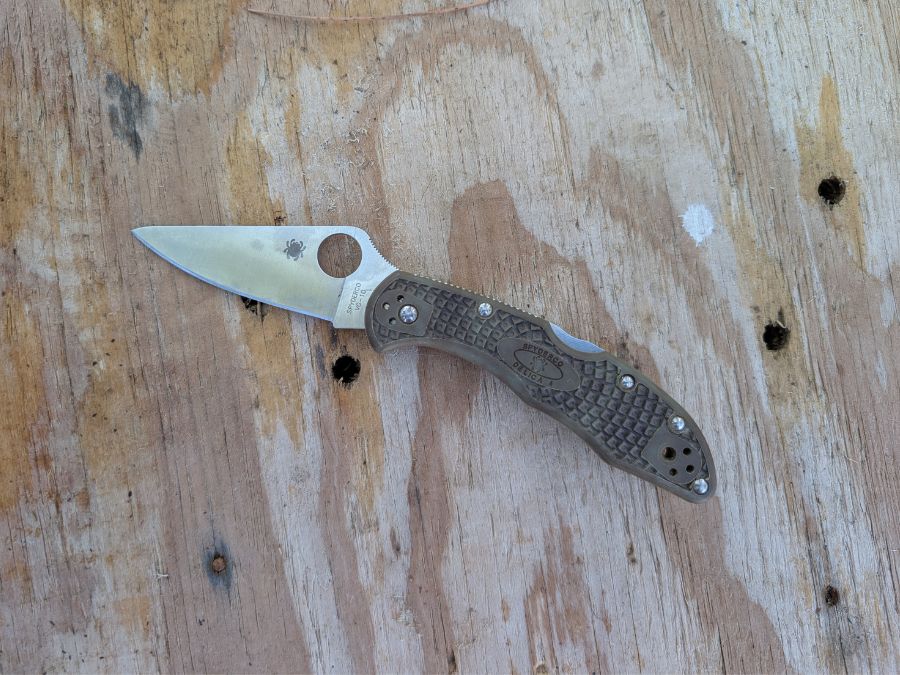
A proven classic that slices better than most modern designs
Street Price: $85–$95 | VG-10 | Back lock | 2.9″ blade
The Delica 4 has been a go-to EDC for decades for one simple reason: it just works. The full-flat-ground VG-10 blade is thin, slicey, and effortless through cardboard, rope, plastic, and even wood. Spyderco’s ergonomics shine here—lightweight FRN scales with directional texturing, inset steel liners, and that signature thumb hole that makes opening stupid-easy with either hand.
It’s a compact knife that still gives you a full, confident grip, and the back lock keeps everything tight with zero drama. Four-position clip carry means it works for absolutely anyone, left- or right-handed, tip-up or tip-down. This isn’t a hard-use prying tool—it’s a daily cutter built for clean slicing and reliable performance. If you want a lightweight, no-nonsense pocket knife that has earned its reputation the long way—years of actual use—the Delica 4 still deserves a spot in your pocket.
Victorinox Evoke (Alox Edition)
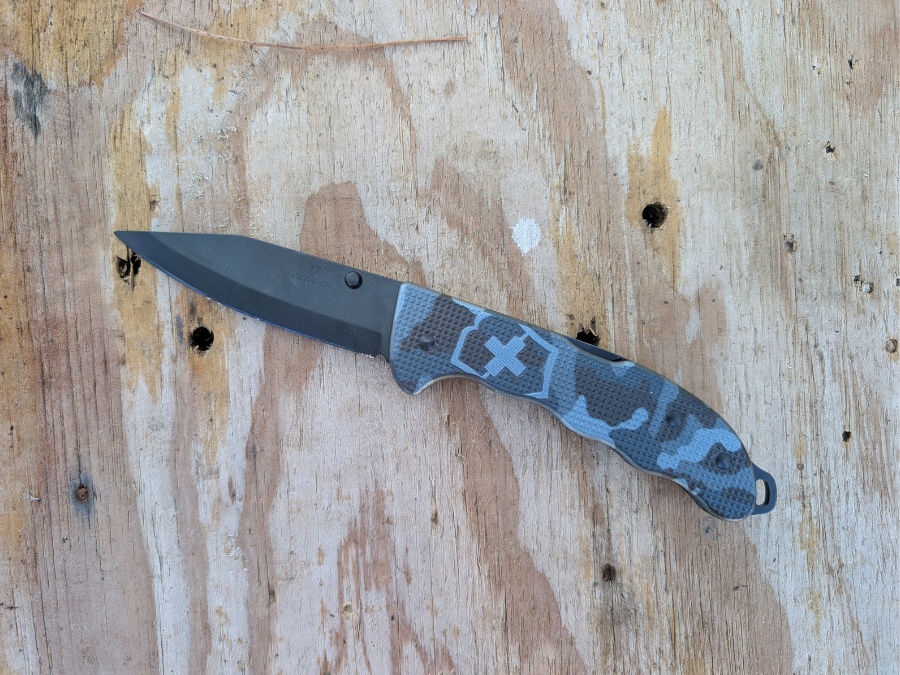
A modern Swiss-made folder with real workhorse credentials
Street Price: $90–$120 | 1.4116 | Back lock | 3.9″ blade
Victorinox doesn’t step into the one-blade EDC world often, but when they do, it’s with purpose. The Evoke is basically a Hunter Pro refined and optimized: a large, confident folder built out of the company’s trademark Alox aluminum slabs. No flex, no nonsense, just a clean, overbuilt back lock wrapped in some of the toughest scales Victorinox makes.
The blade is 1.4116 stainless, the steel they’ve perfected over decades. It sharpens fast, resists corrosion better than most budget steels, and takes an aggressive bitey edge you can actually maintain in the field. The long drop point gives you reach and stability, and the removable thumb stud is a smart touch. If you want a slick, snag-free profile, pull it off. If you want one-handed deployment, keep it on.
In hand, the Evoke feels like a real tool. Big, confident ergonomics, a deep carry clip that works, and a sturdy lock that never wavers. It’s heavier than your average Swiss Army Knife, but that weight buys you durability and control. This isn’t a dainty slicer—it’s a rugged folder built for people who actually use their knives.
Bottom line: a serious Victorinox-made work knife with the build quality you expect and the simplicity we all secretly want. Big blade, tough scales, reliable lock. If you’ve ever wished Victorinox made a pure cutting tool instead of a multi-tool, this is the one.
Premium Pocket Knives ($100+)
Premium doesn’t mean perfect—it means you’re paying for better materials, tighter tolerances, and the kind of fit and finish that makes a knife feel special. These are the ones you keep for years.
Kershaw Bel Air
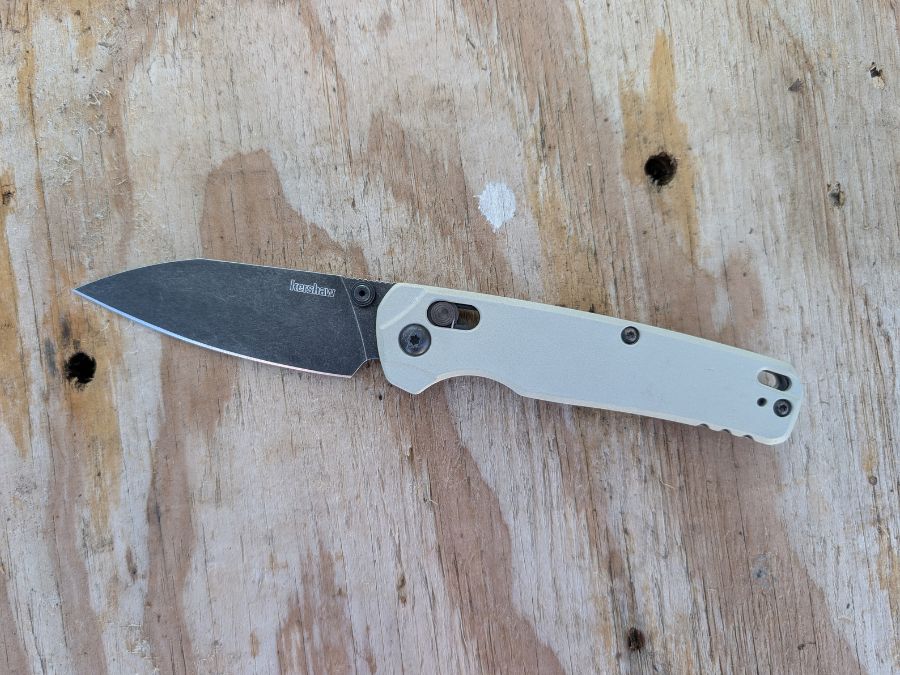
The grown-up Leek we’ve been waiting for
Street Price: $165 | CPM Magnacut | DuraLock (Crossbar) | 3.0″ blade
The Kershaw Bel Air takes everything fun about the Leek and finally makes it a real, hard-working EDC. Made in the USA with CPM Magnacut steel and anodized aluminum handles, it feels premium, tight, and purpose-built. At under 3 ounces, it carries like air but still fills the hand just enough for real work.
The DuraLock crossbar system gives it glassy, fidget-friendly action—no stick, no slop, just clean precision. Thumb studs are dialed, and the slim handle has the right contour for all-day comfort. That flat-ground blade is a true slicer, thin and efficient, though the tip is delicate enough that prying isn’t advised.
Bottom line: a sleek, modern, USA-made EDC that hits far above its price point. The Bel Air is the rare Kershaw that feels like a custom piece you can actually use every day.
Benchmade Bugout 535
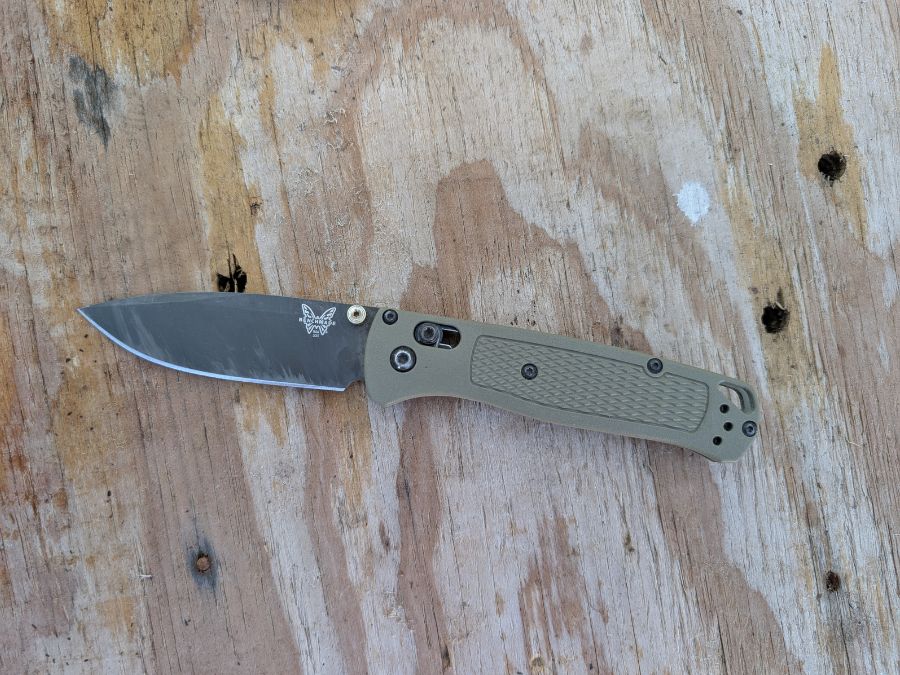
Featherweight blade with full-size cutting power
Street Price: $190 | CPM S30V | AXIS lock | 3.24″ blade
The Bugout is all about blade-to-weight ratio: a full cutting-length S30V blade in a knife that basically disappears in your pocket. It slices extremely well thanks to the thin stock and high grind, and the AXIS lock keeps it easy to flick open and close with either hand.
Where it shines is ultralight EDC and backpack duty—people who count ounces will love it. The trade-off is the Grivory scales: they keep the weight down but feel hollow and a little cheap, so if you like a solid, chunky handle this one will always feel a bit toy-like, even though the blade performance is anything but.
Benchmade Tagged Out
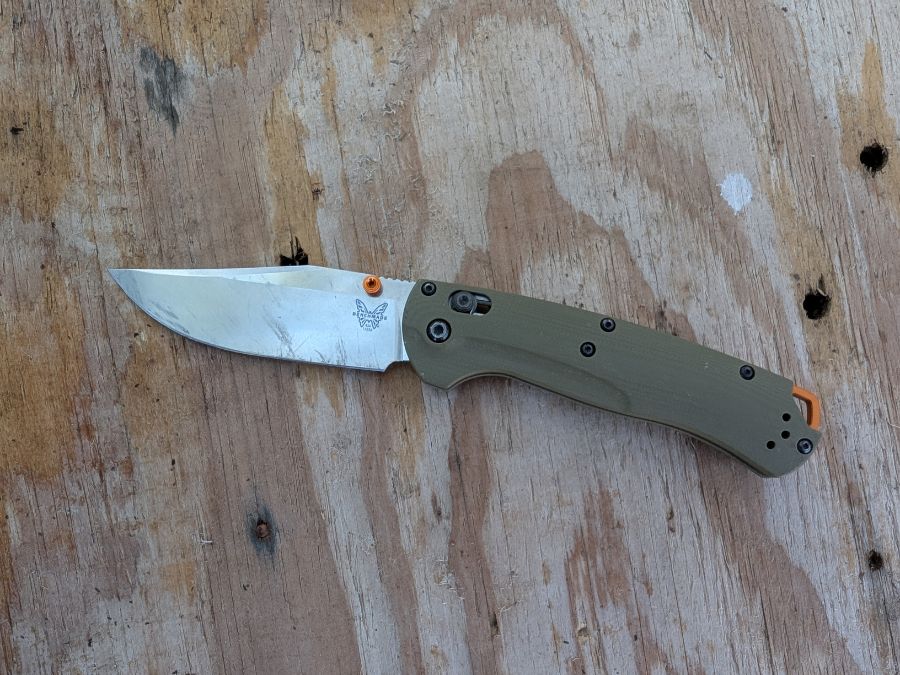
A Bugout-style ultralight with better steel and more real estate
Street Price: $230 | CPM S45VN (G10 model) | AXIS lock | 3.5″ blade
The Tagged Out takes the Bugout formula and fixes the stuff that bugs a lot of us: you get a longer, slicey clip-point blade, tougher modern steel, and a fuller handle that actually lets you bear down without feeling like you’re choking a Popsicle stick. It’s still crazy light and pocket-friendly, but the extra half-inch of handle and blade, added girth, and G10 scales make it feel like a “real knife” instead of a pure ultralight science project—perfect for gym shorts, summer carry, and anyone who likes the Bugout idea but wants something cooler and more confidence-inspiring in hand. Read My Full Review
Benchmade 940 Osborne
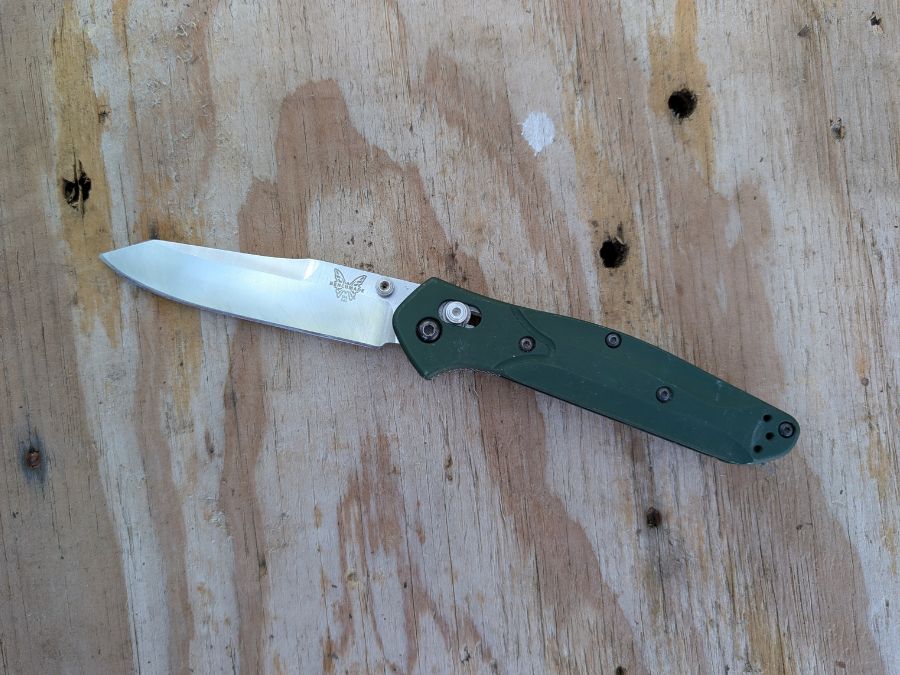
A slim, hard-use classic with Benchmade’s best aluminum handle
Street Price: $200–$240 | CPM S30V | AXIS lock | 3.4″ blade
The aluminum-handled 940 is the version that made this knife a legend. It’s slim, tough, and built around one of the strongest reverse-tanto blade shapes in everyday carry. The long flat edge gives you excellent control for slicing, and the reinforced tip handles the kind of utility cuts that would worry most lightweight folders.
The aluminum scales are what make this version special—rigid, durable, and slick in the way a hard-use EDC should feel. They’re more wear-resistant than G10 and don’t flex, giving the 940 a confidence that belies how thin it carries. Add the AXIS lock, smooth thumb-stud deployment, and a profile that disappears in pocket, and you get one of the most proven everyday carry knives ever made. It’s pricey, but it’s the kind of knife you end up carrying for years.
Bradford Guardian 3
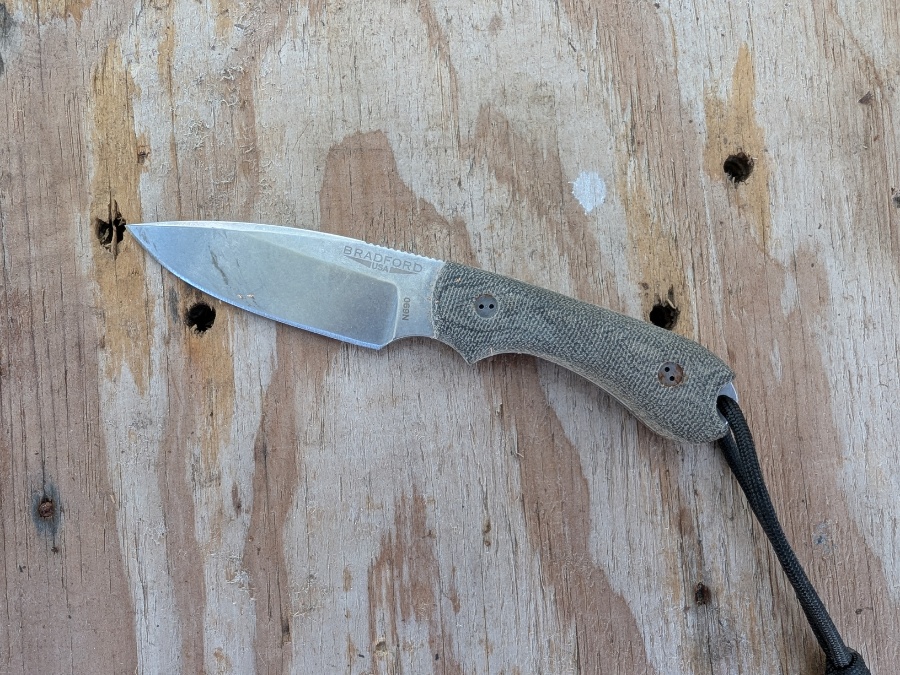
Pocketable fixed blade that hits way above its size
Street Price: $170 | M390 | Fixed blade | 3.0″ blade
This is the rare small fixed blade that actually disappears on you — whether it’s riding horizontal on the belt or dropped into a pocket, it carries more like a chunky folder than a sheath knife. The contoured micarta scales and big palm swell give you a full, locked-in grip when you choke up, and the jimping is exactly where you want it for control. Paired with a thin, slicey M390 blade and a true 3-finger/4-finger choke-up handle, the Guardian 3 is one of those fixed blades you start “testing” and then realize you just don’t want to stop carrying.
Spyderco Para 3 Lightweight
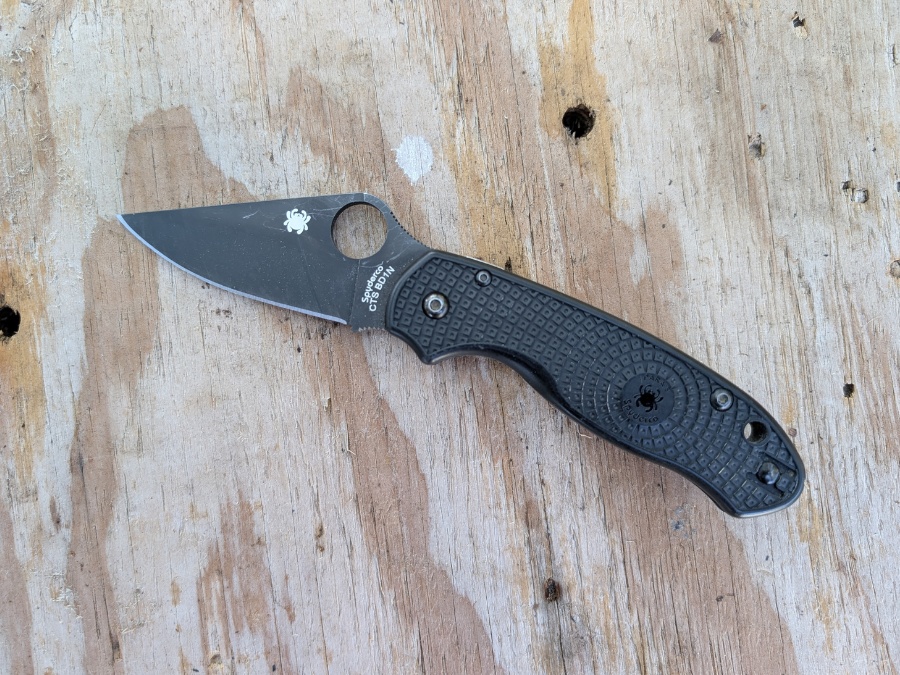
Featherweight cutter with big-knife attitude
Street Price: $130 to $160 | CTS BD1N | Compression lock | 3.0″ blade
The Para 3 Lightweight is what happens when Spyderco takes the already excellent Para 3 and strips it down to the essentials. You get a 3-inch leaf-shaped blade in CTS BD1N that holds an edge better than VG-10, shrugs off daily use, and still sharpens without a fight. It slices like a mini utility scalpel but has enough spine and tip strength that you don’t feel like you’re going to snap it if you twist in cardboard or plastic clamshells.
The FRN handle keeps things stupid light while still giving you real ergonomics: a proper finger choil, solid jimping, and that classic Spyderco thumb ramp that locks your hand in. The wire deep-carry clip disappears in the pocket, and the compression lock gives you fidget-factor and one-handed closing without feeling flimsy.
If you want a U.S.-made, toss-it-in-the-shorts-and-forget-it knife that still works like a “real” folder, the Para 3 LW earns its spot on this list. Read My Full Review Here.
Giant Mouse Ace Clyde
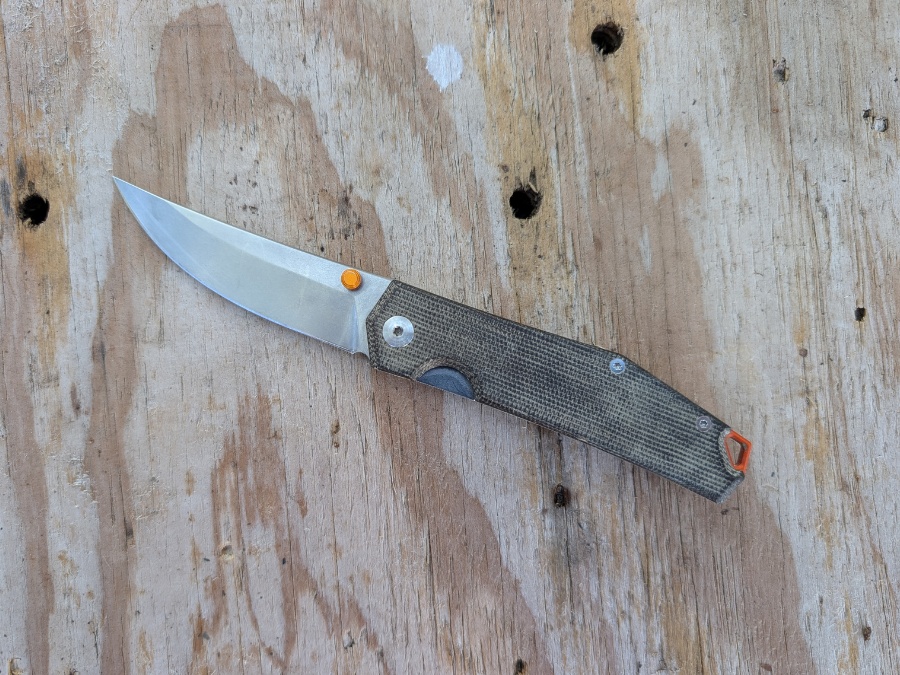
Slim, classy slicer with a touch of weird (in a good way)
Street Price $175 | 3″ blade | ~2.5 oz | Micarta / LMAX
The Clyde is what happens when a dress knife and a modern EDC have a good-looking kid. You get a super pocketable, ultra-slim profile, contoured micarta (or G-10) scales, countersunk liners, and a crowned, tumbled LMAX blade that’s pure slicer with a very fine, precise tip. Action is smooth and controlled off the thumb stud, and the deep-ish wire clip plus light weight make it disappear in the pocket. It’s definitely more “gentleman utility” than hard-use: the tip is delicate, there’s no real finger guard, the thumb stud can chew your thumb a bit, and it’s right-hand–only with T6 body screws. But as a lightweight, stylish, well-built EDC that feels a little special every time you open it, the Ace Clyde absolutely earns its spot.
Cold Steel Recon 1 — Tanto
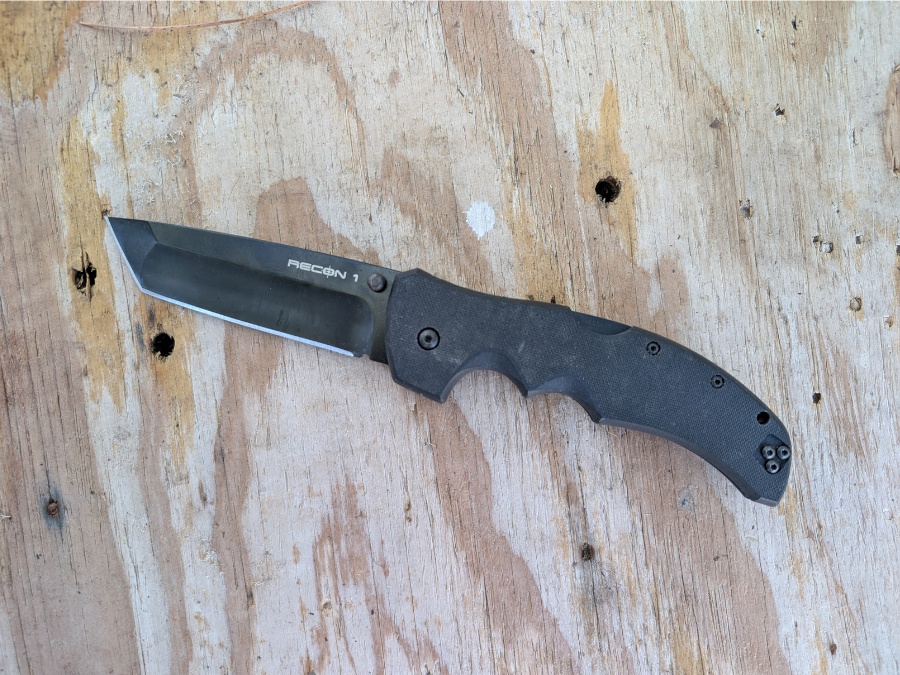
Hard-use legend that refuses to die
Street Price: ~$130 | CPM-S35VN | Tri-Ad lock | 4.0″ blade
The Recon 1 Tanto is Cold Steel distilled: oversized, overbuilt, and built to outlast the apocalypse. The upgraded S35VN blade trades the old hollow grind for a flatter, stronger geometry that still slices well but absolutely excels in heavy, abusive cuts. The tanto tip is reinforced and confidence-inspiring — perfect for piercing, scraping, and utility tasks where a normal folder might snap.
Ergos are classic Cold Steel: long handle, aggressive traction, and a secure, locked-in feel whether you’re wearing gloves or not. Deployment is surprisingly smooth for such a brute, and the Tri-Ad lock remains one of the toughest locking systems on any production folder — no flex, no play, even after hard pressure or batoning.
At a little over 5 ounces, it’s big, but it carries flatter than its footprint suggests thanks to the thin profile and reversible clip. If you want one folding knife that can go from daily chores to real-world hard use without complaint, the Recon 1 Tanto is still the benchmark.
Helle Nipa
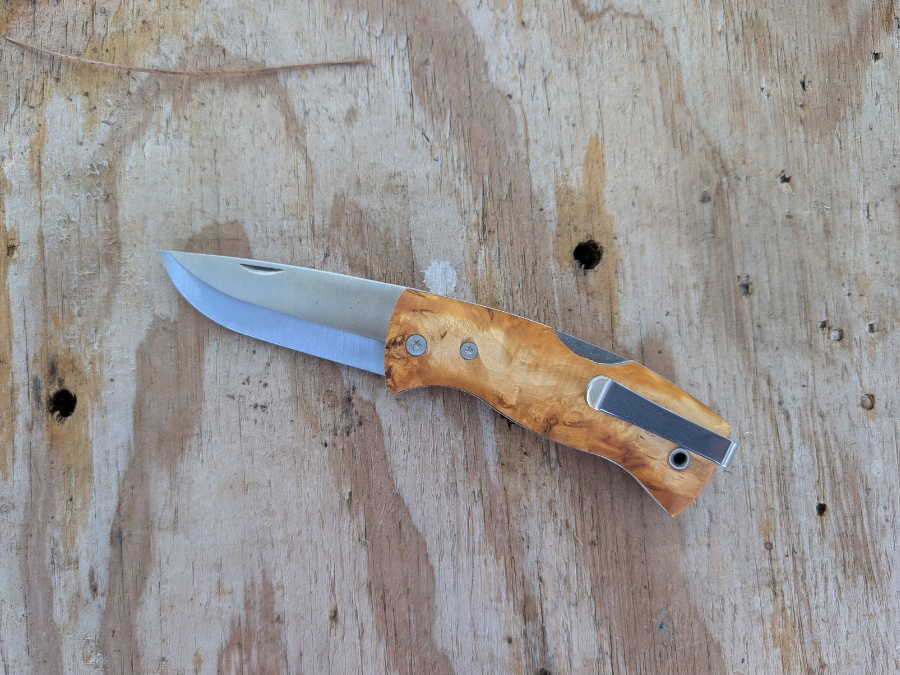
A handmade Scandinavian folder with real soul
Street Price: $160–$180 | Sandvik 12C27 | Slip joint | 2.7″ blade
The Helle Nipa is one of those knives you don’t forget—partly because it’s gorgeous, partly because it feels like a scaled-down fixed blade in the hand. Mine was a birthday gift from one of my best friends, and it instantly became one of the few folders I actually enjoy using, not just carrying.
The curly birch scales are classic Helle: warm, grippy, and shaped into a barrel-like handle that fills your palm in a way almost no modern folder does. It’s compact, but not dainty, with just enough girth to lock your hand in and give you control for real carving or camp tasks. If you’ve ever used a Scandinavian fixed blade, the grip will feel immediately familiar.
The 12C27 blade is pure Scandinavian practicality—scandi grind, clean polish, easy to sharpen, and tough enough for real woodwork. The slip joint has a stout, confident backspring that doesn’t feel flimsy, and the steel liners plus the polished deep carry clip make it a genuinely functional EDC instead of a collector piece.
Bottom line: a compact Scandinavian folder that feels like a mini puukko in your pocket. Beautiful wood, great steel, real usability. If you want something traditional that still works as a modern everyday tool, the Nipa nails it.
Off-Grid Stinger XL
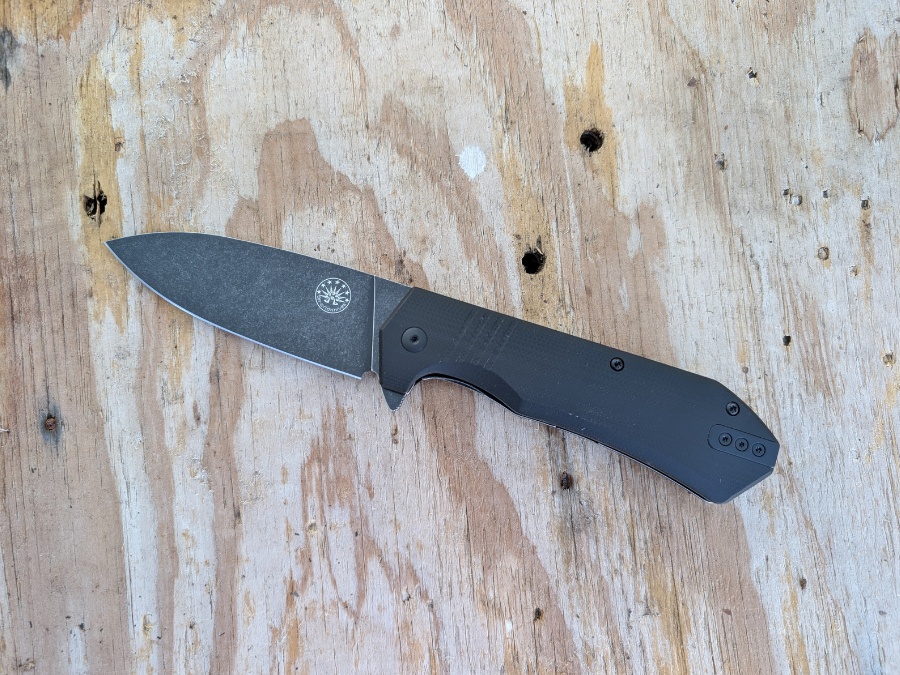
Big, tough, confidence boosting, built for real work
Street Price: Around $110 | 154CM | Liner lock | 4″ blade
The Stinger XL is one of those knives that earns its place the moment you actually use it. I originally grabbed it for my Hard Use Knives round up and fully expected it to be a gimmicky oversized folder. Instead, it showed up like a tank with manners. My black G10 and blackwash version feels purpose built, rock solid, and surprisingly refined for the size.
The 4 inch 154CM blade is genuinely impressive. Good geometry, strong stock, and a reliable edge that holds up under the kind of abuse most pocket knives never see. The flipper action is dialed in perfectly—consistent, confident, and tuned for a big blade without feeling sloppy. Ergonomics are equally solid, giving you a full, locked in grip with room to spare.
Is it huge? Absolutely. It is almost seven ounces and takes up serious pocket real estate. But that is the point. The Stinger XL is for the days you want something with authority in your pocket, not a lightweight slicer for trimming string. It is overbuilt in all the right ways and priced well for what you get.
If you like big folders that can actually work, the Stinger XL delivers. If you want something small and polite, look elsewhere. Read My Full Review Here.
Case Medium Stockman
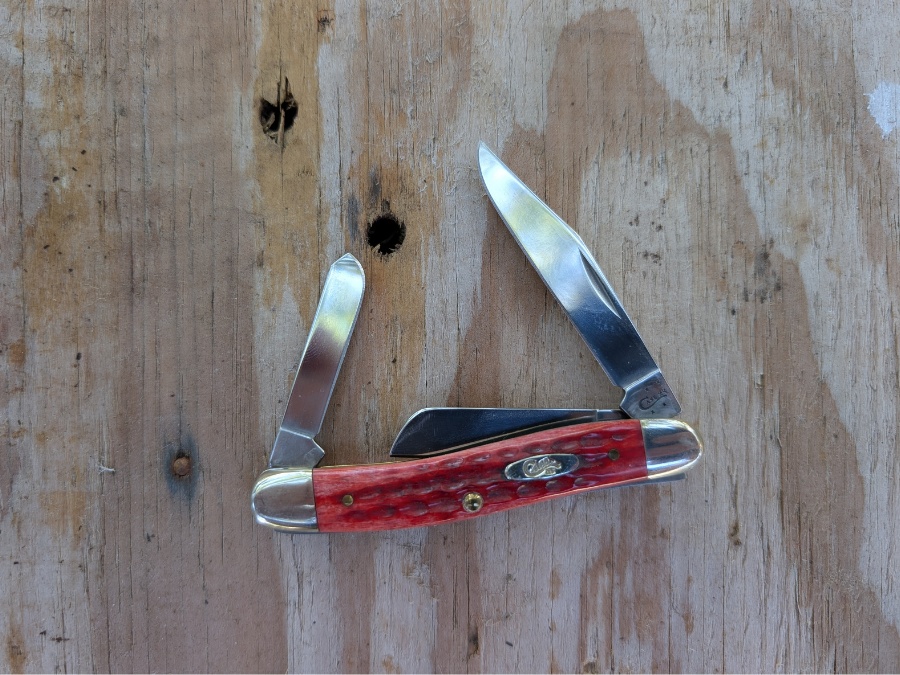
Classic traditional that still earns its spot
Street Price: $60 to $90 | Tru-Sharp or carbon steel | Slipjoint | Three blades
A true old school pocketknife that still works as everyday carry. The Medium Stockman gives you a clip point, sheepsfoot, and pen blade packed into a slim serpentine frame that rides light and disappears in the pocket.
Fit and finish is “typical Case”—some rub marks, light pull, softer snap—but the utility is undeniable. The sheepsfoot is the real workhorse, the clip handles everyday slicing, and the pen blade ends up doing more than you expect.
It’s classic, friendly, and capable. The kind of knife you can use, pocket, and forget until you need it. Great traditional EDC.
Gerber Armbar Drive
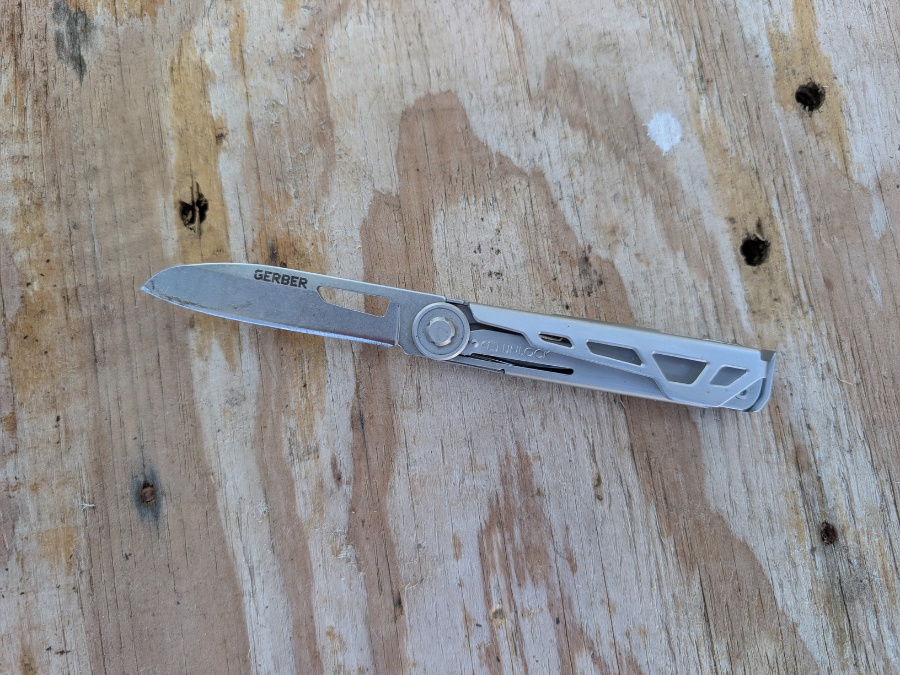
A pocket-friendly multitool that actually gets used
Street Price: ~$35–$45 | 7Cr17MoV | Slipjoint-style tool | 2.5″ blade
The Armbar Drive isn’t your typical folding knife—it’s built around the usefulness you’ll actually reach for in real life. At its heart is a 2.5″ drop-point blade in 7Cr17MoV steel: fine for everyday cutting such as opening packages, trimming cord, or prepping small tasks. But the standout feature is the integrated full-size bit driver and spring-loaded scissors.
The bit driver is a serious piece of practical gear: accepts standard bits, gives you real leverage, and turns the knife into a quick screwdriver when needed. The scissors are robust and capable—they’re not decorative, you’ll genuinely use them for cutting threads, zip-ties, or small jobs. The handle feels solid, not flimsy, and carries like a slim tool.
Bottom line: If you want a single EDC tool that flips open, cuts, drives screws, and trims stuff, the Armbar Drive is one of the most practical options you’ll find under $50. Read My Full Review Here.
What 30 Knives Taught Me About EDC
After carrying, using, and abusing every knife on this list, a few things become clear.
Price doesn’t always equal performance. The QSP Penguin at thirty bucks outslices folders that cost five times as much. The CJRB Feldspar has no business being this good for the money. Meanwhile, some premium knives earn every dollar—the Kershaw Bel Air and Bradford Guardian 3 feel like tools you’ll hand down someday.
There’s no single “best” pocket knife. The Bugout is perfect for ultralight carry and useless if you want a knife that feels solid. The Recon 1 Tanto is a tank that disappears in your pocket and overkill for opening Amazon boxes. The Opinel is a campsite legend and a terrible choice for fast deployment. Every knife on this list does something well—the trick is matching the tool to how you actually use it.
What matters is that you carry it. The best EDC knife is the one that’s actually in your pocket when you need it. A fifty-dollar knife you carry every day beats a two-hundred-dollar knife sitting in a drawer.
If you’re just starting out, grab the Penguin or the Feldspar and learn what you like. If you want one knife that does almost everything, the Para 3 Lightweight or Delica 4 will serve you for years. If you want something that makes you smile every time you flip it open, half this list qualifies.
And if you buy one of these knives and disagree with my take? Good. That means you’re actually using it. Send me a message and tell me why I’m wrong—I’m always looking for a reason to buy another knife.
Now stop reading and go cut something.
Frequently Asked Questions About EDC Knives
What blade length is best for everyday carry?
For most people, 2.75 to 3.25 inches hits the sweet spot. Long enough to handle real tasks, short enough to carry comfortably and stay legal almost everywhere. Under 2.5 inches starts feeling like a toy for adult hands. Over 3.5 inches gets into “do I really need this much knife?” territory—useful, but heavier and harder to justify in an office environment.
If you’re unsure, start around 3 inches. The Spyderco Delica, Para 3 LW, and QSP Penguin all land right in that zone for a reason.
What knife steel should I look for?
For budget knives (under $50): D2, 8Cr13MoV, 9Cr18MoV, and 14C28N are all solid choices. D2 holds an edge longer but can rust if you ignore it. The Cr steels are softer but sharpen easily and resist corrosion. 14C28N is the sleeper—tougher than it looks and easy to maintain.
For mid-range ($50–$150): Look for 154CM, VG-10, Nitro-V, or AUS-10A. All proven performers with good edge retention and reasonable maintenance.
For premium ($150+): S30V, S35VN, S45VN, M390, and CPM Magnacut are the current standards. They hold edges longer, resist corrosion, and generally perform better—but they cost more to buy and can be harder to sharpen without good stones.
Honestly, steel matters less than people think. A well-ground 8Cr blade will outcut a poorly ground S30V blade every time. Geometry beats metallurgy for most daily tasks.
What’s the difference between liner lock, frame lock, and back lock?
Liner lock: A bent piece of steel inside the handle springs over to hold the blade open. Simple, proven, easy to close one-handed. Most budget and mid-range knives use this. Downside: your fingers cross the blade path when closing.
Frame lock: Same concept, but the lock is part of the handle itself rather than a separate liner. Generally stronger and gives a more solid feel. Common on higher-end knives.
Back lock: A spring-loaded bar in the spine locks the blade. Very strong, very secure, but usually requires two hands to close. Traditional Spydercos and Buck knives use this.
Axis/Crossbar lock: A spring-loaded bar that moves perpendicular to the blade. Ambidextrous, easy to operate, great for fidgeting. Benchmade pioneered it; now several brands make versions (CIVIVI calls theirs a crossbar lock).
Compression lock: Spyderco’s design where a leaf spring in the handle locks behind the blade. Strong, easy to close, and your fingers stay clear of the edge.
For most people, liner locks and crossbar locks offer the best combination of strength, ease of use, and one-handed operation.
How much should I spend on my first good pocket knife?
Thirty to fifty dollars gets you a genuinely excellent knife. The QSP Penguin, CJRB Feldspar, and CRKT Pilar all live in this range and perform far better than their prices suggest. You don’t need to spend $150 to get quality—you just need to spend it wisely.
If you’re brand new, start at $30. Carry it for six months. Learn what you like and don’t like. Then upgrade with actual knowledge instead of guessing based on internet hype.
Is D2 steel good?
Yes, with caveats. D2 is a semi-stainless tool steel that holds an edge well and takes abuse without chipping. It’s one of the best steels in the budget category and shows up on knives from $25 to $100.
The catch: D2 can rust if you leave it wet or live somewhere humid. Wipe it down after use, hit it with a little oil occasionally, and it’ll treat you fine. If you want zero-maintenance steel, look for 14C28N or step up to S30V.
Also worth knowing: “D2” from different manufacturers isn’t always the same. Heat treatment matters as much as the steel itself. A QSP or CJRB D2 blade is generally well-treated. Random Amazon brands? Roll the dice.
What blade shape is most practical for EDC?
Drop point: The all-rounder. Strong tip, good belly for slicing, handles almost any task. If you’re only carrying one knife, this is probably the shape.
Sheepsfoot/Wharncliffe: Flat edge, no belly, excels at controlled cuts and slicing. Great for boxes, tape, and precision work. Less useful for piercing.
Tanto: Reinforced tip, angular grind, built for hard use and piercing. Overkill for most EDC tasks but nearly indestructible at the point.
Clip point: Classic Bowie-style shape with a thinner, more precise tip. Good all-rounder but the tip is more fragile than a drop point.
Hawkbill: Curved inward like a talon. Specialized for cutting rope, straps, and material under tension. Not an everyday shape, but incredibly effective at what it does.
For general EDC, start with a drop point or sheepsfoot. Branch out once you know what tasks you actually use a knife for.
Should I get a folding knife or a fixed blade for EDC?
Folding knife for 95% of people. They’re more compact, more socially acceptable, and easier to carry in most environments. A good folder handles virtually every daily cutting task without drama.
Fixed blades make sense if you work outdoors, need maximum strength, or want something you can deploy instantly without a lock to worry about. The Bradford Guardian 3 proves you can carry a fixed blade concealed without looking like a mall ninja—but it’s still more commitment than dropping a folder in your pocket.
Start with a folder. Add a fixed blade later if your use case demands it.
How do I maintain a pocket knife?
Basic maintenance takes five minutes:
- Clean it: Wipe the blade after use. Blow out lint and debris from the pivot occasionally. Q-tips and compressed air work fine.
- Lubricate it: A drop of oil on the pivot and lock surfaces every few months keeps the action smooth. Mineral oil, 3-in-1, or dedicated knife oil all work.
- Sharpen it: Touch up the edge before it goes completely dull. A ceramic rod or fine diamond stone takes thirty seconds. Full reprofiling is rarely needed if you maintain regularly.
- Check the screws: Pivot screws and clip screws can loosen over time. Snug them up if you notice play.
That’s it. Most pocket knives need very little attention to stay functional for years.
How often should I sharpen my EDC knife?
Depends on use, but most people can go weeks or months between touch-ups. A quick pass on a ceramic rod every few weeks keeps a working edge indefinitely. If you’re cutting cardboard daily, you’ll sharpen more often. If you mostly open packages and slice the occasional apple, you’ll barely touch your stones.
The key is maintaining before it’s dull. A few light strokes on a sharp knife beats fifteen minutes of work on a butter knife.
Are expensive knives worth it?
Sometimes. Premium knives generally offer better steel, tighter tolerances, smoother action, and more refined ergonomics. A $200 Benchmade will feel different than a $30 CJRB—cleaner, more precise, more polished.
But “different” doesn’t always mean “better for you.” A QSP Penguin cuts cardboard just as well as a knife costing six times more. If you lose knives, abuse them, or just need something functional, budget options deliver incredible value.
Premium makes sense when you care about the details: action quality, handle materials, steel performance, fit and finish. It doesn’t make sense if you just need a blade that works.
What about knife laws? Can I carry these anywhere?
Laws vary wildly by state, city, and country. Some places restrict blade length (often 3 or 4 inches). Some ban specific features like assisted opening or one-hand deployment. Some prohibit carry in certain buildings regardless of knife type.
General guidelines for the US:
- Blades under 3 inches are legal almost everywhere
- Avoid automatic (switchblade) knives unless you know your local laws
- Some cities (NYC, San Francisco) have stricter rules than their states
- Federal buildings, schools, and courthouses are always off-limits
Look up your specific state and city laws before carrying. A five-minute search beats a confiscation or worse.
What’s the best pocket knife for the money?
The QSP Penguin at $30 is almost impossible to beat for pure value. Great steel, great action, great ergonomics, deep carry clip, and a blade shape that excels at actual work. It’s the knife I hand to anyone who asks “what should I buy first?”
The CJRB Feldspar runs a close second. Slightly larger, slightly more versatile, and just as well-made for the price.
If you can stretch to $50–$60, the CIVIVI lineup opens up, and you start getting premium features at budget prices.
I have big/small hands—what knife should I get?
Large hands: Look for handles over 4.5 inches. The Cold Steel Recon 1, CIVIVI Tacticorix, Benchmade 940, and Off Grid Stinger XL all give you room to grip without cramping. Avoid sub-3-inch blades with short handles—they’ll feel like toys.
Small/medium hands: Most knives in the 3–3.5 inch blade range work well. The Spyderco Delica, Para 3 LW, and QSP Penguin are all comfortable for average hands. If standard handles feel chunky, look at slimmer options like the Böker Kwaiken Air or Giant Mouse Ace Clyde.
Universal: The Benchmade Bugout and Tagged Out have adjustable ergonomics that work for a wide range of hand sizes.

Blair Witkowski is an avid watch nut, loves pocket knives and flashlights, and when he is not trying to be a good dad to his nine kids, you will find him running or posting pics on Instagram. Besides writing articles for Tech Writer EDC he is also the founder of Lowcountry Style & Living. In addition to writing, he is focused on improving his client’s websites for his other passion, Search Engine Optimization. His wife Jennifer and he live in coastal South Carolina.