
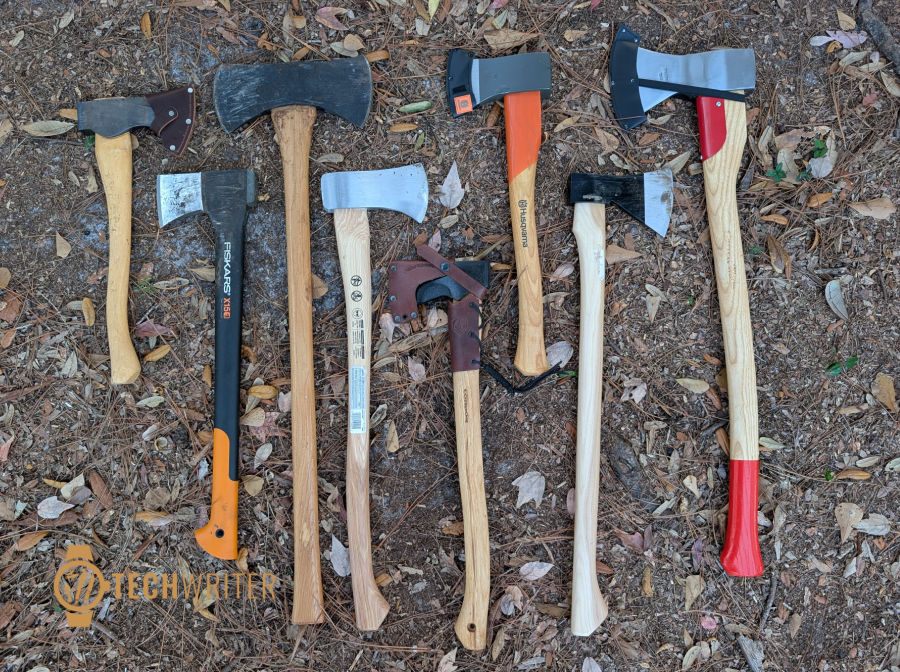
Best Axes for Splitting Wood: The Ones That Actually Work
Most axes look good on a shelf. Only a few actually earn their keep once you start swinging. After testing everything from bargain hardware-store choppers to premium forged tools, I can say this: the right axe doesn’t make you work harder—it makes every swing count.
This roundup cuts straight to the tools that proved themselves in real use. No hype, no showpieces, no “collector” axes pretending to be workhorses. These are the axes that split clean, bite deep, survive bad hits, and keep performing season after season.
I own eight of the axes in this roundup, and several have been with me for years—woodpile regulars, trail tools, bushcraft beaters. The ones I don’t own I researched through long-term user reviews, steel analysis, and conversations with people who actually swing them. What made the list isn’t hype—it’s tools that kept delivering.
If you want to save time, save energy, and split more wood with less frustration, start here. These are the best axes for the job.
Quick Picks:
- Best Budget Splitter: Fiskars X15
- Best Traditional Splitter: Collins Jersey 36
- Best All-Rounder: Husqvarna German
- Best Pack Axe: Hults Bruk Akka
- Best Budget Axe For Beginners: Cold Steel Trail Boss
Fiskars X15 Splitting Axe
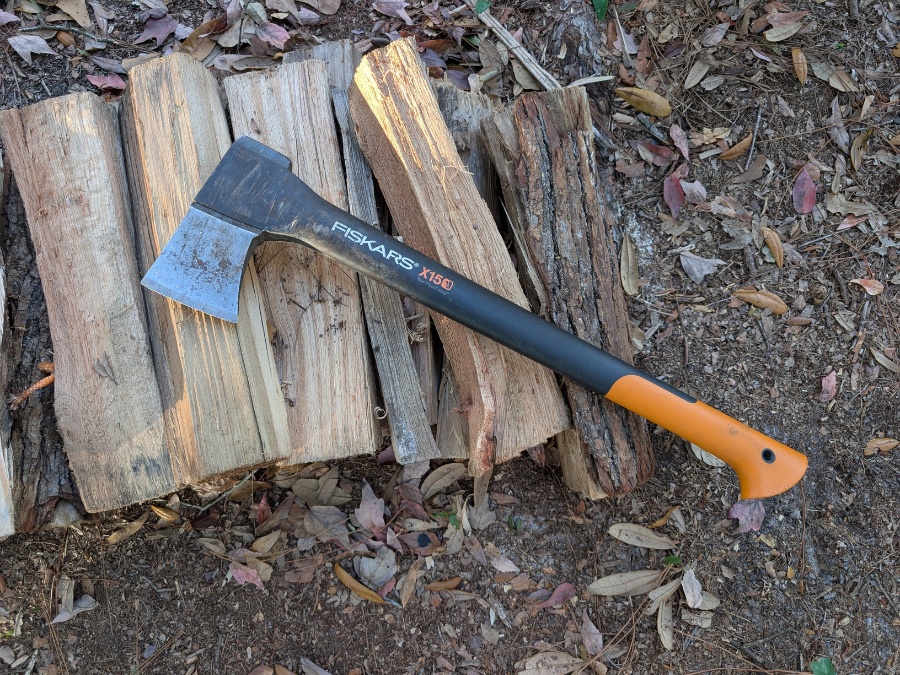
Best Budget Axe for Pure Chopping Power
Quick Specs: Street price ~$40–$50 • Head weight ~3.5 lb • Handle length 23.5″
If you want the most chopping force you can get for the least amount of money, the Fiskars X15 is hard to beat. This axe is unapologetically head-heavy, and that weight translates directly into deep, aggressive bites when you’re splitting or bucking wood. In testing, it powered through rounds faster than axes that cost twice as much, and it absolutely excels at straight-up wood destruction.
It’s not a balanced or versatile tool. The FiberComp handle is nearly bombproof but a little slick until you wrap it, and the weight distribution makes close-in or one-handed work feel awkward. This isn’t the axe you take backpacking or use for carving—not even close.
But if you’re processing firewood at home or maintaining a campsite and want a cheap, tough, high-output chopper, the X15 delivers exactly what it promises. It’s simple, effective, easy to find, and one of the strongest values in the budget splitting axe category.
Best For: Budget-friendly, high-output splitting and backyard wood processing.
Collins Axe Jersey 36

Best Traditional Hickory-Handled Splitter
Quick Specs: Street price ~$35–$50 • Head weight ~3–3.5 lb • Handle length 36″
The Collins Jersey 36 is a classic full-size splitter that delivers exactly what you want from a traditional axe: good steel, real hickory, and dependable power. The drop-forged head has that familiar Jersey pattern shape that bites deep and keeps moving through tough rounds, and the 36-inch handle gives you all the leverage you need for big, confident swings.
What makes this axe stand out is the feel. The hickory handle soaks up shock better than most synthetics, and the overall weight—right around five pounds—hits a sweet spot between heavy enough to split efficiently and light enough to control for longer sessions. This isn’t a fancy boutique axe, and it doesn’t pretend to be. It’s a straightforward, reliable wood-processing tool built for splitting firewood and general homestead chores.
If you prefer traditional handles and want an affordable, hard-hitting axe that just works, the Collins Jersey 36 is one of the best value choices in the full-size category.
Best For: Traditional full-size splitting with a forgiving, shock-absorbing hickory handle.
Cold Steel Trail Boss
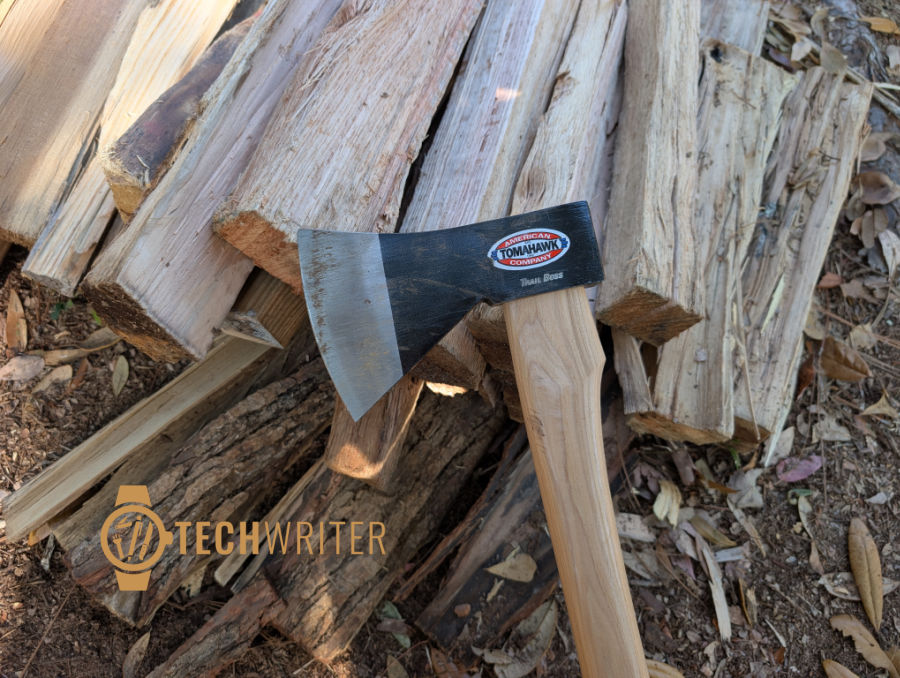
Best Budget Axe for Splitting Wood
Quick Specs: Street price ~$25–$40 • Head weight ~2.25 lb • Handle length 27″
The Cold Steel Trail Boss has earned a reputation as one of the best values in the “boy’s axe” category, and after using it, it’s easy to see why. It’s lightweight, easy to swing, and hits far above its price point when it comes to clearing trails, limbing branches, or dealing with saplings. The Hudson Bay–style head gives it a wide cutting edge and a lively feel, making it a great option for quick, repeated chops on smaller wood.
The downside is the factory hang. The head on many Trail Boss axes comes loose faster than it should, thanks to the narrow eye and the reliance on barrel wedges. It’s not a dealbreaker—just expect to rehang it early or tune it up yourself. Once the head is secure, the axe really comes into its own.
For its size, the Trail Boss bites surprisingly deep and remains comfortable to use thanks to its manageable weight and long handle. It’s not a heavy-duty splitter and it’s not meant for big, knotty rounds, but for day-to-day camp chores, trail clearing, and lightweight wood processing, it’s one of the best cheap axes you can buy.
If you want a hardworking, easy-to-carry axe that won’t break the bank—and you don’t mind doing a little finishing work—the Cold Steel Trail Boss delivers outstanding performance for the money.
Best For: Budget trail work, limbing, saplings, and general camp chores.
Condor Tool & Knife Double Bit Michigan
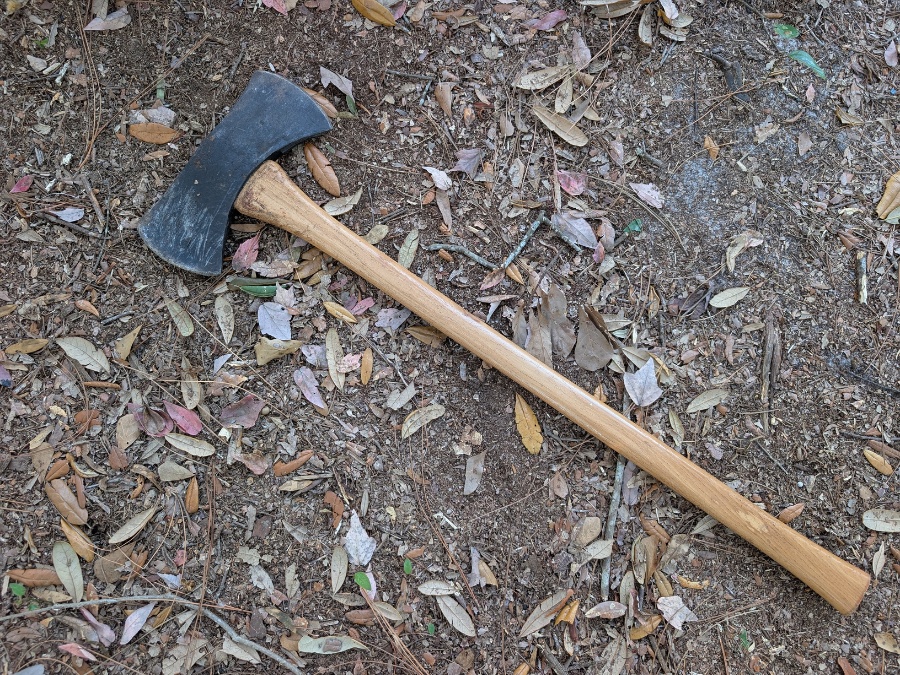
A Classic Double-Bit Workhorse for Trail Clearing and Chopping Wood
Quick Specs: Street price ~$80–$110 • Head weight ~2.5–3 lb est. • Handle length ~30″
Condor’s Double Bit Michigan Axe is one of those tools that feels rooted in tradition but doesn’t cost a fortune. With two identical cutting edges, you essentially get double the usable blade—one side for heavier chopping, the other kept sharp for clean cuts. For anyone who spends time on trails, campsites, or wooded property, having two edges ready to go is more useful than it sounds.
Despite being a full-size axe, the Condor swings lighter than expected thanks to its slim bit profile and long hickory handle. It’s easy to control, easy to aim, and surprisingly quick in the hands compared to heavier felling axes. In frozen or tough wood, it still bites well and keeps momentum through the cut. For limbing, clearing saplings, or general trail work, it’s absolutely capable.
Where this axe makes the most sense is for users who want a dedicated cutter—not a hammer, not a do-everything bushcraft tool. A double bit isn’t what you grab to pound pegs or beat on hardware, and Condor isn’t trying to pretend it is. This is a cutting tool through and through, supported by a nicely shaped hickory handle and one of Condor’s better leather sheaths.
Best For: Trail clearing, repeated chopping, and anyone who wants two cutting edges ready to go.
Husqvarna German Splitting Axe

Best Mid-Size All-Rounder for Chopping and Log Splitting
Quick Specs: Street price ~$60–$80 • Head weight ~2.7 lb • Handle length 19″
The Husqvarna German Splitting Axe (often sold as the 1250 “universal axe”) is a sweet spot tool if you want one axe that can both split and chop without feeling like a giant boat anchor. With a German-made Rhine-style head around 2.7 pounds and an overall length of about 19″ inches, it lands right between a compact hatchet and a full-size felling axe.
In the real world, that means you can swing it most of afternoon without wrecking your shoulders, but it still has enough bite to chew through branches, small trees, and modest rounds. I was surprised at how beefy this ax was when I opened it. It definitely has the weight behind it to do some serious splitting.
The head has a nice, slender taper that lets it sink quickly and cut cleanly, especially in medium hardwoods. It’s not a dedicated maul and it won’t bully its way through gnarly, knotty rounds the way a heavy 5-pound splitter will, but for limbing, processing blowdowns, trail work, and campfire wood, it feels fast, lively, and efficient. You can choke up for more control, or slide your hand down and let it run when you want power.
The ash handle has proper swell at the top and a solid flare at the end (called a fawn’s foot), so your grip feels locked-in during the swing. If you want a single axe that’s genuinely enjoyable to use, easy to carry, and versatile enough for both chopping and light splitting, the Husqvarna German Splitting Axe is a very strong contender.
Best For: A true mid-size all-rounder that can chop, limb, and split without fatigue.
COUNCIL TOOL Wood-Craft Pack Axe
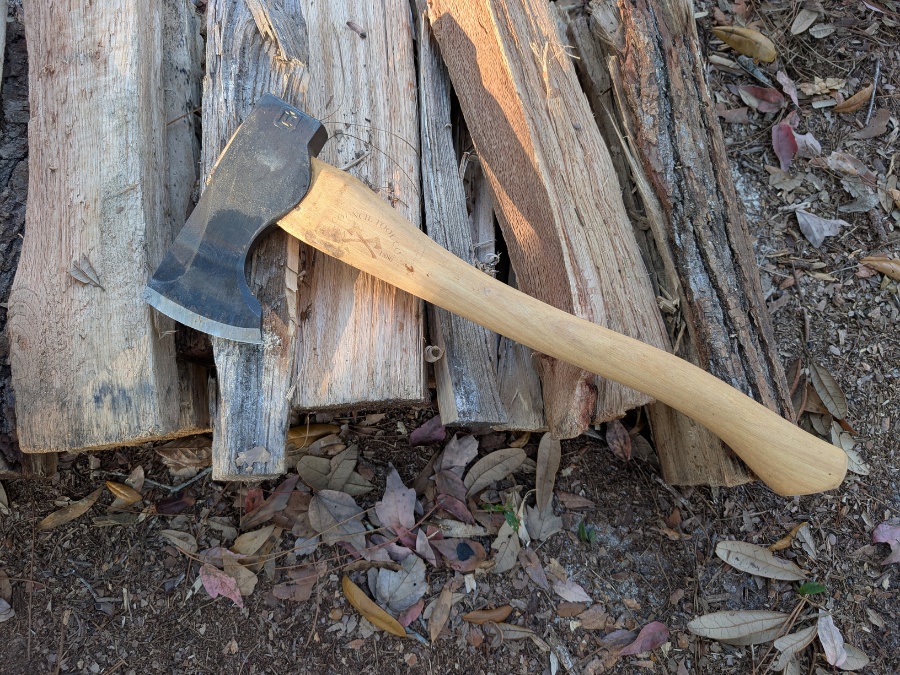
Best Premium Pack Axe for Camp Chopping and Small-Log Splitting
Quick Specs: Street price ~$140–$190 • Head weight 2 lb • Handle length 19″ (also 24″)
The Council Tool Wood-Craft Pack Axe is what you buy when you’re done wasting money on cheap “bushcraft” toys and want a serious, American-made tool in your pack. With a 2 lb 5160 spring-steel head and a 19″ handle (also available in 24″), this one is built for control, deep bites, and clean woodcraft work first, with splitting as a strong second.
The geometry is what sets it apart. The bit is long, thin, and ground around 25° per side, so it bites deeper and cleaner than most compact axes. That makes it excellent for limbing, shaping, notching, and general camp chores where precision matters.
You can choke up on the long beard for knife-adjacent tasks, then slide back and let it swing when you want to break down small rounds and kindling. It’s not a replacement for a full-size splitting axe on big, knotty wood, but for 3–4″ logs and campfire splitting, it performs way above its size.
Add in the straight, well-grained hickory handle and Council’s long history of making real working axes in the U.S., and you’ve got one of the best premium pack axes on the market for anyone who actually uses their gear.
Best For: Premium camp use, carving, notching, and small-log splitting with real control.
Condor Tool & Knife Cloudburst Axe

Another Solid Budget Axe for Splitting Wood
Quick Specs: Street price ~$70–$90 • Head weight ~1.75 lb est. • Handle length 23″
Condor’s Cloudburst Axe is one of those rare budget tools that punches above its weight without pretending to be something it’s not. Made in El Salvador with a 1060 high-carbon steel head and a 23″ hickory handle, it hits the sweet spot for campers and weekend bushcrafters who want real performance without spending boutique money.
The head shape is classic Condor—clean lines, a functional 3″ bit, and a compact poll you can actually use without worrying about deforming the eye. The grind is thin enough to bite easily, making it great for limbing, notching, and breaking down smaller campfire rounds. It’s not a heavy hitter designed for big, knotted hardwood, but for general camp chores, it feels quick, predictable, and easy to swing.
The fit and finish are surprisingly good for the price. The handle seating on the examples I’ve seen has been solid with no gaps, and the included leather sheath is far nicer than what most axes offer at twice the price. It’s thick, well-stitched, and even has a spacer to keep the edge from getting chewed up.
Best For: Budget bushcraft chores, limbing, kindling prep, and camp use.
Hults Bruk Akka Forester’s Axe
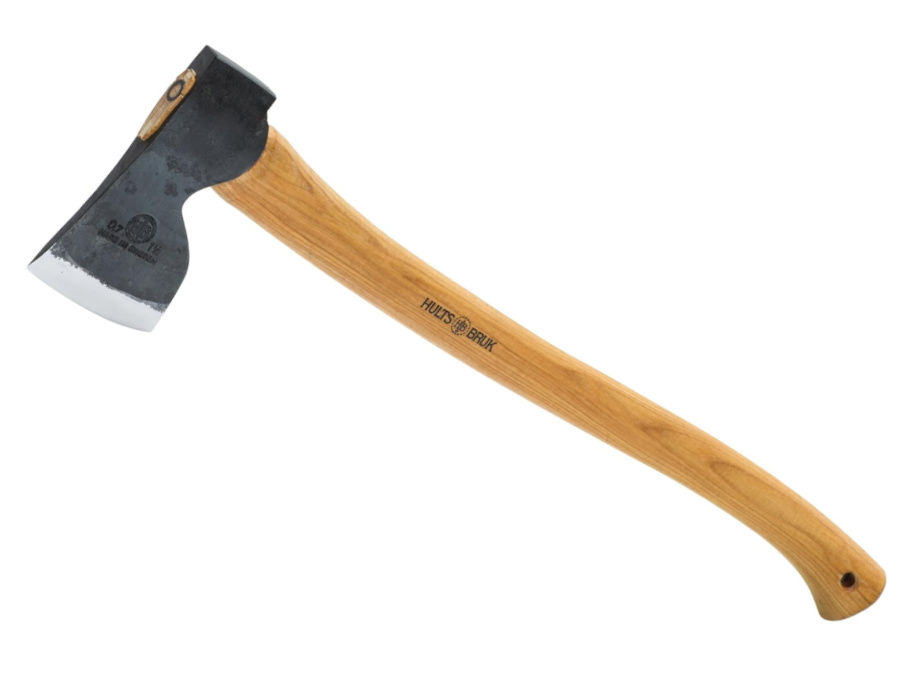
A Lightweight, High-Performance Pack Axe for Camp Chores & Splitting Wood
Quick Specs: Street price ~$160–$220 • Head weight 1.5 lb • Handle length 23″
The Hults Bruk Akka Forester’s Axe is one of the most capable ultralight “pack axes” you can buy, and it earns that reputation with a smart blend of chopping power, carving finesse, and packable size. With a 1.5-lb head and a 23″ hickory handle, the Akka gives you more leverage than the smaller 19–20″ forest axes while still staying light and easy to carry on hikes, bushcraft outings, or in a vehicle kit.
The head design is what makes the Akka stand out. Its wide, high cheeks add splitting ability without making the axe feel wedgey, and the long, relieved bit allows you to choke up comfortably for controlled carving, notching, and fine work—something most pack axes struggle with. It isn’t a heavy-duty splitter, but for campfire rounds, feathering, tent stakes, and general camp chores, it’s excellent.
Out in the woods, the Akka punches above its weight. It handles light splitting easily, bites well in small felling cuts, and the longer handle gives it noticeably more authority than the traditional 19–20″ Scandinavian pack axe designs. The included leather sheath is also premium quality, better than many axes at this price point, and the steel quality from Hults Bruk is consistently top tier.
If you want a do-everything camp and bushcraft axe that’s light enough to carry but tough enough to work, the Hults Bruk Akka Forester’s Axe is one of the best options in the entire mid-sized axe category.
Best For: Lightweight pack carry, carving, camp chores, and small splitting with finesse.
Forest Maul Wood Splitter Axe
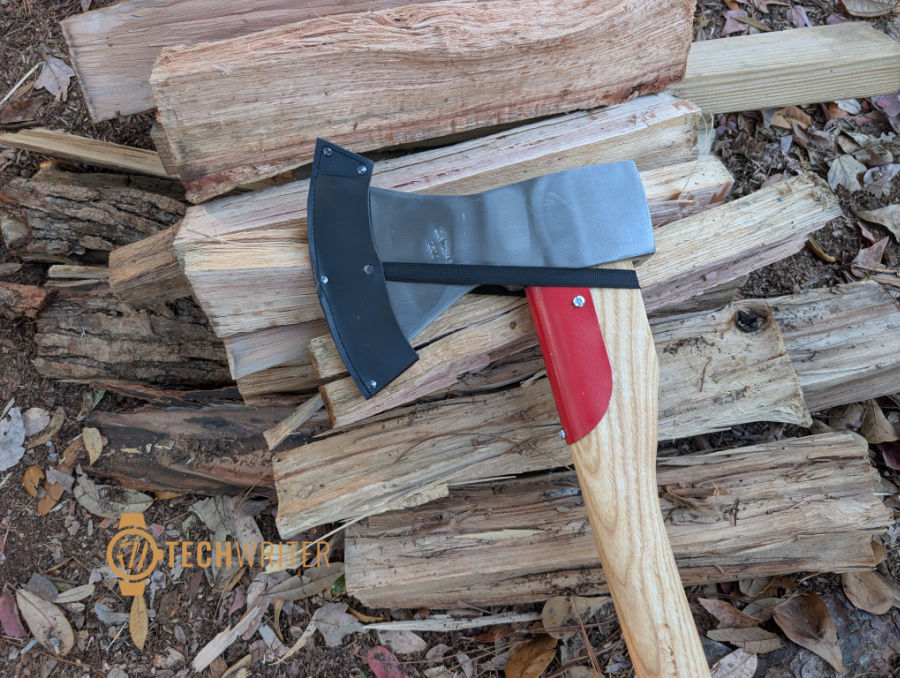
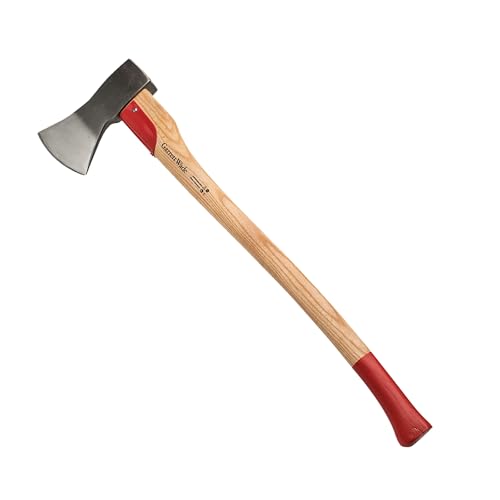
- MULTIPURPOSE SPLITTING HATCHET AXE – Tackle tough jobs with our full-size tree felling axe or wood splitting maul axe, which features a sharp blade ideal for using as a firewood splitter, for lawn cleanup, or for chopping down trees.

Heavy Hitting German Wood Splitter
Quick Specs: Street price ~$45 – $60 • Head weight ~4–5 lb • Handle length 31″
If you want a splitting axe that hits harder than a standard full-size axe without dragging around a full maul, the Forest Maul Wood Splitter Axe fills that middle ground perfectly. It’s built in Germany with a stout European ash handle and a wide wedge-style head designed to break rounds apart quickly instead of getting buried and stuck.
The head geometry is the real advantage here. The shoulders flare aggressively enough to pop wood apart on the first or second swing, making it ideal for firewood prep on medium-sized rounds.
The handle is straight-grain ash with a protective steel collar at the throat, which means you can overstrike without destroying the tool. At just over five pounds and around thirty-one inches long, it gives you real leverage and momentum, but it’s still manageable for repeated swings. You get more force than a three-pound axe but without the fatigue and bulk of a full seven- or eight-pound maul.
In use, this tool shines when splitting dry, knot-free firewood, breaking down rounds for the woodpile, or tackling backyard chores where you need power but also want accuracy.
It won’t replace a full maul for massive, gnarly pieces, but for most homeowners and wood burners it’s a strong, capable middleweight that earns its keep. This is a smart choice if you want a reliable splitter that doesn’t feel like overkill.
Best For: Medium-size round splitting where you want more punch than a standard axe without hauling a full maul.
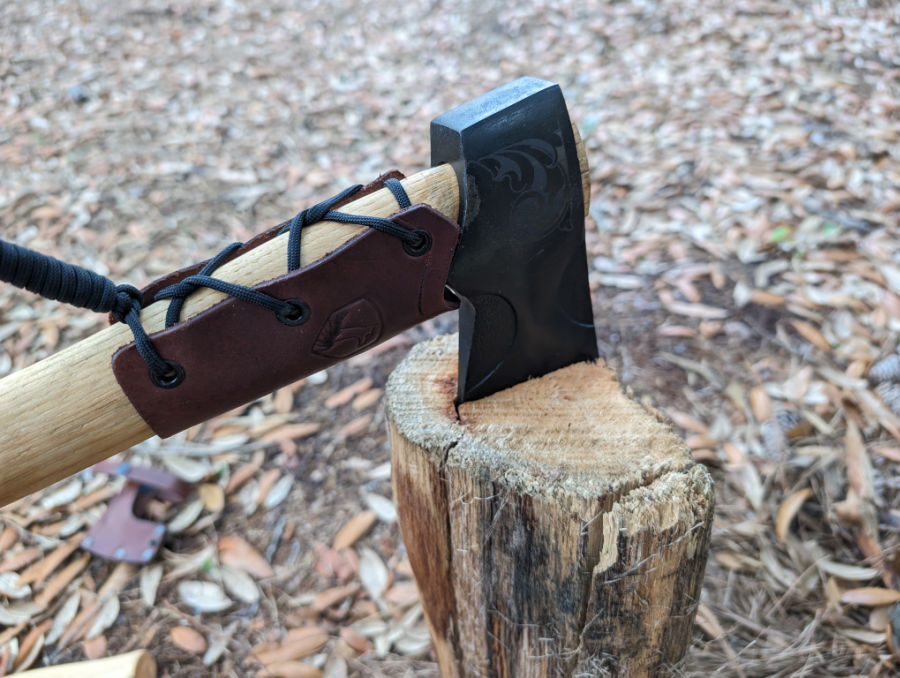
What These Axes Prove Once You Put Them to Work
When you spend enough time around woodpiles, campsites, and blown-down trails, you learn quickly which axes earn a permanent spot on the wall and which ones end up forgotten in a corner. Every tool in this roundup made the cut because it proved itself where it matters—outside, under load, with real swings and real work behind it.
You don’t need a dozen axes to get things done. You just need the right one for the job. Whether you lean toward a heavy hitter, a mid-size all-rounder, or a compact pack axe, pick the one that matches how you actually work and put it to use. The steel will tell you the truth soon enough.
And if nothing else, remember this: a good axe doesn’t just split wood—it makes the work enjoyable.
FAQ: Your Splitting Axe Questions Answered
What’s the difference between a splitting axe and a splitting maul?
A splitting axe typically weighs 3-5 pounds with a thinner wedge profile, designed for speed and multiple swings. A splitting maul weighs 6-12 pounds with a much wider wedge, built for maximum splitting force on single swings.
For most firewood tasks, a splitting axe offers better control and less fatigue. You only need a maul for massive rounds or extremely knotty wood. The Forest Maul in this list splits the difference—heavier than an axe but lighter than a true maul.
What size axe is best for splitting firewood?
For dedicated firewood splitting, you want:
- Head weight: 3-4 pounds (sweet spot for power vs. control)
- Handle length: 28-36 inches (leverage without losing accuracy)
- Overall weight: 4.5-6 pounds total
The Fiskars X15 and Collins Jersey 36 both hit these specs perfectly. If you’re processing smaller kindling or have limited storage, drop down to the 2.5-pound range like the Husqvarna German.
Can you split wood with a hatchet?
You can split kindling and small rounds (under 4″) with a hatchet, but it’s inefficient for real firewood. Hatchets lack the weight and handle length for proper splitting momentum.
If you need something packable that can still split decently, look at the Hults Bruk Akka or Council Tool Wood-Craft—they’re basically heavy hatchets with longer handles that bridge the gap.
Should I get a wood or composite handle?
Wood handles (hickory, ash):
- Better shock absorption
- Traditional feel and flex
- Can be replaced if broken
- Require more maintenance
Composite handles (fiberglass, FiberComp):
- Nearly indestructible
- No maintenance needed
- Can feel “dead” or vibrate more
- Can’t be replaced if damaged
For most users, composite makes sense for a beater axe (like the Fiskars). For a main splitter you’ll use regularly, hickory feels better in the hands.
How do I sharpen a splitting axe?
Splitting axes don’t need razor edges—in fact, too sharp can cause sticking. Aim for a 25-30° angle per side (50-60° inclusive). Here’s the quick method:
- File method: Use a bastard file at consistent angle, following the existing bevel
- Count strokes: Same number on each side to keep centered
- Finish: Hit it with a puck stone if you want, but filed is fine
- Test: Should shave wood, not hair
The axes in this list come reasonably sharp from factory. The Council Tool and Hults Bruk come sharpest, the Fiskars comes adequate, the Condors need touching up.
What weight axe for splitting—heavier is better, right?
Not necessarily. A 3.5-pound head swung properly generates more usable force than a 6-pound head swung poorly. Most people do best with:
- Beginners: 2.5-3 pounds (like the Husqvarna German)
- Regular users: 3-4 pounds (like the Fiskars X15)
- Experienced/strong: 4-5 pounds (like the Forest Maul)
Anything over 5 pounds becomes a specialty tool. You’ll split fewer pieces before fatigue sets in.
Do I need a double-bit axe?
Unless you’re doing serious trail work, probably not. Double bits like the Condor Michigan are fantastic for extended cutting sessions (one edge for rough work, one kept sharp), but they’re terrible for splitting since you can’t hammer wedges or use the poll for anything.
Single bit gives you more versatility. The only reason to go double bit is if you’re cutting all day and want two edges ready without resharpening.
Why are Swedish axes so expensive?
Swedish axes from Gransfors Bruks and Hults Bruk cost more because:
- Hand-forged by individual smiths (not mass produced)
- Higher grade steel with excellent heat treatment
- Hand-selected, properly dried hickory handles
- Each axe is essentially semi-custom
Are they 3x better than a Fiskars? No. Are they noticeably better in fit, finish, and edge retention? Yes. The Hults Bruk Akka in this list is the “affordable” Swedish option that still delivers that quality.
What’s the best axe for a beginner?
Start with the Cold Steel Trail Boss at $30. It’s cheap enough that you won’t cry if you damage it, tough enough to take abuse, and sized right for learning proper technique. Once you know what you like, upgrade to something specialized.
If you want to spend a bit more, the Husqvarna German at $70 is the best all-around axe that can grow with your skills.
How do I maintain an axe handle?
For wood handles:
- Sand lightly with 220-grit if it gets fuzzy
- Apply boiled linseed oil (BLO) twice a year
- Check head tightness before each use
- Store indoors when possible
For composite: Literally nothing. Maybe wash it once a year.
The Collins, Husqvarna, Council Tool, and Hults Bruk in this list all have quality handles that need minimal care. The Condors might need a light sanding to remove varnish for better grip.
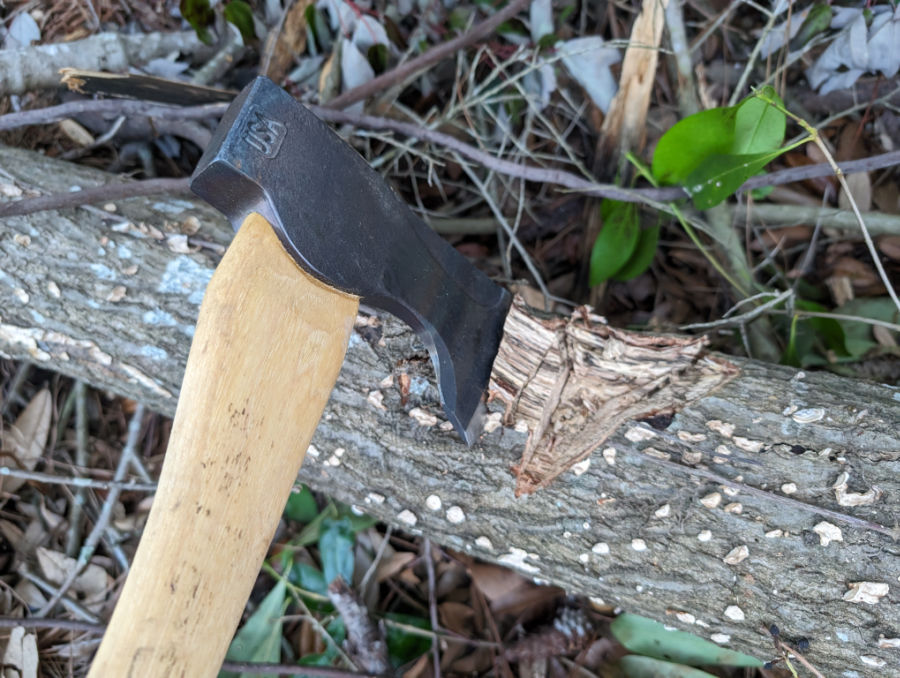
How I Tested These Axes
I didn’t just skim product pages and call it a day. I own eight of the axes in this roundup, and several of them have been with me for years—ridden in my truck, lived at the woodpile, gone through hot summers, wet winters, and plenty of abuse. I’ve used them for everything from breaking down firewood at home to clearing blowdowns on trails and doing weekend bushcraft chores.
For the axes I don’t currently own, I dug deep. That means reading long-term user reviews, studying steel and head geometry differences, watching dozens of YouTube tests from people who actually put these tools to work, and talking directly to folks who own and swing them regularly. My goal wasn’t to chase specs—it was to understand how each axe performs in real hands, on real wood, in real conditions.
I tested the ones I own across multiple seasons on a mix of pine, oak, hickory, elm, and whatever else the Lowcountry throws at me. I paid attention to bite depth, sticking, handle comfort, finishing quality, and how tired I felt after 20–30 minutes of repeated chopping. Splitting, limbing, light felling, carving, camp chores—you name it, I put these axes through it.
What made the list isn’t hype. It’s the axes that kept delivering—tools that I would hand to a friend without hesitation.

Blair Witkowski is an avid watch nut, loves pocket knives and flashlights, and when he is not trying to be a good dad to his nine kids, you will find him running or posting pics on Instagram. Besides writing articles for Tech Writer EDC he is also the founder of Lowcountry Style & Living. In addition to writing, he is focused on improving his client’s websites for his other passion, Search Engine Optimization. His wife Jennifer and he live in coastal South Carolina.