
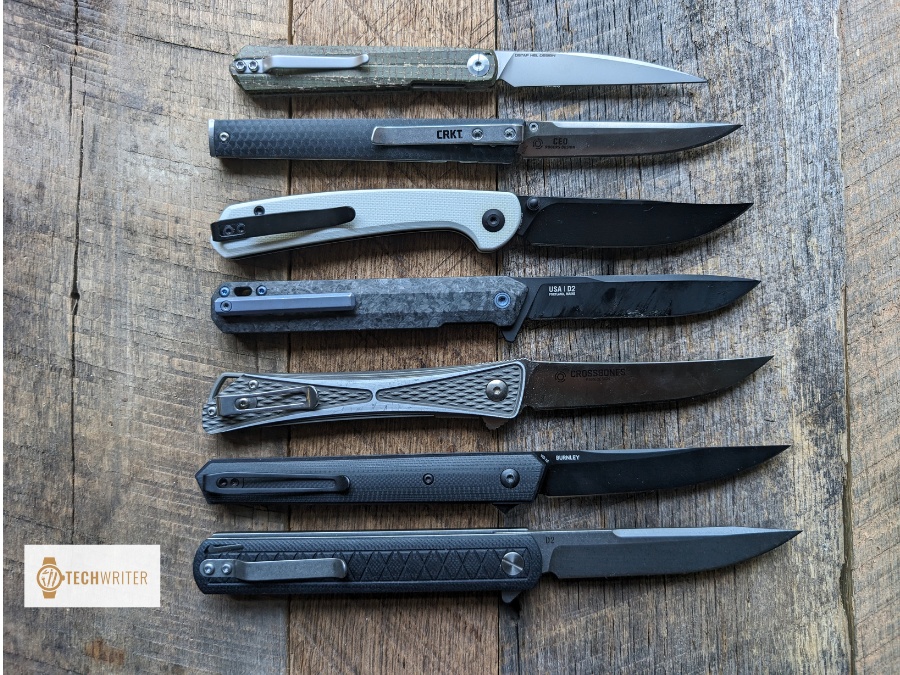
Best Gentleman’s Knife | Sleek EDC Picks That Balance Elegance and Utility
Quick Take
If you want the perfect balance of class and utility, the Böker Plus Kwaiken Air is my top pick. Slim, lightweight, and refined, it’s everything a gentleman’s folder should be. That said, every knife on this list has earned its spot — from budget-friendly beaters to sleek premium options, there’s something here for every pocket and price point.
What Makes a Gentleman’s Folder?
A gentleman’s knife isn’t about toughness or heavy use — it’s about discretion, style, and precision. These are slim, lightweight folders designed to disappear in your pocket until you need them. They shine at everyday tasks like opening packages, slicing fruit, or trimming a loose thread, all while looking right at home in the office, at dinner, or on the weekend.
I’ve owned and carried each of these knives — some for over two years — so this isn’t just spec-sheet talk. These are my real-world impressions from daily carry and extended use. Some models I reach for more than others, but each one brings its own flavor to what a gentleman’s folder can be.
My favorite is the Kwaiken Air, but you really can’t go wrong with any of these. They’re all different, all useful, and they cover a wide spread of price points so you can find the one that fits your style and your budget.
SENCUT Jubil
Slim, Sharp, and Discreet for Everyday Carry
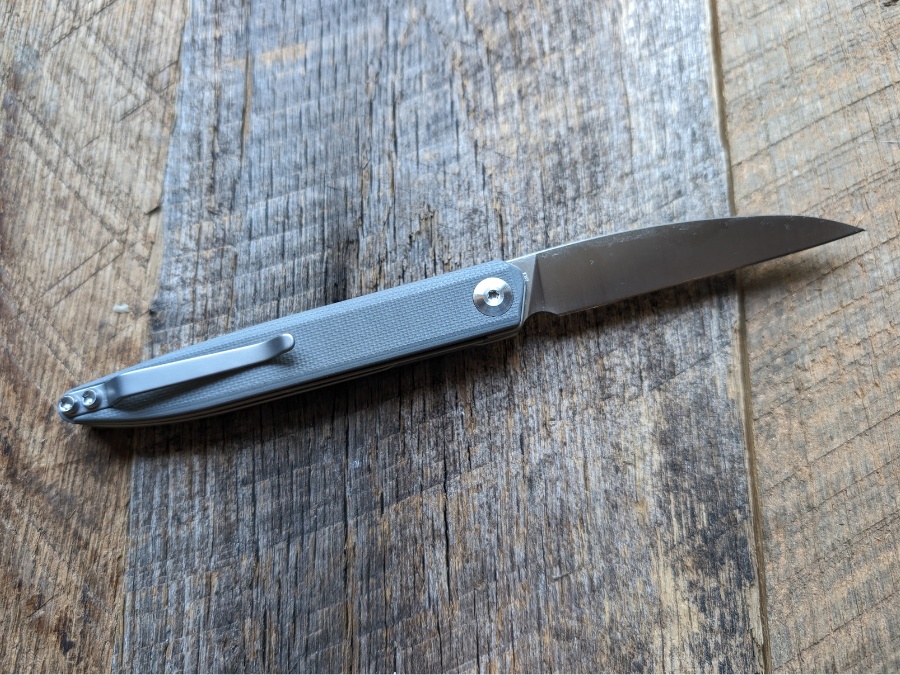
The SENCUT Jubil is what happens when a budget-friendly knife gets the gentleman’s treatment. At just over $37, it feels like a more approachable sibling to the CIVIVI Clavi — same long, narrow silhouette, but stripped down to the essentials. This is a gentleman’s knife first and foremost: light, slim, and so discreet in the pocket you almost forget it’s there until you need it.
The blade is a thin, slicey Wharncliffe in D2 steel. With its pokey fine tip and flat grind, it handles precision tasks like a scalpel — opening letters, trimming paper, scoring packaging. It’s not meant for heavy cutting, and if you jam that tip into a cutting board you’ll pay for it, but for detail-oriented everyday use, it absolutely shines.
In hand, the Jubil is minimal to a fault. The handle is extremely narrow, and while that keeps weight to a featherlight 1.7 ounces, it also means you’ll feel hand fatigue quickly if you try to muscle through tougher material. For gentleman’s carry, though, that tradeoff makes sense. This is a knife you slip into your pocket and barely notice until you need it.
Deployment is handled by a front flipper that rides on ceramic bearings. The action is smooth and snappy, even if the featherweight blade won’t drop shut under its own weight. The purple G10 scales add a touch of style while keeping grip secure, and the construction is simple and sturdy with heavy skeletonization inside to keep things light.
A bent stainless clip keeps carry discreet — shirt pocket, suit pocket, jeans pocket, it all works. It doesn’t scream “knife,” which is exactly what you want from something designed as a gentleman’s blade. My only real knocks are the bead-blasted finish, which will pick up wear and corrosion faster than a stonewash, and the right-hand-only clip. Lefties are out of luck here.
Verdict: The SENCUT Jubil isn’t built to chop wood or pry open crates — and it doesn’t need to be. For under forty bucks, you’re getting a clean, discreet, ultra-light knife that excels at the small, precise tasks where a gentleman’s knife belongs. It’s affordable, functional, and refined enough to hold its own in the office or on a night out.
CIVIVI Clavi
Ultra-slim, ultra-light, and built like a folding X-Acto knife.
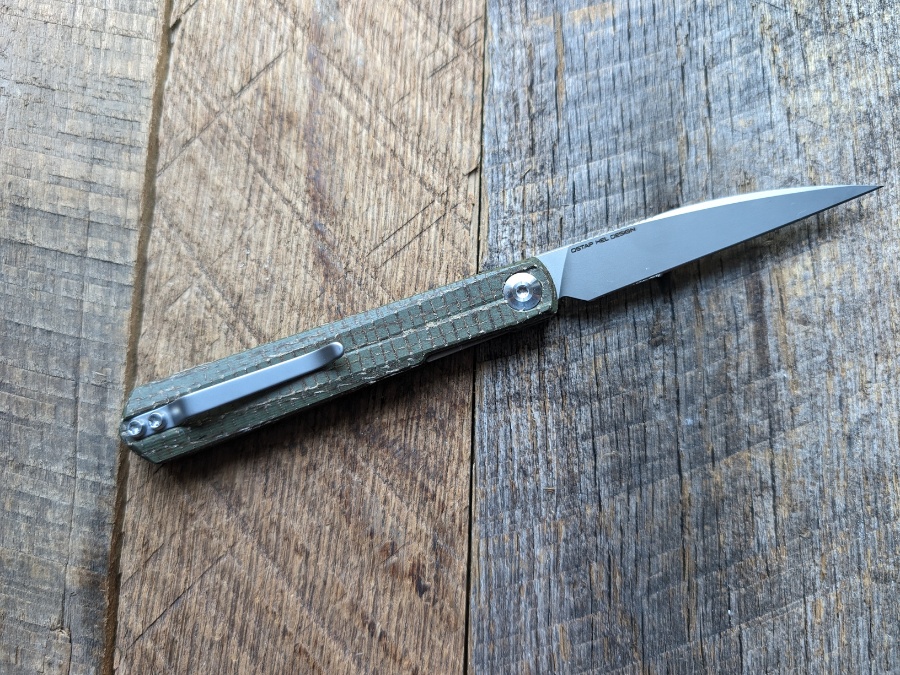
The CIVIVI Clavi is one of those knives that disappears in pocket until you need it. At just 1.57 ounces and 0.41 inches thick, it’s practically weightless, making it an ideal gentleman’s carry when you want a blade that won’t print or drag your pants down. CIVIVI gave it sleek lines, a front flipper, and Nitro-V steel — nothing fancy, but enough to deliver a reliable edge in day-to-day use.
The 3.06-inch Wharncliffe blade is where this design shines. With its needle-like tip and high flat grind, it feels more like a precision cutting tool than a pocket knife. Think of it as a folding X-Acto — perfect for detailed cuts, stencils, opening mail, or digging out a splinter. The edge geometry is thin, the tip is scalpel-sharp, and the control in a pencil grip is excellent. You won’t be prying with it, but used as intended, the Clavi punches way above its size.
Ergonomically, it’s basic but effective. Flat scales and a slim profile mean it’s not melting into your hand, but it avoids hotspots. CIVIVI made the smart move of skipping a deep carry clip, instead opting for a simple bent clip that works better with such a thin frame. The reversible clip and hidden lanyard post keep it discreet, and in something like basketball shorts or office slacks, it practically disappears.
The action is classic CIVIVI: smooth ceramic bearings, a crisp detent, and a front flipper tab with jimping that actually works. Even if you’re not a front flipper pro, the Clavi is easy to actuate and fidget with. Fit and finish are what you’d expect from CIVIVI — clean screws, countersunk hardware, and solid lockup, though the bead-blast finish on the blade does show wear quickly.
The Clavi isn’t a hard-use knife and doesn’t try to be. It’s an office-friendly gentleman’s folder: discreet, slim, and sharp. For under $65, it gives you a lightweight blade with serious precision cutting ability and the quality action CIVIVI is known for. If you want a pocket knife that feels closer to a scalpel than a workhorse, the Clavi delivers.
CRKT CEO
A suit-and-tie folder with boardroom looks and budget quirks.
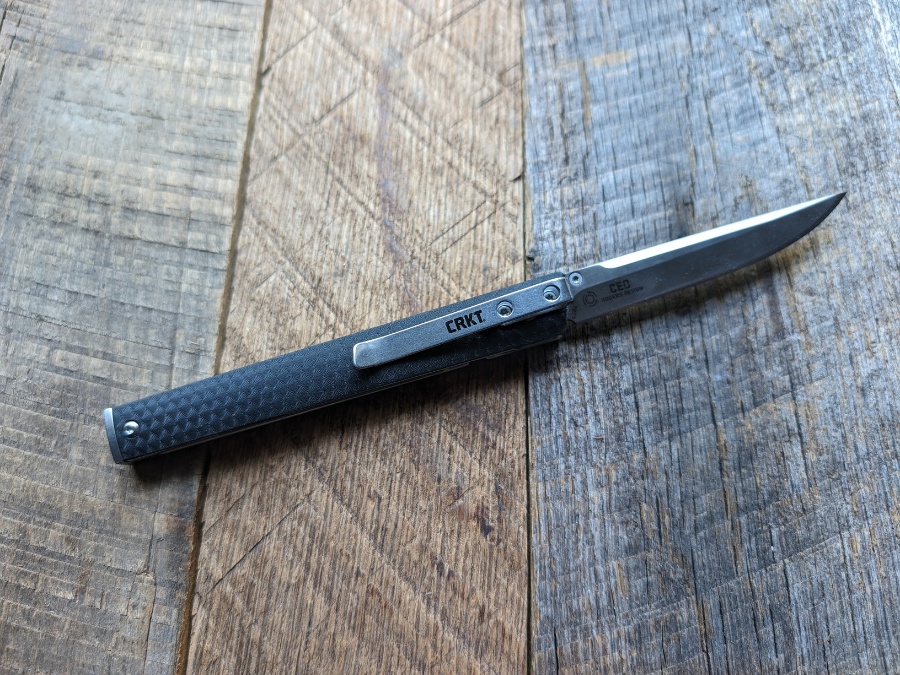
The CRKT CEO has always been about one thing: discretion. Richard Rogers designed this knife to look more like a pen than a blade, and the result is one of the most “gentlemanly” knives you can buy for under $50. Long, slim, and impossibly lightweight at just 1.9 ounces, it vanishes in a shirt or suit pocket until you need it.
The 3.35-inch AUS-8 blade is thin, slicey, and dressed in an elegant satin finish. It’s not premium steel, but it’s plenty capable for the kind of daily office tasks this knife was made for — opening mail, breaking down light packaging, or cutting loose threads before a meeting. Closed, the blade disappears completely into the handle, which makes the CEO one of the most discreet carries in this entire roundup. It really does pass for a pen at a quick glance, and that’s the whole point.
Where things get messy is the action. Out of the box, a lot of CEOs — mine included — suffer from a stiff detent that makes the flipper nearly unusable. CRKT’s quality control is hit-or-miss, and this knife is a prime example. The good news is that with a little tuning (bending the lock bar tension and adding some lubrication), the IKBS bearing system comes alive. Once sorted, the action is smooth, snappy, and downright addicting. But it shouldn’t take a workshop intervention to get there.
The GRN handles are clean and slim, with skeletonized steel liners keeping weight almost nonexistent. Ergonomics are better than expected for something that feels like a letter opener — you can get a full four-finger grip, and the scales have just enough contouring to stay comfortable. The deep carry clip is one of the best I’ve seen at this price point: low-profile, reversible, and nearly invisible in the pocket. For a discreet office knife, that’s exactly what you want.
The CEO is not a warehouse box-slayer or an outdoor beater. It’s a gentleman’s knife through and through — light, subtle, and dressed for the office. If you get a good one, or you’re willing to tweak it into shape, the CEO becomes one of the classiest budget folders out there. Just know you may have to work for that “executive” action.
SENCUT Skelfin
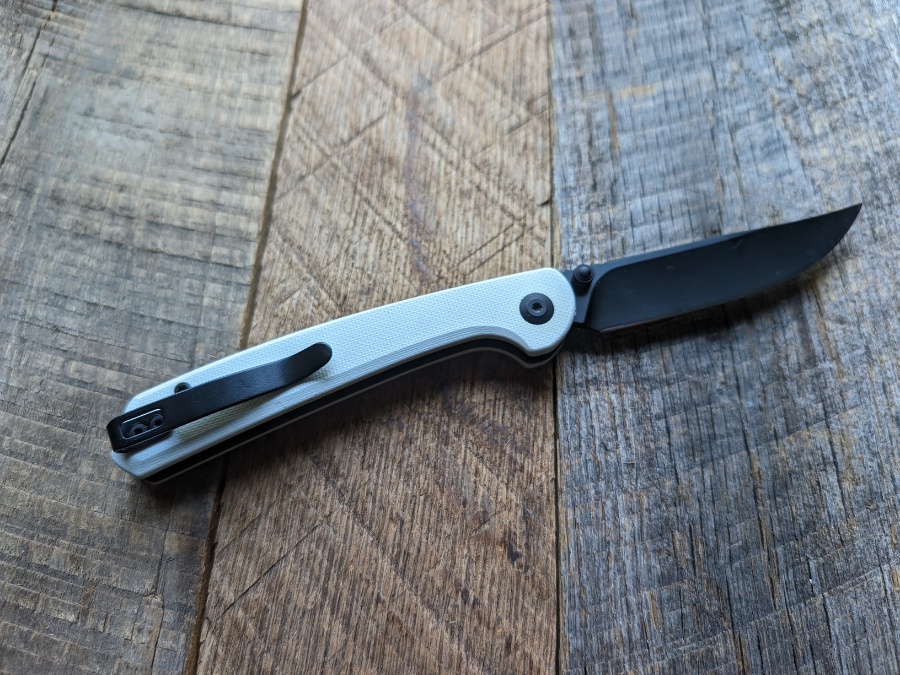
Slim, fidgety, and gentleman-ready with a killer button lock.
SENCUT has been quietly building a reputation for delivering budget knives that punch way above their weight, and the Skelfin is another winner in their lineup.
From a gentleman’s knife perspective, it checks nearly all the boxes — light, slim, and refined enough to vanish in your pocket, yet playful thanks to one of the best button locks in the budget category. Read My Full Review Here
The Skelfin’s specs read exactly like what you want in a discreet carry. At just 2.4 ounces and 0.43 inches thick, this knife doesn’t print or drag down your pocket. The 3.3-inch clip point blade in 9Cr18MoV steel with a hollow grind is slicey enough for daily tasks, and the black coating gives it a low-profile look that works in both jeans and slacks. It’s not premium steel, but SENCUT has consistently nailed the heat treat, and for this type of knife, edge retention and corrosion resistance are more than adequate.
Where the Skelfin really shines is in hand and in use. The white G10 handles are slim and clean, with just enough contouring to keep it from feeling flat. The pocket clip isn’t recessed but is reversible, so lefties aren’t left out. At this price point, the little trade-offs are forgivable, especially when the overall execution is this solid.
And then there’s the action. That button lock is addictive — crisp, confidence-inspiring, and downright fun to fidget with. Paired with thumb studs and cage ceramic bearings, the deployment is fast, smooth, and versatile. You can pop it open with a flick or simply enjoy the fidget factor while zoning out at your desk. SENCUT and its parent brand CIVIVI have proven they know how to dial in action, and the Skelfin continues that streak.
As a gentleman’s knife, the Skelfin hits the sweet spot: slim enough to carry in a suit, practical enough for daily use, and refined without being delicate. It’s the kind of knife you forget about until you need it, and then it shows up with style. For under $60, this is an easy recommendation for anyone looking to add a lightweight, button-lock gentleman’s folder to their rotation.
Tekto F2 Bravo
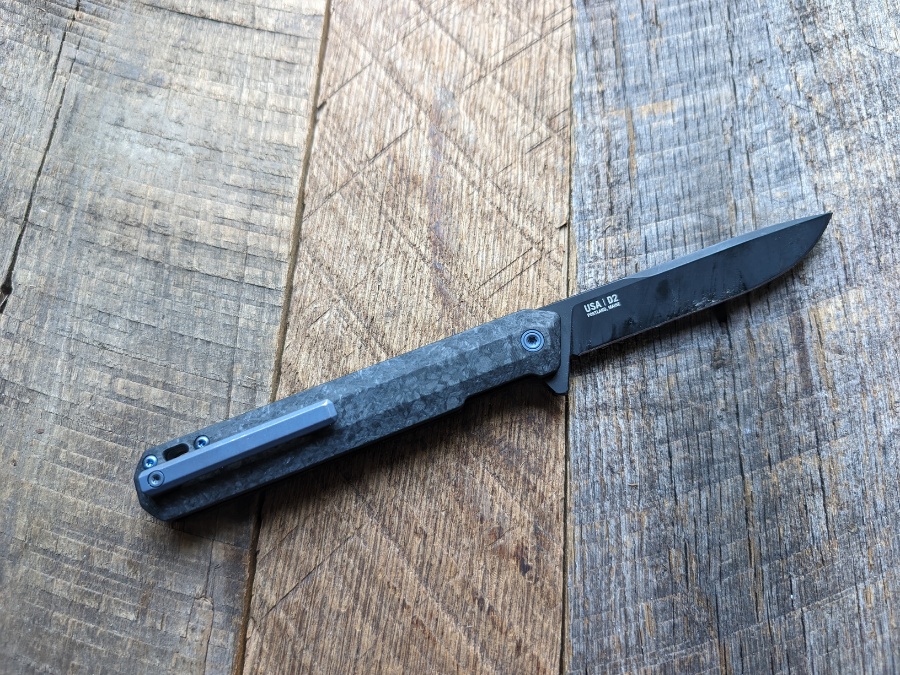
Overpriced on paper, but a sleek EDC that wins you over with time.
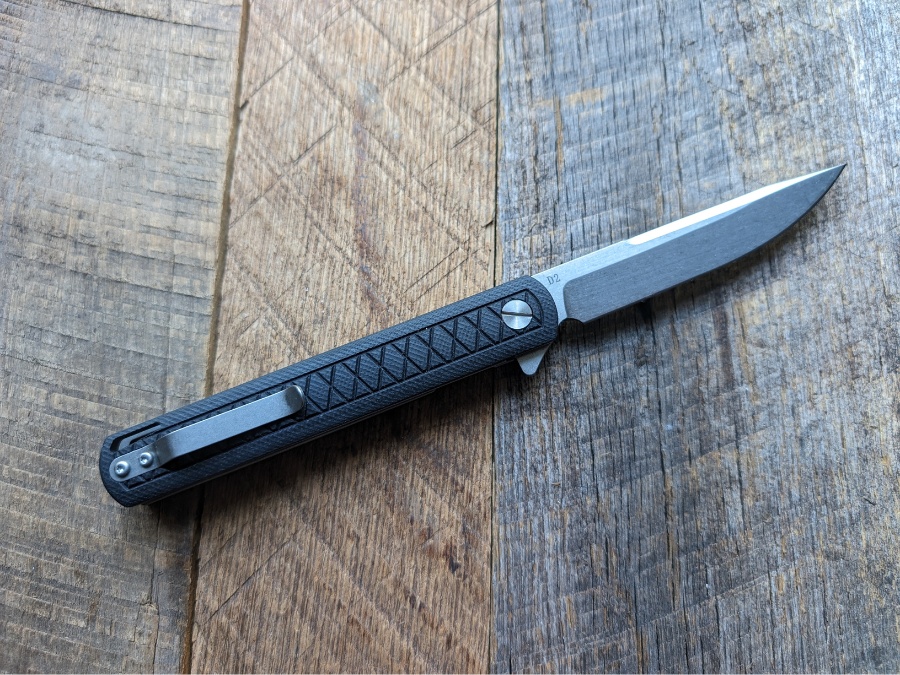
When I first unboxed the Tekto F2 Bravo, my gut reaction was that it was way too expensive for what it offered. $140 for a D2 blade from a small Maine-based outfit felt steep, especially when you can grab more steel for less money from bigger production brands.
But here’s the thing—after carrying the black G10 version for over a year, I’ve grown to really like it. It’s slim, lightweight, and has that CEO-style silhouette that makes it a true gentleman’s knife. It’s not trying to be a hard-use tool, and once you accept it on those terms, it works.
The blade is a 3.1-inch drop point in titanium-coated D2, riding on ceramic bearings. It flips open cleanly with a low-profile tab, and the lockup has stayed solid. At 2.4 ounces, the Bravo disappears in the pocket, and the deep-carry clip does its job without drawing attention. The fit and finish isn’t Benchmade-level, but it’s tidy enough, and the recessed liners keep the whole thing slim in hand.
Where the knife wins points is in the overall profile. The lines are modern but understated, and the black G10 with subtle machining makes it feel sharper (in looks, not just edge) than the price might suggest. It’s the kind of knife that slips easily into office carry without raising eyebrows but still has enough blade to make short work of packages and light tasks.
The F2 Bravo will never be a “value king”—you’re paying more than the sum of its parts. But after a year of pocket time, I can say it’s earned its place. It’s solid, it’s reliable, and while it felt overpriced at first, I’ve come to respect it as a well-executed gentleman’s folder. A keeper, even if it’s not a bargain. Read My Full Review Here
CRKT Crossbones
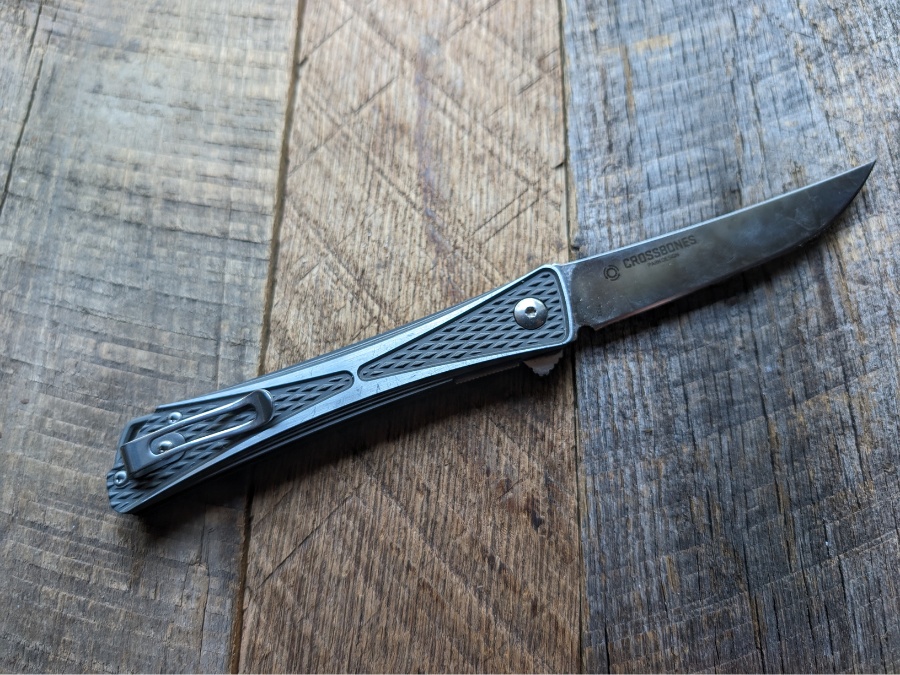
Slim, flashy, and a slicer built for pocket carry.
The CRKT Crossbones is one of those knives that looks like it should cost more than it does. Designed by Jeff Park, it takes his custom style and distills it into a $60 production folder that still feels special. It’s slim, lightweight, and it flips like a dream thanks to CRKT’s IKBS bearing system.
The blade steel is AUS-8 — nothing exotic, but easy to sharpen and perfectly serviceable for an EDC cutter. The blade itself is almost paper-thin behind the edge, which makes it a stellar slicer for everyday tasks. The aluminum handle scales are well finished, with a raised diamond texture that adds just enough grip without killing the clean gentleman’s-knife aesthetic.
Carry is discreet thanks to a deep carry clip, and at just under three ounces the Crossbones basically disappears in the pocket. Ergonomics aren’t perfect — the slim frame and some unnecessary jimping can make it less comfortable for extended use — but for its intended role as a stylish, lightweight cutter, it works.
The big knock is fit and finish. Out of the box, many Crossbones models suffer from a sticky lock face and minor milling marks. It’s not a dealbreaker, but it does remind you that this isn’t a $300 custom. If you can live with those quirks, you get a lot of design and cutting performance for the price.
Boker Plus Kwaiken Air
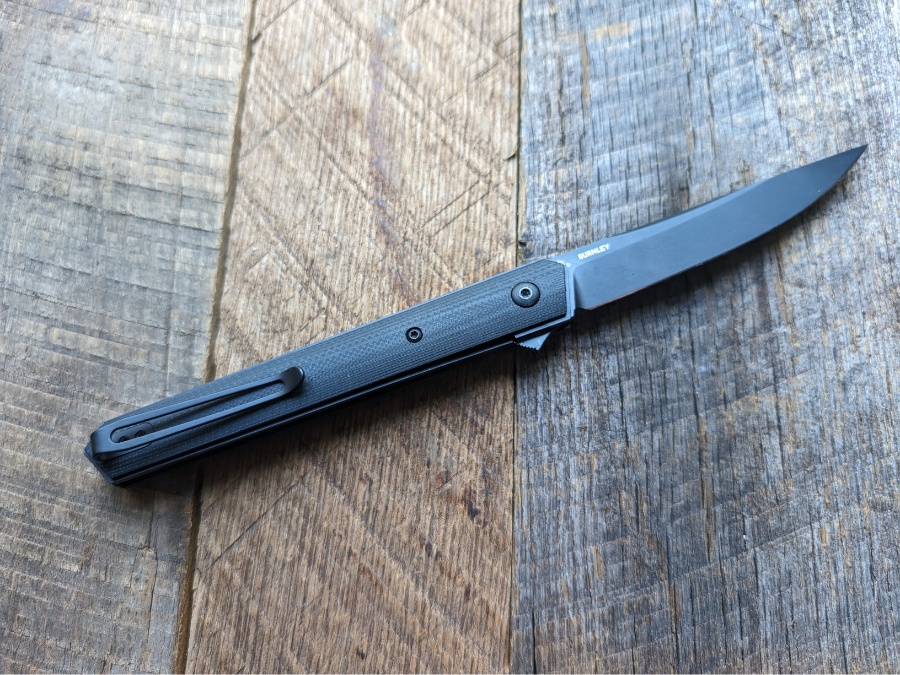
Slim, lightweight, and dressed up enough for the suit pocket.
This is the Kwaiken that actually feels like a gentleman’s knife. At 8.39 inches overall with a 3.54 inch trailing point blade and a blade stock around 0.09 inches, the Kwaiken Air carries slim, slices clean, and tucks into a pocket without printing. The weight is a featherlight 2.93 ounces, so the “Air” name is not just marketing. If your idea of a gentleman’s carry leans long and minimalist, this checks the box.
The blade steel is VG10 with a flat grind that starts thin behind the edge and still cuts well despite thickening quickly toward the spine. Finish work on the blade looks more refined than the price suggests, with lengthwise lines that read dressy rather than industrial. It is a pure flipper and a good one: the tab has proper jimping, the detent is tuned for a light-switch pull, and the action settles into that smooth, repeatable rhythm you want in a fidgetable folder.
In hand, the ergos are better than the silhouette implies. The handle is long enough for a full purchase and the G10 texture is the right kind of subtle for a refined carry. I do wish there were a short run of jimping on the spine where your thumb naturally lands; the knife is secure as is, but a little bite there would elevate control without hurting the clean lines.
Credit to Boker for getting the pocket clip right functionally. It is recessed with recessed screws, glides over pocket hems, and avoids hot spots. The miss is cosmetic. The clip and liner edges show small nicks and tool marks that cheapen an otherwise handsome design. It is not a deal breaker at this price, but brands like CJRB, Civivi, and QSP are tightening this up in the same bracket, so Boker should too. Also note it is right hand tip up only.
Extras are a pleasant surprise. The packaging and included zip pouch feel a class above the sticker price, reinforcing the gentleman’s vibe from unbox to pocket.
Bottom line: The Kwaiken Air is a stylish, ultra-slim carry that slices like a proper letter opener yet has enough blade to handle daily tasks. If you can live with some rough finishing on the clip and liners, you get a refined Burnley design, good action, and true gentleman’s-knife manners at a budget number.
Eafengrow EF16 Folding Knife
Bulky, budget-friendly, and surprisingly classy
The EF16 from Eafengrow is proof that even budget brands can put out a solid gentleman’s knife — though this one definitely pushes the upper limits of what you’d call “gentlemanly” in size. At 8.4 inches overall with a 3.7-inch blade, it’s the bulkiest knife on this list, but it still carries the lines and styling of a sleek folder. For twenty bucks, it’s a lot of knife.
The blade comes in what’s best described as a drop-point with a clean stonewashed finish, riding on a ball-bearing pivot. Deployment is mostly smooth, though some examples can feel a little sticky. Eafengrow claims D2 steel here. Whether that’s gospel truth or not is anyone’s guess — some past models have tested differently — but for this price point, I’m not complaining. It cuts, it holds an edge decently, and it sharpens back up without a fight.
The olive drab G10 scales look good and provide enough grip without screaming “tactical.” You get a frame with a liner lock, tip-up right-hand carry only, and a lanyard hole that’ll swallow paracord without modification. The clip isn’t reversible, and it could stand to taper a bit cleaner into the scales, but again, we’re talking about a $20 folder here.
On the downside, it’s a big presence in the pocket and lacks the refinement of higher-end gentleman’s knives. The clip and bulkiness keep it from disappearing in slacks the way a true gentleman’s carry should. But if you want a cheap, respectable-looking knife you won’t cry over if it gets lost, broken, or “borrowed” permanently, the EF16 is a solid pick.
Final Word: Finding Your Gentleman’s Edge
A gentleman’s knife isn’t about brute force or overbuilt designs—it’s about carrying a blade that matches your environment without sacrificing utility. From the featherweight SENCUT Jubil to the refined Kwaiken Air, every knife on this list has earned its place through pocket time and real-world use, not just spec sheets.
For me, the Kwaiken Air is the standout—it’s sleek, slim, and refined without being fragile. But the beauty of this category is choice. Whether you want a sub-$40 discreet slicer or a premium statement piece, there’s a gentleman’s knife here that fits your pocket, your budget, and your style.
At the end of the day, the best gentleman’s knife is the one you’ll actually carry. These aren’t safe queens; they’re tools meant to disappear until you need them—and when you do, they should cut clean, look sharp, and remind you why sometimes less really is more.

Blair Witkowski is an avid watch nut, loves pocket knives and flashlights, and when he is not trying to be a good dad to his nine kids, you will find him running or posting pics on Instagram. Besides writing articles for Tech Writer EDC he is also the founder of Lowcountry Style & Living. In addition to writing, he is focused on improving his client’s websites for his other passion, Search Engine Optimization. His wife Jennifer and he live in coastal South Carolina.