
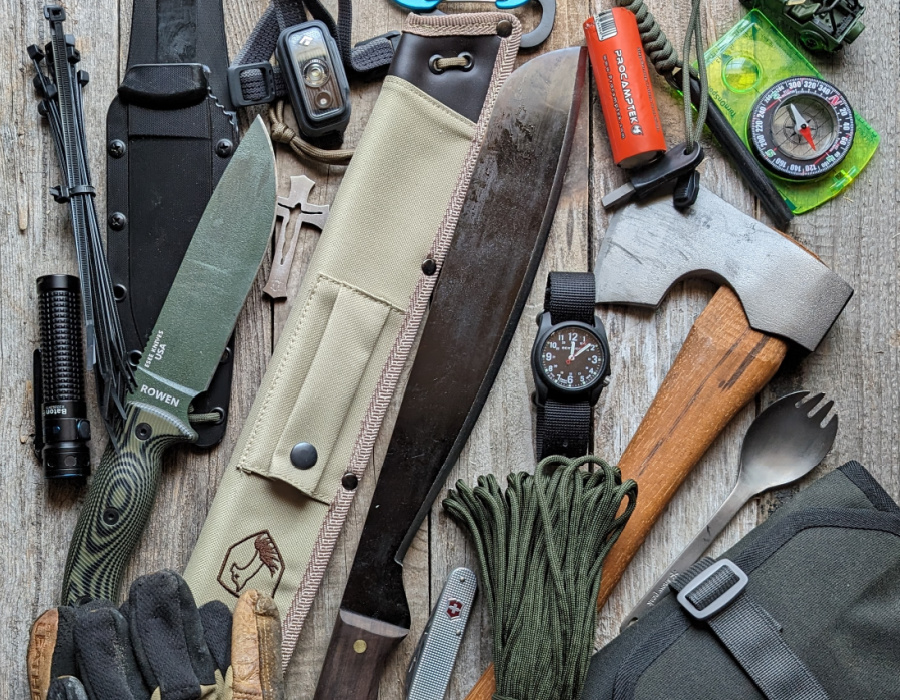
Beyond Self-Reliance: How EDC Makes You the Guy Who Helps
EDC has never just been about gear. Sure, your knife cuts boxes and your flashlight finds dropped screws. But the real power of everyday carry isn’t self-reliance — it’s becoming the guy who steps in when someone else can’t.
That’s the part most people miss. A pocketknife can cut rope for your kid’s project. A strip of moleskin can save a stranger’s hike. A box wrench in your van can get an entire out-of-town school team rolling again when their battery dies.
Everyday carry, done right, turns you into the person others can count on. Not the guy flexing a titanium pry bar on Instagram, but the guy who fixes a problem in thirty seconds flat and never asks for applause.
Preparedness as Everyday Service
Scripture says, “Let each of you look not only to his own interests, but also to the interests of others” (Philippians 2:4). That’s the heart of EDC. Carrying gear isn’t about showing off, it’s about being ready to serve.
Your pocketknife may be handy for you, but it’s often more valuable when you use it for someone else. Your flashlight might guide you through a dark hallway, but it becomes priceless when it makes others feel safe walking beside you. Even a couple of aspirin in your bag might seem like nothing — until the person next to you desperately needs them.
EDC, in this light, is stewardship. It’s a small, daily way of living out love for your neighbor.
The Trap of Carrying for Applause
There’s no shortage of influencers chasing likes with exotic steels, titanium pry bars, or lanyard beads that never see use. There’s nothing wrong with appreciating well-made gear — but carrying for applause misses the point.
A titanium pry bar might get attention online. But a $2 strip of moleskin might keep a stranger from limping home. Which one really serves?
Gear should serve people, not ego.
Skills Over Stuff
The other side of this contract is responsibility. If you carry something, you should know how to use it. Don’t pack a tourniquet you’ve never been trained to apply.
Don’t stash jumper cables if you don’t know how to hook them up. Gear without skill isn’t preparedness — it’s pride.
Preparedness is being able to step in with confidence when it counts, not just look prepared.
The Ripple Effect of Helping Others
Helping someone with your gear doesn’t just fix their problem — it sparks something bigger. Psychologists call it reciprocity, but in real life, it often goes further. People don’t just want to help you back — they want to pay it forward.
I’ve seen it happen. We drive a Chevy 3500 twelve-passenger van (nine kids will do that to you), and I keep a solid toolkit inside. At a cross-country meet, an out-of-town school van was stranded — battery terminals loose, kids and coaches stuck. Nobody had the right tools. I grabbed a couple of box wrenches, tightened the terminals, and had them running in minutes.
That moment wasn’t about me. It was about showing those kids and coaches what preparedness looks like. They didn’t just thank me — they left thinking, “Maybe we should keep a toolkit in our van, too.”
That’s the ripple effect. One small act of service plants a seed that might bless people you’ll never even meet.
The Everyday Rescues
Not every moment is dramatic. Often it’s the small, forgettable rescues:
- Using a fire starter at a mountain rental when nobody else could light the fireplace.
- Tying down a Christmas tree with paracord when everyone else was out of ideas.
- Handing out moleskin when a blister threatened to ruin a hike.
They’re not heroic. They’re not cinematic. But they make life smoother. They make you the guy others are glad to have around.
Audit Your Carry
Here’s a challenge: audit your kit tonight.
- Count how many items solve only your problems.
- Count how many could help someone else.
- Ask: if nobody ever saw my gear, would I still carry it?
If the balance feels off, shift it. Carry less for applause and more for service.
EDC Theory
Everyday carry isn’t just about self-expression or self-reliance. It’s about being useful. It’s about living prepared in a way that makes life easier, safer, or smoother — not just for you, but for others.
That’s the real purpose of EDC: to be the guy who helps. It won’t get you likes, and it won’t trend on Instagram. But it will bless people. And in the end, that’s worth more than all the titanium in the world.

Blair Witkowski is an avid watch nut, loves pocket knives and flashlights, and when he is not trying to be a good dad to his nine kids, you will find him running or posting pics on Instagram. Besides writing articles for Tech Writer EDC he is also the founder of Lowcountry Style & Living. In addition to writing, he is focused on improving his client’s websites for his other passion, Search Engine Optimization. His wife Jennifer and he live in coastal South Carolina.